October 25, 2019
Exuma, Bahamas: Your Complete Travel Guide to the Island Everyone Is Talking About

I'm Gillian, a Scotland based home & lifestyle blogger. Follow along as I navigate this new journey sharing my life from home.


There are destinations that look beautiful in photographs and then deliver something slightly less magical in person. And then there are places that actually exceed every expectation you arrived with. Exuma, Bahamas falls firmly into the second category. It is one of those rare destinations where the reality is better than the brochure, the water is genuinely that colour, and you find yourself talking about it for years afterwards.
The Bahamas consists of over 700 islands, and Exuma is one of just 30 that are inhabited. That relative quietness is precisely its appeal. This is not a resort-heavy, cruise-ship-crowded destination. It is unspoiled, authentic, and breathtakingly beautiful, with some of the most extraordinary wildlife encounters you can have anywhere in the Caribbean.
If it’s not already on your radar, it should be. Here’s everything you need to know.

Getting to Exuma
The main entry point is Great Exuma Airport (IATA code: GGT), which receives direct flights from several US cities including Miami, Fort Lauderdale, Atlanta, and Charlotte, with airlines including American Airlines and JetBlue. Flights from the UK will typically connect through one of these hubs. Bahamasair also operates connections from Nassau if you’re island-hopping through the Bahamas on a longer trip.
The airport is small and navigating it is refreshingly straightforward. Don’t expect a large international terminal. Do expect a warm welcome and the immediate feeling that you’ve arrived somewhere genuinely special.
Getting Around the Island
Rent a car. This is genuinely the best advice anyone can give you about Exuma, and it’s worth repeating. Taxis on the island are available but expensive, and a rental car gives you the freedom to explore at your own pace, which is very much in the spirit of Exuma. The roads are quiet, traffic is minimal, and everything operates on two-lane roads with no motorways or complex junctions to navigate.
One important note: driving in the Bahamas is on the left, as in the UK. The roads do have potholes to watch out for, but if you take things at a sensible pace, it poses no difficulty whatsoever.
Rental cars are available at the airport and cost roughly $50-$80 per day. For a week’s visit, having your own vehicle makes the difference between a good trip and a great one.
Where to Stay in Exuma
Grand Isle Resort is one of the most beautiful properties on the island and a natural base for exploring everything Exuma has to offer. Set on a stunning stretch of white sandy beach, the resort offers spacious two and three-bedroom villas rather than standard hotel rooms, making it particularly well-suited for groups or those who simply want more space and privacy.

The resort has two restaurants, a beautiful pool, and complimentary use of paddleboards, kayaks, and snorkelling gear for guests. The beach is genuinely spectacular, the kind that makes you question why you ever go anywhere else.

The area around George Town, the island’s main settlement, also has a range of smaller guesthouses, vacation rentals, and boutique accommodation for those who want a different base.
What to Do in Exuma
Swimming with the Pigs at Pig Beach
This is Exuma’s most famous attraction, and it absolutely lives up to the hype. On Big Major Cay, an uninhabited island accessible only by boat, a colony of wild pigs has made the beach their home. No one knows for certain how they got there: local legend has it that sailors left them intending to return and cook them, or that they swam from a nearby shipwreck and simply decided to stay. However they arrived, they have adapted spectacularly to island life, swimming out to greet boats and interacting with visitors in the most unexpectedly delightful way.

There are now around 20 pigs and piglets living their best lives on Pig Beach, and the experience of swimming alongside them in that extraordinary turquoise water is genuinely unlike anything else. Bring fresh fruit if you want to make friends quickly.

A few important tips before you go. Book a reputable, full-day organised excursion rather than a short boat trip. The full-day tours include multiple stops and represent far better value. Also be aware that imitation pig experiences have sprung up elsewhere in the Bahamas, charging tourists for encounters with pigs that are not the original swimming pigs of Big Major Cay. The real ones are only accessible from Exuma itself. If you’re based on the island, your tour operator will get you to the right place.
Swimming with Nurse Sharks at Compass Cay
Most full-day pig beach excursions also stop at Compass Cay, where a community of nurse sharks has made its home around the marina. These are large, docile creatures that have been visiting the dock for years and are completely habituated to people. You can swim alongside them in the water or simply wade in from the dock as they cruise past. It sounds terrifying on paper and turns out to be one of the most exhilarating and strangely peaceful experiences imaginable.
There is typically a small landing fee at Compass Cay (around $15 per person, cash only) payable to the island’s private owners, which covers access to the site.
Snorkelling Thunderball Grotto
Thunderball Grotto is a spectacular sea cave cut through a small rocky island near Staniel Cay, with openings that let shafts of light pour into the underwater cavern. You’ll recognise it if you’ve ever watched the James Bond film “Thunderball” or the film “Splash”, both of which filmed scenes here. Snorkelling through it is extraordinary: the light, the fish, the coral formations, and the whole theatrical quality of being inside a naturally carved underwater cave.
It’s accessible only at certain tides, so your tour operator will time the visit accordingly. The snorkelling itself is suitable for all levels and most operators provide equipment.

Coco Plum Beach
Coco Plum is one of those beaches that rewards the effort of finding it. It’s not immediately obvious to navigate to without local knowledge, which is partly why it often has almost no other visitors when you get there. The beach is pristine, the water is clear, and there’s a distinctive wooden swing over the water that makes for genuinely beautiful photographs. Take the time to find it. It’s worth every wrong turn.
Ask at your resort or hire car company for current directions, as signage is not Coco Plum’s strong point.


Swimming with Sea Turtles
Sea turtles are spotted regularly in the waters around Exuma, often swimming close to shore in calm, shallow areas. This is one of those wildlife encounters that requires no booking and no excursion. Simply being in the water at the right moment can put you in the company of these extraordinary creatures. They are unhurried and unbothered by human company, which makes the whole experience feel genuinely special rather than staged.

Chat and Chill, Stocking Island
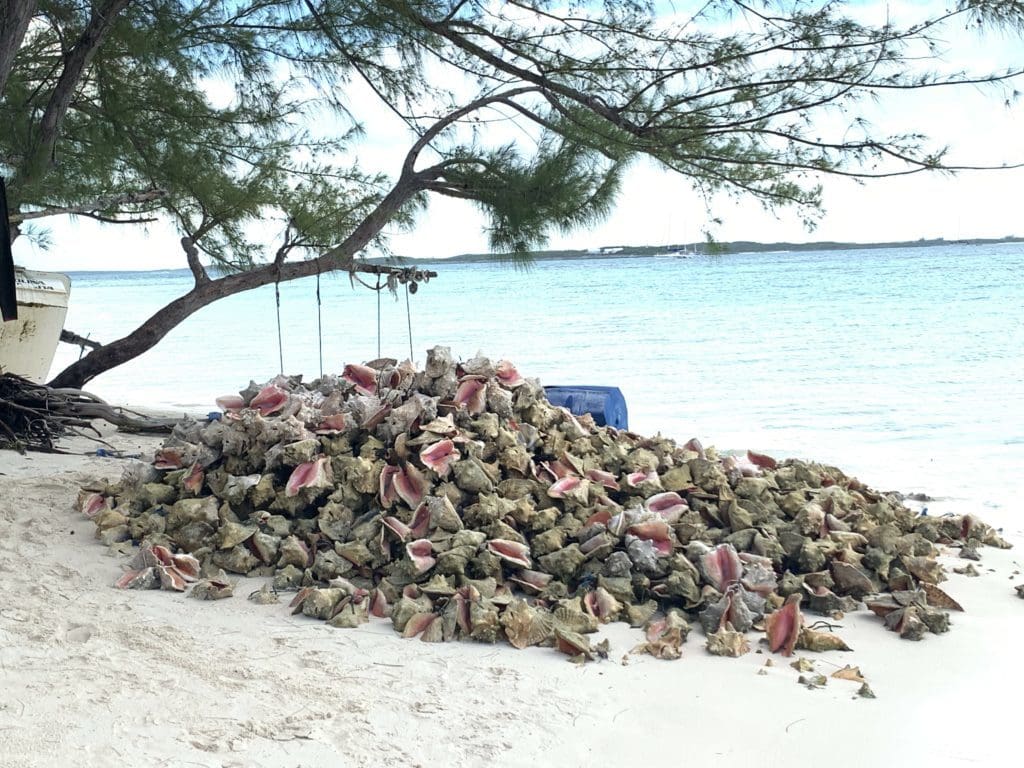
A short water taxi ride from George Town takes you to Stocking Island, home to the famous Chat and Chill restaurant and beach bar. This is a wonderfully laid-back spot: fresh conch salad prepared to order right in front of you, cold Kalik beer, friendly resident stingrays in the shallow water who come in at feeding time, and the kind of easy, unhurried atmosphere that reminds you what the Caribbean is actually for. It’s worth a full afternoon easily.

Fresh conch salad, if you haven’t encountered it before, is a Bahamian staple and very much worth trying. Made with freshly caught conch, lime juice, onion, and peppers, it’s bright, clean, and completely addictive.
The Vineyards and Local Food
While Exuma isn’t a wine destination in the way that South Africa’s Cape is, good food is very much part of the island experience. The restaurants on and around the Waterfront in George Town serve excellent local seafood, and the dining at Grand Isle Resort is reliably good. Try cracked conch, fresh lobster when it’s in season, and the local rum drinks. The Bahamas has its own distinctive food culture and it’s worth engaging with properly rather than defaulting to familiar options.

What Makes Exuma Different from the Rest of the Bahamas
The honest answer is: the lack of commercialisation. Nassau is a full-scale tourist destination with cruise ship ports, casinos, and all the infrastructure that comes with mass tourism. Exuma has none of that. The hotels are smaller. The restaurants are locally owned. The roads are quiet. The beaches are often completely empty. And the wildlife, the pigs, the sharks, the turtles, the iguanas, the extraordinary marine life visible through water so clear it barely seems real, is abundant and unmanaged in a way that feels genuinely wild.
It’s the kind of place that gets into your system. You spend a week there and leave planning when you can return. That is its own form of recommendation.
Practical Tips for Visiting Exuma
Currency: The Bahamian dollar operates at a 1:1 exchange rate with the US dollar, and US dollars are widely accepted everywhere. Cards are accepted at most hotels and larger restaurants, but carry cash for market purchases, water taxis, and the nurse shark landing fee at Compass Cay.
Passport: A valid passport is required to enter the Bahamas. Ensure it has at least six months of validity remaining from your travel date.
Best time to visit: The Bahamas enjoys warm weather year-round. The peak season runs December through April with reliably dry weather but higher prices and more visitors. Summer and autumn bring lower prices, fewer crowds, and the possibility of tropical weather. Hurricane season runs June through November, peaking in September. Check forecasts when planning if travelling in this window.
What to pack: High-SPF reef-safe sunscreen (many Bahamian reefs are protected and conventional sunscreen is harmful to coral). A good quality snorkel mask if you have one, though most tours provide equipment. Water shoes are useful for rocky entries. A dry bag for boat days. Light, quick-drying clothing for water excursions and something slightly smarter for evenings.
Book the pig excursion in advance: Spots on full-day tours to Pig Beach fill up quickly, particularly in peak season. Book before you travel rather than trying to arrange it once you arrive.
Driving: Left-hand side. Take it at an easy pace, watch for potholes, and enjoy the unhurried pace of island driving. You’ll be fine.
The Honest Verdict
Exuma is one of those destinations that travels writers use the word “unspoiled” for and actually mean it. There is nothing manicured or manufactured about it. The beauty is completely natural, the wildlife encounters are genuine, and the whole experience has a quality of ease and authenticity that is increasingly rare in Caribbean tourism.
It sits at the upper end of the budget for Caribbean travel, but what it offers in return is genuinely exceptional. The swimming pigs alone would justify the trip. The turtles, the sharks, Thunderball Grotto, Coco Plum Beach, and the simple pleasure of floating in that extraordinary water more than complete the picture.
Put it on your list. Then book it before it gets any more popular than it already is.
Quick Planning Checklist for Exuma
- Book flights into Great Exuma Airport (GGT) via Miami, Fort Lauderdale, Atlanta or Charlotte
- Reserve accommodation in advance, Grand Isle Resort is a beautiful option
- Book the full-day pig beach excursion before you travel
- Arrange car rental for the week at the airport
- Pack reef-safe sunscreen, a dry bag, and water shoes
- Bring cash in US dollars for smaller vendors, water taxis, and the Compass Cay landing fee
- Leave a full day free for Stocking Island and Chat and Chill
- Allow at least two days just for the beach, the resort, and doing absolutely nothing
Looking for more travel inspiration? Read about our week on safari at Zulu Nyala Game Reserve and our family guide to Cape Town, South Africa.
Leave a Reply
If you like the sort of recommendation that still holds up six months later, leave your email below and I'll write to you on Sunday.
Most Sundays, once the house has gone quiet and it's edging towards nine, a letter goes out. It's the one I'd write to a friend with good taste and not nearly enough time: one thing worth reading, one thing worth buying, and one thing to skip. No noise, no pressure to spend, just the considered version of what I've actually been using, loving, or quietly sending back.