I Tried the Medicube PDRN Pink Collagen Gel Mask Everyone’s Talking About on TikTok

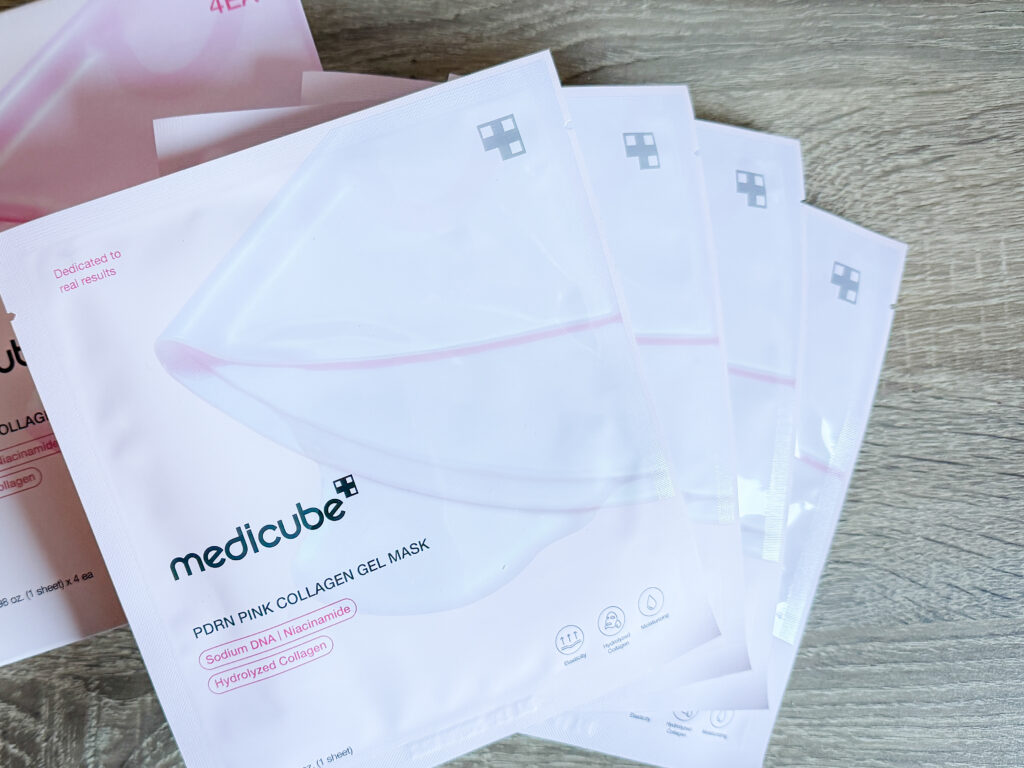
If your TikTok feed looks anything like mine, you've been absolutely pelted with this mask for the past few months. The Medicube PDRN Pink Collagen Gel Mask has been doing serious numbers on the app, with creators pulling the pink jelly pieces out of the packet, smoothing them onto their faces, and then revealing glass-skin results so dramatic they look like a filter. And I'll be honest with you, my first instinct was to keep scrolling.
Because here's the thing about TikTok Shop skincare right now: it's a mess. Every other video is someone “organically” discovering a product that happens to have a commission link in their bio, and the results are always flawless and the caption always says some version of “I wasn't paid to say this.” (Sure.) TikTok is full of genuinely mediocre products pushed hard by people who needed a payout, and I've become properly sceptical of the whole machine.
But the Medicube mask kept coming up. Not just from the usual suspects pushing whatever's trending, but from skinfluencers I actually trust, from dermatology-leaning accounts breaking down the ingredients, and eventually from friends outside of beauty-content circles. So I decided to do what I always do when I can't tell if something is hype or actually good: I ordered it directly from Medicube (the official Medicube store on Amazon), sat down and did my research, and I'm writing it all up here so you can make an informed call.
If I'm honest, I wouldn't even have been on this particular rabbit hole if I hadn't let an AI build my entire skincare routine a few months ago. That experiment is what got me paying proper attention to ingredients for the first time, and once you start looking, K-beauty is impossible to avoid.
Let me start with what this mask actually is, why the ingredient list is genuinely interesting, and what you should know before you buy it. Then I'll tell you exactly what I thought after using it myself.
So what actually is salmon DNA and why is it in a face mask?
I know. “Salmon DNA” sounds like something a wellness brand invented to charge you more for moisturiser. But the science behind it is actually a lot more legitimate than the TikTok thumbnails might suggest.
PDRN stands for polydeoxyribonucleotide. It consists of DNA fragments extracted from the sperm cells of salmon, specifically salmon trout or chum salmon, and it has been researched extensively for its anti-inflammatory, tissue-regenerating, and collagen-stimulating properties. It sounds bizarre, yes. But the reason salmon DNA is used rather than any other source is because salmon DNA shares remarkable structural similarities with human DNA in terms of molecular weight, making it highly biocompatible with our skin cells.
This isn't a brand new ingredient either. PDRN-based products, initially developed for wound healing, have been used globally as regenerative therapies for decades, and in countries like South Korea they have long been popular as injectable skin treatments under brand names like Rejuran. The K-beauty industry essentially took an ingredient that was already well-established in medical and clinical settings and started working it into skincare formulations for everyday use.
The mechanism is where it gets interesting. PDRN works by activating fibroblast cells to produce collagen and elastin, improving blood flow so skin receives more nutrients and oxygen, calming inflammation to reduce redness, and supporting the skin's structural repair at a cellular level. In practical terms, that translates to better hydration, improved firmness, a more even tone, and skin that generally looks more alive and less like it needs about three days of sleep it isn't going to get.
The research is promising, even for topical application. Clinical studies have shown that topical PDRN can improve skin hydration by around 45% after four weeks of use, and these effects appear to continue even after you stop using it, suggesting it improves the skin's natural ability to hold moisture rather than just adding temporary surface moisture.
Is it as dramatic as an injectable treatment? No, and anyone telling you a sheet mask delivers the same results as a professional procedure is trying to sell you something. But as a regular at-home treatment layered into a good skincare routine, there's genuine science behind why it might make a real difference.
What's actually in the Medicube mask?
The hero ingredient is the salmon PDRN (listed as Sodium DNA on the ingredients list), but the mask has a genuinely solid supporting cast. Alongside the PDRN, the formula contains hydrolyzed collagen and niacinamide for pore care and improved firmness, with the full ingredient list also including a significant peptide complex covering multiple types of acetyl and palmitoyl peptides.
Niacinamide is one of the most well-researched skincare ingredients out there, known for brightening skin tone, reducing the appearance of pores, and improving the skin barrier. Pairing it with PDRN makes sense because they're both working on similar goals, just through different pathways. The hydrolyzed collagen adds a plumping, moisturising effect, while the peptide complex is targeting firmness and elasticity from multiple angles at once.
The other thing worth noting is that Medicube confirms the mask is dermatologist-tested and suitable for sensitive skin, which matters if you're someone who tends to react to products. The formula is also fragrance-free in the traditional sense (there's no synthetic fragrance listed in the first half of the ingredients), which is good news for reactive skin types.
Medicube is a South Korean brand, founded in Seoul and fully rooted in the K-beauty philosophy of science-led, skin-first formulations. If you're new to that world, I wrote a whole piece on why K-beauty is changing how we all think about skincare that's worth a read, because it genuinely reframed things for me.
The colour-changing thing
This is the bit that makes the mask so watchable on TikTok, and honestly it's pretty satisfying in real life too. The mask starts out as an opaque pink jelly and gradually becomes transparent over three to four hours as your skin absorbs the active ingredients. When it's gone clear, that's your cue that the mask has done its job.
It's not just a gimmick either. The colour-change mechanism is basically a built-in absorption indicator, so instead of guessing how long to leave it on, the mask tells you. Most people either use it as an extended treatment left on for a few hours in the evening, or as an overnight mask worn while they sleep.
The mask comes as two separate pieces rather than a single full-face sheet, which means you can actually get most of it to sit flat without the usual wrestling match you get with traditional sheet masks. The pieces cover your full face comfortably and are flexible enough to mould to your face shape.
Why is it going viral now?
Part of it is timing. K-beauty has been building momentum on TikTok for a while, and glass skin as an aesthetic goal has completely taken over from the matte, full-coverage looks that dominated a few years ago. PDRN fits neatly into that trend because the results it promises, plump, dewy, luminous skin with a natural-looking glow, are exactly what the glass skin aesthetic is built on.
But I also think the salmon DNA hook does a lot of work here. It's inherently shareable. “I put salmon sperm on my face and my skin looks incredible” is a genuinely compelling hook, and TikTok is built on that kind of attention-grabbing content. The colour-change element adds to it because it's visually interesting and gives creators something satisfying to film. You don't need to be a beauty creator to understand why that combination does numbers.
What's different about the Medicube mask compared to a lot of TikTok Shop products, though, is that when you pull back from the viral surface level and look at the ingredient list, there's actually something worth talking about underneath. It's not relying on one splashy ingredient to carry a mediocre formula. The combination of PDRN, niacinamide, collagen, and a multi-peptide complex is genuinely well thought out for the skin concerns it's targeting.
The price point helps too. At around £5 to £6 per mask, it sits in an accessible luxury position, luxurious enough to feel like a proper treatment, affordable enough that you're not rationing it or saving it for special occasions.
Who is this mask actually for?
Based on the ingredient profile, it's a strong option if your main skin concerns are hydration, dullness, loss of firmness, uneven tone, or visible pores. It's also worth considering if you've been wanting to try PDRN as an ingredient but aren't ready to commit to a full serum or higher-investment product.
It's not going to replace your actives. If you're using retinol or AHAs for texture or cell turnover, the Medicube mask works alongside those rather than instead of them. Think of it as a booster treatment rather than your entire routine.
For sensitive skin types who tend to find actives too irritating, the combination of hydrating and barrier-supporting ingredients here makes it a gentler way to still feel like you're getting results.
My verdict
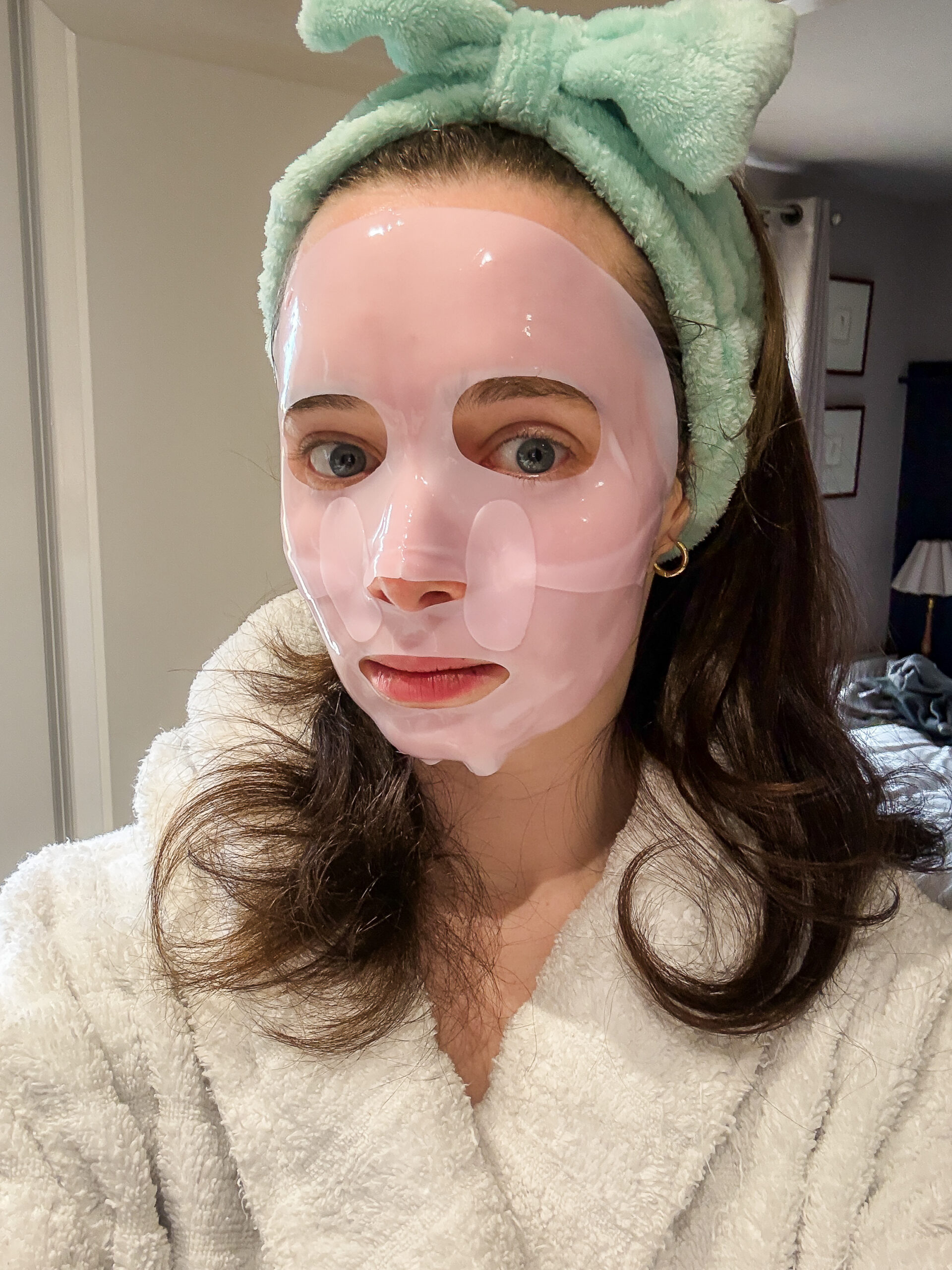
I'm writing this in real time. The mask is on my face as I type this, because it stays on for anywhere between one and three hours while the colour changes, and I figured there's no better way to give you an honest account than to actually document it as it happens. No editing for flattery. No waiting until I remember what I thought. Just me, my laptop, and what is currently a very pink, very slimy face.
Applying the Medicube PDRN Pink Collagen Gel Mask: what actually happens
Right, let's talk about the bit nobody mentions in the TikTok videos, because in the TikTok videos it always looks effortless. It is not effortless.
I applied the mask straight after cleansing and toning, which is exactly where Medicube recommends it sits in your routine, as the last step before anything else goes on. Clean, prepped skin, ready to go. What happened next was considerably less serene.
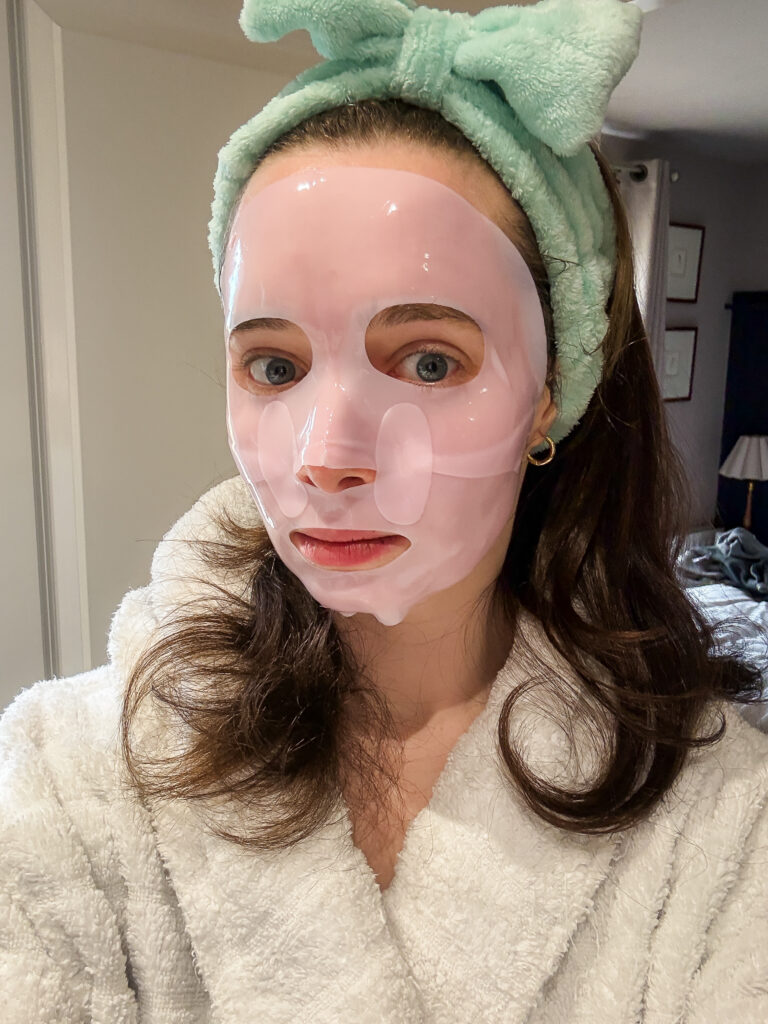
The mask comes in two large jelly pieces: one for the top half of your face covering the eye area, and one for the lower half with a cutout for your mouth. In theory, neat. In practice, getting them onto your face is a bit like trying to handle a very enthusiastic slice of raw salmon. They are extraordinarily slimy, which I understand is the point, but it does mean your first thirty seconds involve quite a bit of shuffling, repositioning, and trying not to let the whole thing slide off completely.
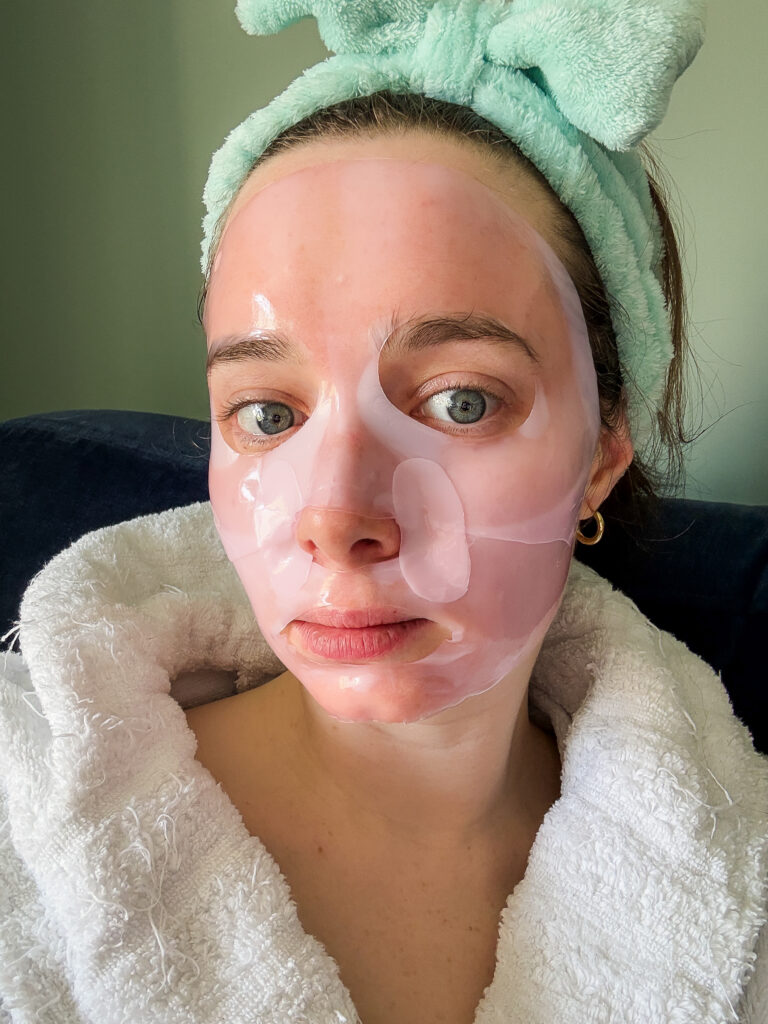
The top piece was the trickier of the two for me. It didn't quite reach my hairline, so the top of my forehead missed out entirely, and the area around my inner eyes near my nose had some gaps where it just wouldn't sit flat. The lower piece was similarly ambitious, with the section between my nose and top lip being slightly too generous and doing its best to migrate southward over my mouth.
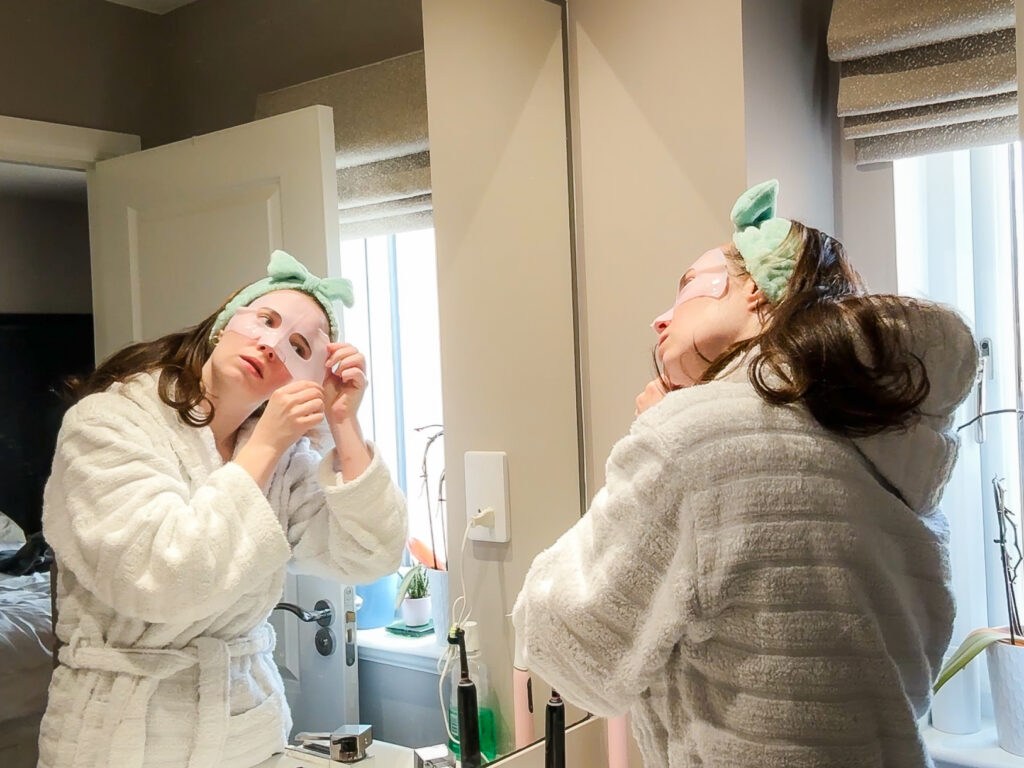
I ended up rearranging everything once it was on, tucking the lower piece under the top piece rather than over it, which helped considerably with the slipping. I also accidentally tore the top section slightly while repositioning it, because pulling at a wet jelly mask is about as graceful as you'd imagine.
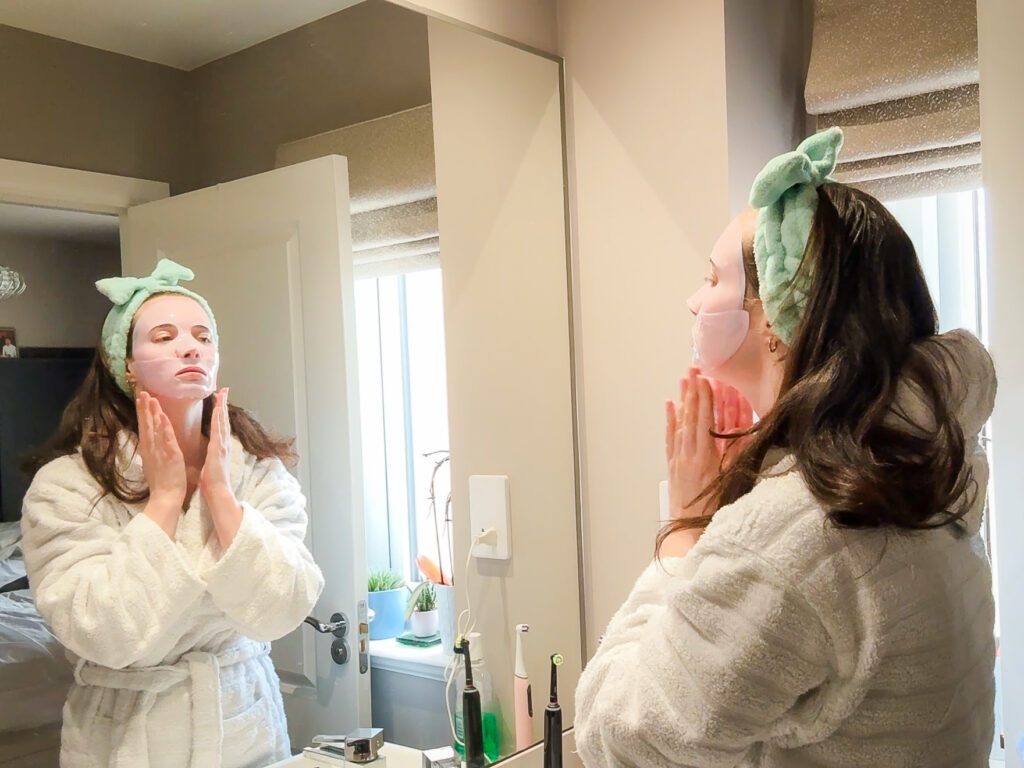
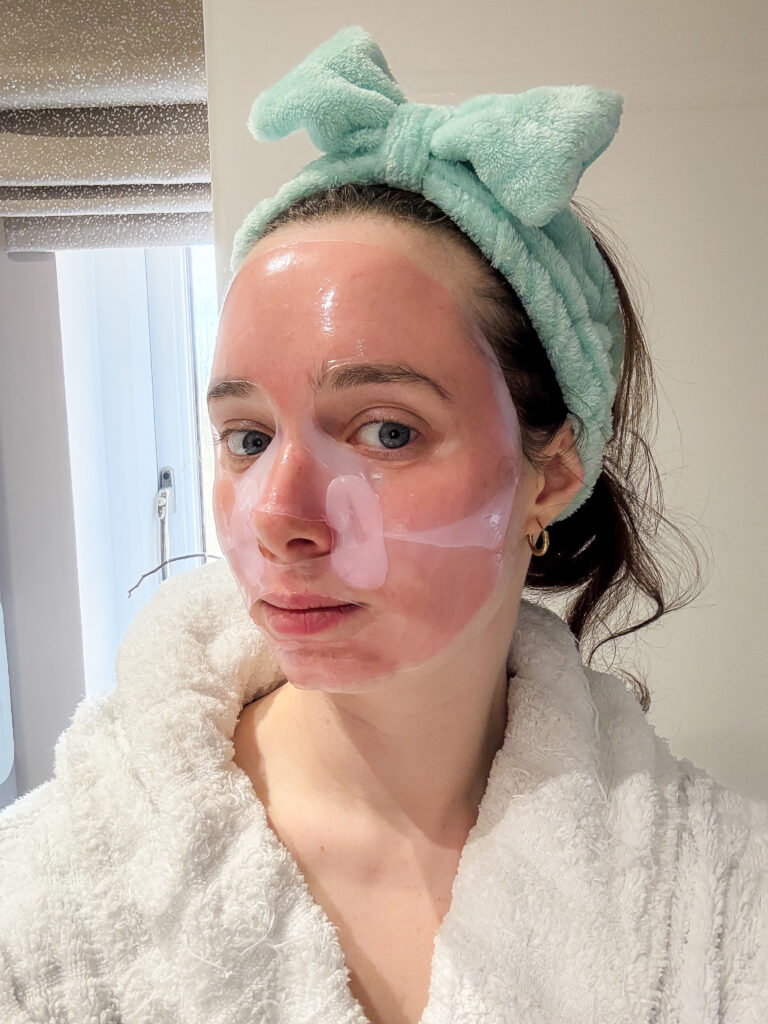
One tip I picked up from watching others on TikTok: the small cutout pieces from the eye sections can be placed over the sides of your nose to cover any gaps. I did this and it worked well, so definitely don't discard those little scraps.
By around the ten-minute mark it had settled properly and was sitting in place without any further intervention. The initial chaos calmed down, and it started to feel a lot more like a proper mask and a lot less like a skincare obstacle course.
Taking it off: the results
After one hour and forty-five minutes, I'd had enough. The mask had been gradually going clearer over time, which was satisfying to watch, but the sections that were either overlapping or not making full contact with my skin, particularly around my eyes, had stayed resolutely pink the whole time. If I'd been waiting for the entire mask to turn transparent before removing it, I'd still be sitting here. Worth knowing before you go in with expectations of a neat full-face colour change: what you actually get is a patchwork of clear where the contact was good, and pink where it wasn't.
Towards the end it started to feel a little uncomfortable, though I think that's partly because I'd made the mistake of talking more towards the end of the session, and a jelly mask isn't exactly designed with conversation in mind. The edges had begun to go solid and were peeling and shrivelling slightly, which is a sign it had done most of its work anyway.
Taking it off, though, was genuinely lovely. That's the best word for it. The texture as it peels away is oddly satisfying in a way that's hard to explain until you've experienced it.
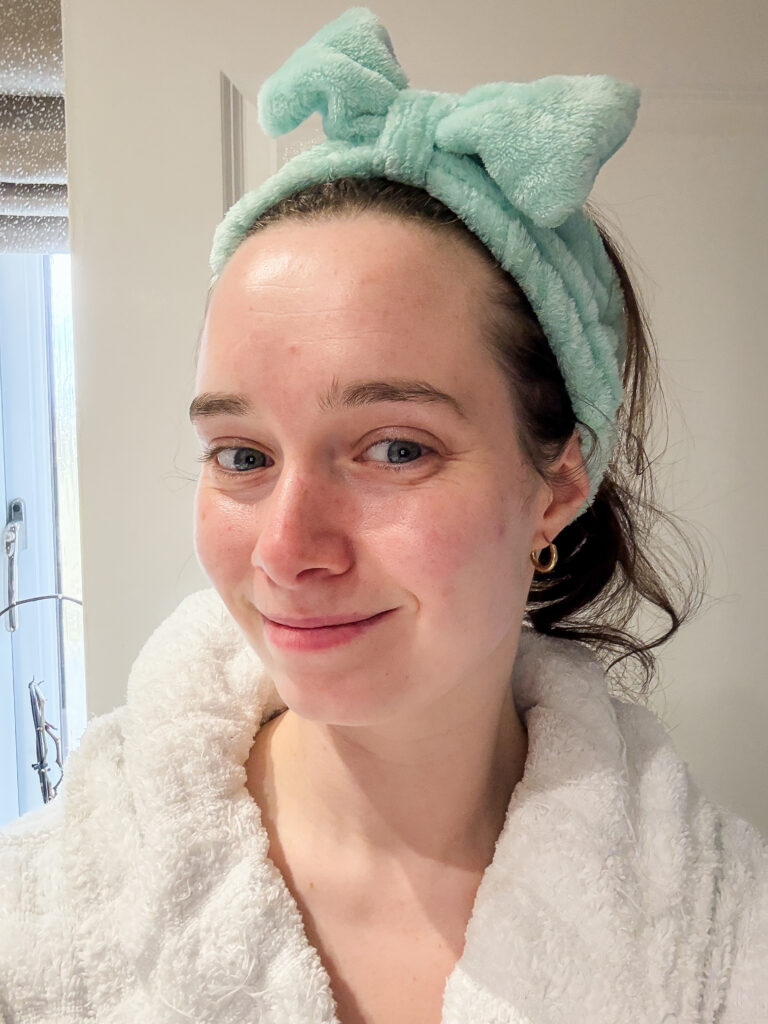
And my skin afterwards? Noticeably softer and tighter. Not in a stretched, stripped way, but in that plump, rested way that good hydration gives you.
Here is my before and after. I'll be straight with you: looking at the before and after photos side by side, the difference isn't dramatic on camera. But that doesn't tell the whole story, because the difference in how my skin actually felt was immediate and noticeable. Softer, plumper, tighter in that well-hydrated way rather than a stripped way. Sometimes skincare does its best work in the texture rather than the photo, and this was one of those times.

The bottom line on the Medicube PDRN Pink Collagen Gel Mask is that it's one of those rare cases where the TikTok hype and the ingredient science are actually pointing in the same direction. The formula is genuinely interesting, the mechanism makes sense, and the price means you can try it without any anxiety about wasting money if it turns out not to be for you.
Whether it earns a permanent spot in my routine is something I'll update you on, but so far it's looking like this might be one trend worth following.