The Lumie Bodyclock Spark 100 Review: Is the Entry-Level Sunrise Alarm Actually Worth It?

There's a particular kind of misery to a winter morning in the UK. The alarm goes off in pitch darkness, your phone lights up like an interrogation lamp, and you're expected to move from deep sleep to upright, productive human in the space of a single flinch. For years, that was my every morning from October to March, and it never got easier.
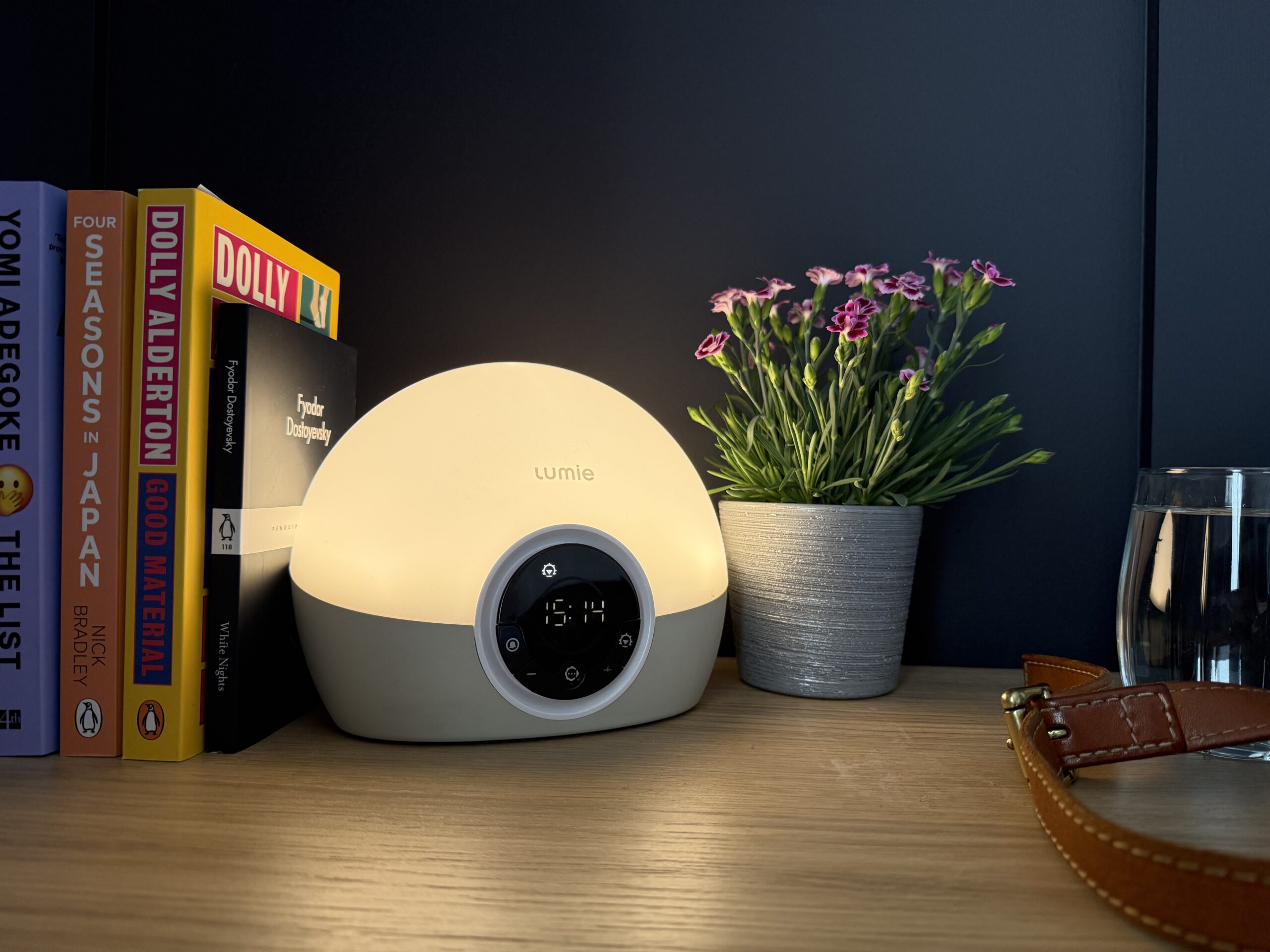
The Lumie Bodyclock Spark 100 is the wake-up light that changed that for me, and it's the one I recommend when friends ask what to buy first. It's the entry-level model in Lumie's Bodyclock range, which means it strips back the fancier features you'll find on the £130-plus models and focuses on doing one thing genuinely well: waking you up with light that mimics a real sunrise.
Here's an honest look at what it does, what it doesn't do, and whether the entry-level version is the one you actually want.
What the Lumie Spark 100 Actually Is
At its simplest, the Spark 100 is a bedside lamp with a clock built in. The difference is that over the 30 minutes before your alarm time, the lamp gradually brightens from complete darkness to a warm, natural-looking light, shifting through soft reds and oranges up to a brighter white glow. The idea is that your body wakes gently, the way it would on a summer morning when the sun comes through the curtains, rather than being yanked out of deep sleep by a sudden noise.
It's also classified as a Class 1 medical device, which means Lumie can legitimately market it as an aid for Seasonal Affective Disorder and the winter blues. That's not marketing fluff. The underlying science is well established: morning light exposure suppresses melatonin, the hormone that keeps you sleepy, and boosts cortisol, which is what gives you that “ready for the day” feeling. A gradual sunrise simulation nudges both of those processes in the right direction before your alarm even goes off.
The science is real, and more importantly, you can feel it working within a few mornings of using it.
Key Features at a Glance
The Spark 100 does a short list of things very well. The sunrise is fixed at 30 minutes, which is shorter than the adjustable options on pricier models, but in my experience 30 minutes is the right length anyway. Any less and it feels rushed. Any more and you're basically awake before the alarm, which defeats the point.
The final light intensity is adjustable, which is a detail that often gets missed. You can set it to finish on a soft, warm glow or all the way up to full bright-white daylight, depending on how aggressive you want your wake-up to be. I started on the lowest setting and gradually worked up.
There's a 30-minute sunset feature that works the same way in reverse, gently fading the light down over half an hour to help you wind down at bedtime. You can choose to have it fade to complete darkness or fade to a low-level nightlight, which is a lovely touch if you have small children or just don't love pitch black.
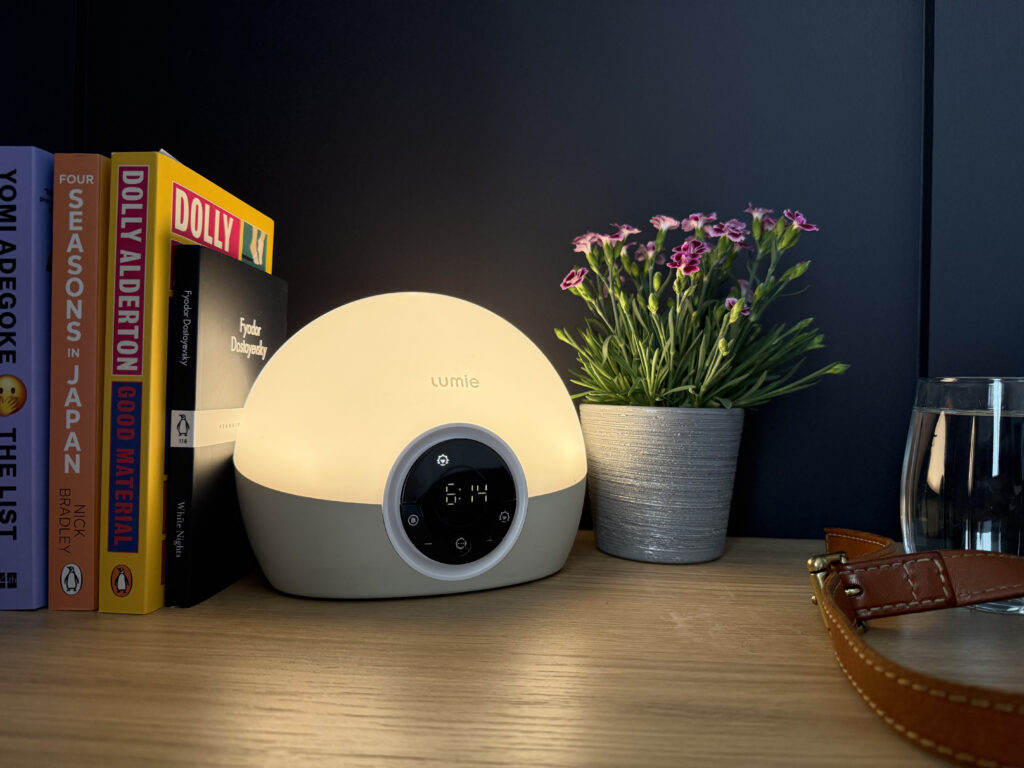
The display is light-sensitive and auto-dims when the room goes dark, which sounds minor but is genuinely important if you're the kind of sleeper who wakes up at every stray glow. You can also turn the display off completely from a small button on the underside.
The alarm sound is a simple beep, and there's only one option for it. No radio, no nature sounds, no birdsong. More on that below.
There's a tap-to-snooze feature on the top of the lamp dome, which is more satisfying than it has any right to be.
My Favourite Setting (And Why It Might Not Be For You)
Here's where I deviate from how most people probably use this lamp. My favourite setting is to turn the alarm sound off completely and just let the light wake me up. No beep, no noise, just the gradual brightening of the room.
I can do this because I don't have a traditional 9-5, and I've got two kids whose own alarms go off when we actually need to get up, so there is genuinely zero risk of me sleeping in. The natural light wakes me up every time, and it's such a gentle way to come round that I actually look forward to mornings in a way I never did with a phone alarm.
If you have a more punishing schedule or a meeting you absolutely cannot miss, the beep is a sensible safety net. But if you have any flexibility at all, try the no-sound version for a week. It's one of those small lifestyle changes that feels disproportionately nice.
The Design and Feel
Physically, the Spark 100 is a squat, domed lamp in an off-white colour that sits about 16cm tall and takes up a roughly 19cm by 12cm footprint on a bedside table. It's not tiny, but it's not overwhelming either. The aesthetic is clean and unfussy, and it doesn't scream “medical device” in the way some wellness products do.
The build is almost entirely plastic. Honestly, it doesn't feel premium in the way a ceramic lamp or something with a wooden base would. The buttons have a slightly clicky, hollow feel to them rather than a reassuring tactile weight. It's not flimsy exactly, but you wouldn't call it luxurious.
That said, mine has lived on my bedside table for several years now and still works exactly as it should. The LEDs are designed to last for years without needing replacement, and Lumie offers a three-year guarantee as standard, which is a reasonable signal of confidence. I've been using mine since 2020, and it's still acting brand new.
What the Spark 100 Doesn't Do
There are a few things worth flagging so you can decide whether to size up to the Glow 150 or Shine 300 instead.
The sunrise duration isn't adjustable. If you specifically want a longer or shorter sunrise, the Glow 150 lets you pick 20, 30, or 45 minutes.
There are no nature sounds or radio. If you like waking up to birdsong, waves, or the Today programme, you'll need one of the more expensive models. The Spark 100 is a beep or nothing.
You have to manually re-enable the alarm every day, which is a quirk of the design rather than a bug. Some people find this annoying. I've come to see it as a small moment of intentionality before bed, but I understand why it irritates others.
There's no battery backup for the alarm itself, only 30 minutes of clock-keeping if the power cuts out. Settings are permanently saved, so you won't lose your configuration, but if there's a power cut overnight you could oversleep. Worth knowing if you live somewhere with flickery electrics.
Who Is This For?
The Spark 100 is genuinely ideal for people who want a gentler start to the day without a complicated piece of technology to learn. It's particularly good for anyone trying to reduce how much they rely on their phone in the bedroom, and for parents looking for a softer way to wake up children who hate loud alarms.
Shift workers and early risers benefit enormously from it because the gradual light cue is more effective at shifting your internal clock than a sudden sound.
It's also a lovely option for anyone who suffers from SAD or just finds British winters genuinely difficult. It won't replace a dedicated SAD light for serious cases, but for mild winter lows, it makes a real difference.
If you want adjustable sunrise lengths, built-in radio, or a wider range of sounds, skip the Spark and go straight to the Glow 150 or Shine 300. But if you want the core experience without the extras, the Spark 100 is the right choice. It's also meaningfully cheaper, which matters if you're trying it for the first time and not sure whether you'll get on with light therapy at all.
Is It Worth the Money?
The Spark 100 is priced at around £79 in the UK, which puts it at the accessible end of the wake-up light market. For context, the top of the Lumie range crosses into £200-plus territory.
For what it delivers, I think £79 is fair. It does exactly what it promises, it's built to last, and the daily impact on your mornings is genuinely noticeable within the first week. If you've been curious about sunrise alarms but put off by the more expensive options, this is the one to start with.
The only reason not to buy it would be if you specifically need one of the features the pricier models offer, in which case buying the Spark and being disappointed is a false economy.
My Honest Verdict
The Lumie Bodyclock Spark 100 is the product I recommend most often to friends, and it's the one I've genuinely kept using long after the initial novelty wore off. It's not flashy, it's not perfect, and it's not the most feature-rich option on the market. But it does the thing it's designed to do, it does it reliably, and the lifestyle upgrade is real.
If you're someone who dreads winter mornings, or you're trying to get your phone out of the bedroom, or you just want to wake up feeling a bit more like a human and a bit less like you've been dragged back from the dead, it's worth the £79.
Leave a Reply
The Sunday Letter
Most Sundays, once the house has gone quiet and it's edging towards nine, a letter goes out. It's the one I'd write to a friend with good taste and not nearly enough time: one thing worth reading, one thing worth buying, and one thing to skip. No noise, no pressure to spend, just the considered version of what I've actually been using, loving, or quietly sending back.
If you like the sort of recommendation that still holds up six months later, leave your email below and I'll write to you on Sunday.