What Happened When I Let ChatGPT Build My Skincare Routine at 32


So here's a sentence I never thought I'd say: I asked an AI chatbot to tell me how to wash my face, and it actually worked.
Look, I know how that sounds. But hear me out.
At 32 years old, my skincare routine was… let's call it “minimalist.” And by minimalist, I mean practically non-existent. A bit of warm water here, maybe some moisturizer there if I remembered (spoiler: I usually didn't). My approach to skincare was essentially “hope for the best and try not to think about it too much.”
But then things started catching up with me. I'd been dealing with stress eczema on my eye for the past 2 years, my skin looked dull and tired, and I was starting to notice fine lines that definitely weren't there in my twenties. Something had to change.
The problem? I had absolutely no idea where to start.
I'd walk into beauty stores and feel completely overwhelmed. Serums, essences, toners, ampoules – what even IS an ampoule? And don't get me started on trying to decode ingredient lists. Hyaluronic acid? Niacinamide? Ceramides? It all sounded like a chemistry exam I definitely failed.
So I did what any confused millennial would do: I opened ChatGPT and typed, “Hi, I'm 32 and I have no idea what I'm doing with my face. Please help.”
The ChatGPT Skincare Routine Experiment Begins
I'd heard all the hype about Korean skincare. The glass skin. The glow. The 10-step routines that sounded both intriguing and slightly wild. But here's the thing, I had no idea what was actually good and what was just clever marketing.
I'd browse online and see some K-beauty products for £8 and others for £80, and I genuinely couldn't tell you what the difference was. Were the expensive ones better? Or was I just paying for fancy packaging? Was there actual science behind this stuff, or was it all just a trend?
So I went to ChatGPT with a very specific request: “I want to try Korean skincare, but I have no idea what's legit and what's just a gimmick. Can you do some research and help me figure this out?”
I gave it the full brief: I'm 32, my skin is dry and dull, I have eczema-prone patches on my eyelid that nothing seems to fix, and I need to know what products are actually worth buying versus what's just expensive marketing fluff.
ChatGPT went off and did its thing; researching ingredients, comparing products, reading through what actually works for dry, sensitive skin. And then it came back with a complete game plan.
It explained that Korean skincare focuses on hydration and gentle, skin-barrier-friendly ingredients rather than harsh treatments. It told me which products had the best reviews for my specific concerns, which ingredients to look for (and which to avoid with eczema-prone skin), and, crucially, which products offered good value without compromising on quality.
I sat there staring at my screen thinking, “Is this going to be brilliant or absolutely ridiculous?”
Spoiler alert: it was brilliant.
My AI-Recommended Skincare Haul
Armed with ChatGPT's recommendations (the provided links and everything!) and a slightly terrifying amount of enthusiasm, I went online shopping. Here's what the robot told me to buy:
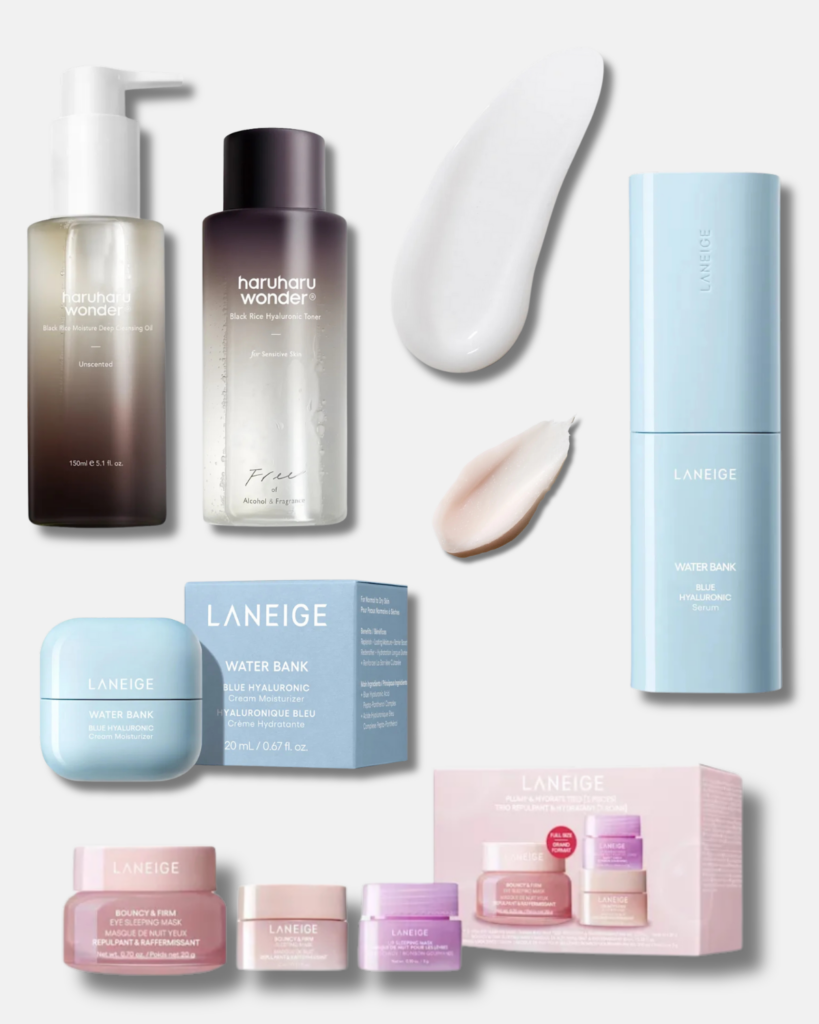
Laneige Bouncy and Firm Sleep Mask – ChatGPT said this would hydrate my skin overnight and help with that dull, tired look. It was on sale as a trio set, so I also got…
Laneige Lip Sleeping Mask and Laneige Eye Mask – The lip mask had thousands of five-star reviews, which felt like a good sign. Turns out everyone on the internet was right about this one.
Laneige Water Bank Blue Hyaluronic Serum – This was supposed to be my hydration hero. ChatGPT explained that hyaluronic acid holds like 1000 times its weight in water, which sounded both impressive and slightly magical.
Laneige Water Bank Cream Moisturizer – A lightweight but nourishing moisturizer that wouldn't aggravate my sensitive skin. Perfect for someone who'd historically avoided anything that felt too heavy.
Haruharu Wonder Black Rice Hyaluronic Toner – I'd honestly never used toner before. I thought it was one of those optional extras that beauty influencers made up. ChatGPT assured me it wasn't, and that it would help balance my skin and prep it for all the other products.
Haruharu Wonder Black Rice Cleansing Oil – This one broke my brain a bit. Washing your face with oil? When you're trying to remove oil? Make it make sense. But ChatGPT explained the whole “oil dissolves oil” science thing, and I decided to trust the process.
When the boxes arrived, I felt like a kid on Christmas morning. Except instead of toys, I was excited about… face cream. What has my life become?
Following the AI's Instructions (Sort Of)
ChatGPT had given me a whole routine to follow, morning and evening. It looked something like this:
Evening:
- Cleansing oil to remove makeup and sunscreen
- Second cleanse (apparently this is a thing? I'm not sure, I typically only do it once)
- Toner
- Serum
- Moisturiser
Every few days I can use the eye mask and sleep mask instead of the moisturiser.
Morning: A slightly simpler version without the double cleanse and sleep mask.
I'll be honest, some nights I did the full routine and felt very fancy and grown-up. Other nights I was tired and just did the basics. And you know what? That's okay. ChatGPT might be an AI, but even it can't account for human exhaustion.
The Products That Actually Delivered
A few months into my AI-guided skincare experiment, I'd finished some of the products. And here's the real test: what did I immediately reorder?
The Laneige Sleep Mask was an instant repurchase (also because I'd only bought a sample size in the first place, which had lasted weeks). I wake up with genuinely plumper, more hydrated skin. It's like giving your face a massive glass of water while you sleep. My skin drinks it up and says “thank you, more please.”
The Water Bank Cream also made the cut. It's the perfect texture, rich enough to feel nourishing but light enough that it doesn't sit on top of your skin or aggravate my eczema-prone areas.
I also added some new bits to my routine:
Laneige Lip Glowy Balm – The daytime version of the lip sleeping mask. Perfect for keeping your lips soft without looking too shiny.
Bouncy and Firm Lip Treatment – Apparently I'm now someone who owns multiple lip products. Past me would be baffled. Present me has very soft lips and no regrets.
The One Product ChatGPT Didn't Recommend (But Changed Everything)
Okay, so this isn't part of the AI experiment, but I have to tell you about it because it was genuinely life-changing.
A friend gave me a pot of Alpha-H Collagen Repair Cream to try on my stubborn eye eczema. I'd been battling this for TWO YEARS. Nothing worked; not steroid creams, not natural remedies, not cutting out dairy, not changing my entire pillowcase collection. Nothing.
I tried this cream on a particularly bad flare-up, fully expecting to wake up to the same dry, angry, flaky mess.
And I kid you not, it fixed two years of frustration in ONE NIGHT.
I stared at my face in the mirror the next morning like I'd witnessed a miracle. No flakes. No redness. No stinging. Just normal, calm, happy skin.
I nearly cried with relief.
It's not Korean skincare, and ChatGPT didn't recommend it, but it's staying in my routine forever. Sometimes the best discoveries are the unexpected ones.
What I'm Still Confused About
Even with ChatGPT's help, I don't have all the answers. There's still so much I don't understand.
Do I need an essence? I keep seeing people rave about essences online, but what's the difference between an essence and a serum? Are they the same thing with different marketing? Someone please explain.
Should I be using retinol? Everyone over 30 seems to swear by it, but I'm genuinely scared I'll use it wrong and wake up with my face burning off. That seems dramatic, but you hear stories.
What about vitamin C serums? AHAs? BHAs? There's a whole alphabet of skincare acids out there, and I don't know which ones I need or if I need any of them at all.
But here's what I've learned: you don't need to know everything to start. You can figure it out as you go.
The Unexpected Benefits of AI Skincare Advice
Here's what surprised me most about this whole experiment: ChatGPT actually gave me better advice than a lot of the beauty content I'd found online.
It wasn't trying to sell me anything. It wasn't sponsored by brands. It just looked at my concerns and suggested products that genuinely suited my needs. No clickbait. No “YOU NEED THIS £200 SERUM OR YOUR FACE WILL FALL OFF” fear-mongering.
Plus, I could ask follow-up questions without feeling foolish. “What's the difference between a serum and a moisturizer?” “Why do I need toner?” “Is it normal for cleansing oil to feel weird at first?” ChatGPT patiently explained everything without making me feel like I should have known this already.
It's like having a knowledgeable friend who doesn't judge you for being a complete beginner at 32.
My Skin Now vs. Two Months Ago
The difference is genuinely noticeable.
My skin looks brighter and more hydrated. That dull, tired look? Gone. The eczema on my eyelid is under control (thank you, miracle cream). And I actually have a routine now, something I stick to most days because it genuinely makes my skin feel better.
I've even had people comment that my skin looks good, which NEVER happened before.
And beyond the physical changes, there's something quite lovely about having this little ritual. Taking ten minutes before bed to properly care for my skin has become this peaceful moment that signals the end of the day. It's self-care that actually feels manageable and worthwhile.
If You're Tempted to Build Your Own ChatGPT Skincare Routine…
Here's my advice: just do it. Seriously.
Tell it your age, your skin concerns, your budget, and what you're hoping to achieve. Ask for product recommendations. Ask for explanations. Ask follow-up questions. The worst that happens is you learn something new.
A few things I'd suggest:
Start simple. You don't need to buy everything at once. Maybe start with a cleanser, moisturizer, and one treatment product. Build from there.
Do a bit of your own research too. ChatGPT is brilliant, but cross-reference the products it recommends. Read reviews. Check ingredients if you have sensitivities.
Give it time. Your skin won't transform overnight (except for miracle eczema cream, apparently). Give products at least a few weeks to show results.
Listen to your skin. If something stings, burns, or makes things worse, stop using it. AI is smart, but it doesn't know your skin like you do.
Be patient with yourself. You're learning. It's okay to feel confused or make mistakes. Nobody gets it perfect straight away.
The Bottom Line
I genuinely never thought I'd be the person writing about how ChatGPT sorted out my skincare. But here we are, and honestly? I'm so glad I tried it.
My skin is happier. I feel more confident. And I actually understand what half those bottles in my bathroom do now (okay, maybe a third, but it's progress).
There's no perfect time to start taking care of your skin. You're not “too late” because you didn't start in your teens or twenties. Your skin will respond to proper care whenever you begin.
And if you're feeling lost and overwhelmed like I was? Ask an AI. It sounds ridiculous, but it genuinely works.
Who knows, maybe in a few months I'll be asking ChatGPT to sort out my hair routine, my workout plan, and possibly my entire life. But for now, I'm just enjoying having skin that doesn't look perpetually exhausted.
And if that's not a win, I don't know what is.