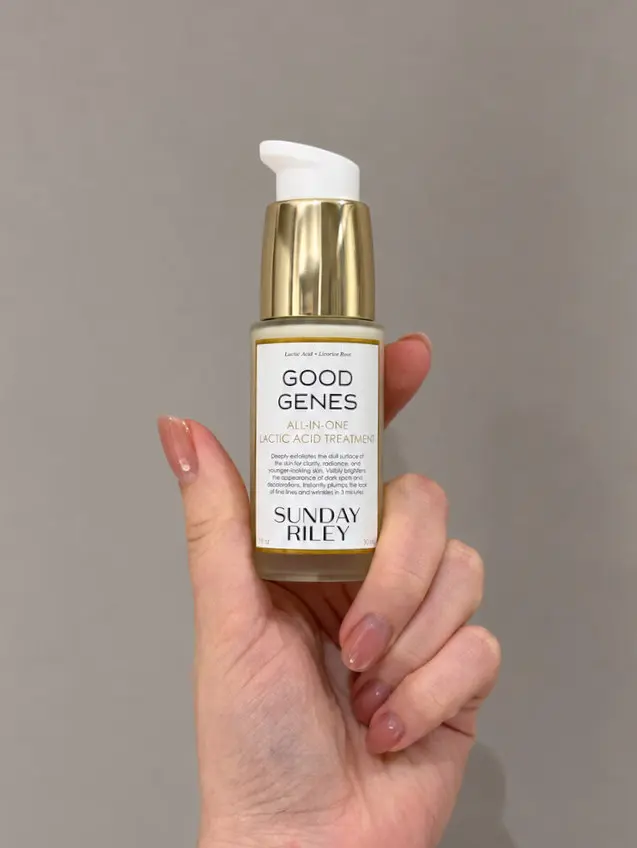
Sunday Riley Good Genes has a reputation. Ask anyone who’s been down a skincare rabbit hole and they’ll have an opinion on it, usually a strong one. It’s the little bottle people either swear by or regret buying.
So here’s my Sunday Riley Good Genes review, including the bit where I got it wrong the first time. I’ll tell you what happened, what I’d do differently, what other people say about it, and whether I think £70 for 30ml is a sensible thing to spend on your face.
Short version: it’s a good product that’s very easy to misuse, and the price makes that mistake sting a little more.
What Sunday Riley Good Genes actually is
The one I’m reviewing is the Good Genes Lactic Acid Treatment. Lactic acid is an AHA, which means it loosens the dead skin cells sitting on the surface so they can be sloughed away. Smoother texture, brighter looking skin, fewer rough patches. That’s the whole idea.
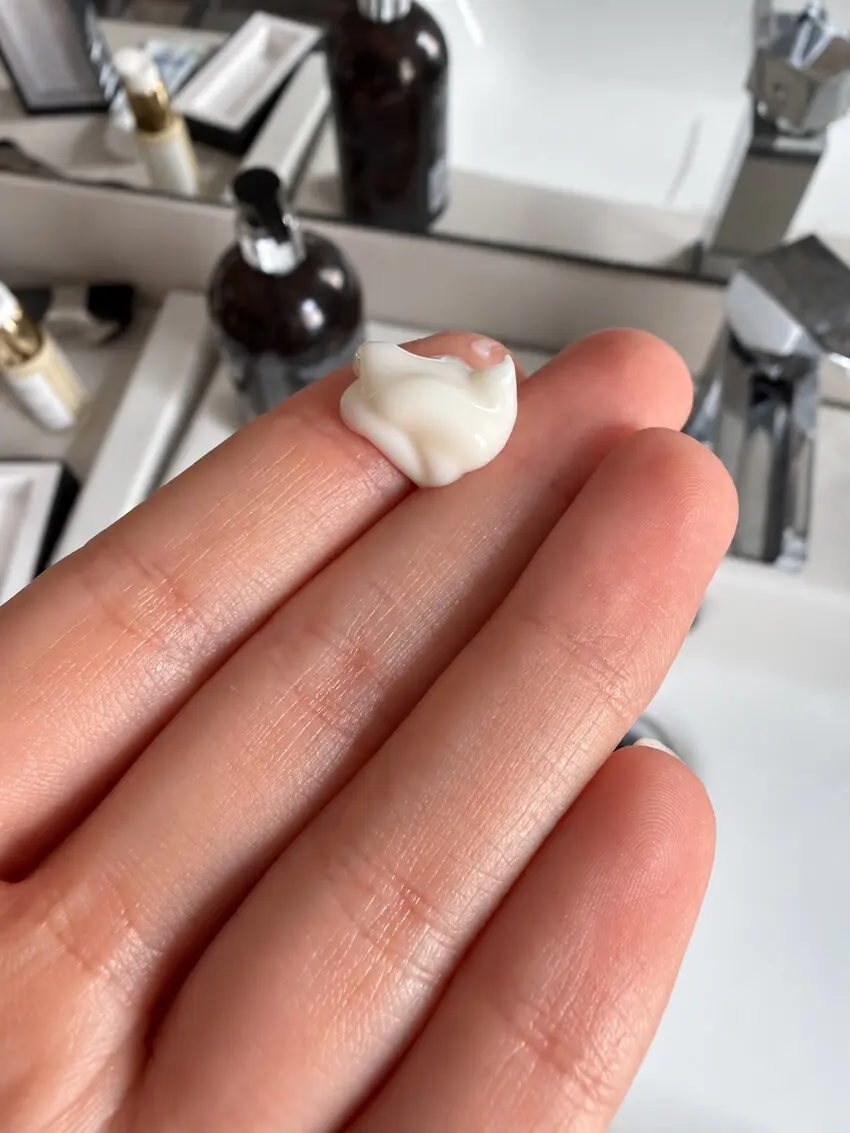
Where it differs from the thin, watery exfoliating toners most of us have tried is the texture. It’s creamy and lotion-like, somewhere between a serum and a light moisturiser, which is why it feels a bit more indulgent to use than a standard acid. The listing also mentions liquorice, lemongrass, arnica, prickly pear and aloe alongside the lactic acid.
It’s £70 for 30ml, or £100 for 50ml. The brand recommends one to two pumps on clean, dry skin, or a 15 minute rinse-off application if your skin is sensitive.
One thing worth knowing before you buy: Sunday Riley also sells a glycolic acid version of Good Genes. The two aren’t the same formula, and plenty of reviews online mix them up. Check that any review you’re reading is about the lactic one.
My first go, and what I got wrong
I’ll be honest, I did not use it properly the first time.
I used too much. My face felt greasy afterwards, and the product sort of piled up on my skin instead of sinking in. If you’ve ever had that bobbly, rolling-off-your-face thing happen with a skincare product, you’ll know exactly what I mean. It wasn’t a good look and it wasn’t a nice feeling.
The thing is, it’s a creamy product, so it’s easy to think you need a decent amount. You don’t. A small amount goes a long way, and a bigger amount just sits there. If yours piles up, the first thing to check is how much you’re pumping out.
It’s been better since. Once I used less, it absorbed the way it’s meant to, and I stopped having the greasy, piling problem. So if your first experience is similar, don’t write it off. Cut the amount right down before you decide it isn’t for you. Since then I haven’t had a problem with it, and I’ve actually really enjoyed it.
What I noticed
The morning glow is the first thing I noticed. My skin looks brighter when I wake up, which is exactly what so many reviewers talk about, so on that front it does what people say it does.
The second thing is the smell. There’s a strong lemon scent, much more than I expected from something that’s meant to be fragrance-free. I actually like it, but I can see why it divides people. If you’re sensitive to scent, don’t go in assuming it’ll be neutral.
The part I can’t get past is the price. I like the glow and I like the smell, but personally I can’t justify £70 for 30ml. It’s a nice product. It just isn’t one I’d pay full price for.


The label looks cheaper than the product feels
This is a small thing, but I can’t leave it out, because it’s the first thing I noticed.
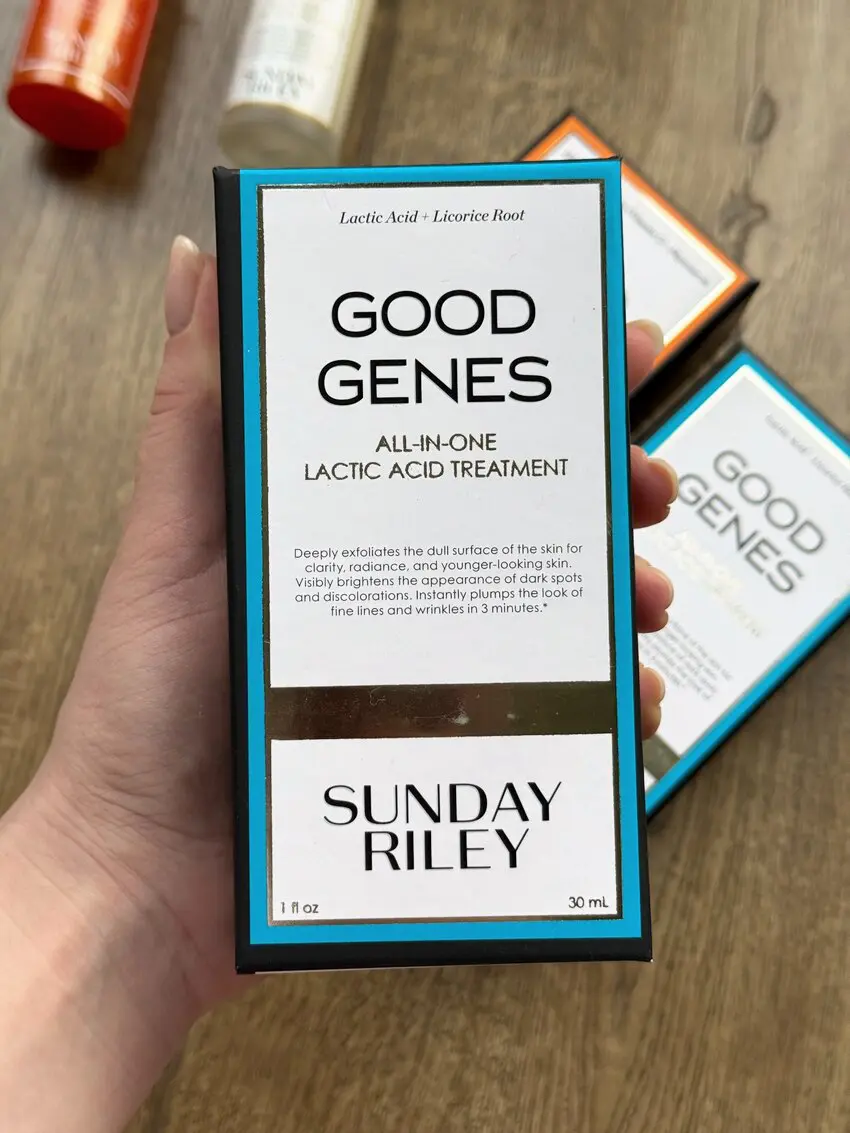
For £70 for the 30ml bottle, I expect the packaging to make me feel like I’ve bought something special. To me, the label design looks cheap, and on one my boxes it’s printed at such an angle that it must be a mis-print. It doesn’t feel cheap in the hand, and the product itself certainly doesn’t feel cheap on the skin. But the look of the label doesn’t match the price tag, and I think that’s a miss for a premium brand.
Does it change how well the product works? Of course not. But if you’re buying skincare partly because it looks beautiful on your shelf, which is half the fun of a luxury routine, this one isn’t going to win any design awards. I’d rather tell you that now than have you be surprised when it arrives.
What other people say about it
I’m one person with one face, so I looked at what a wider group of customers and reviewers say too. I’m describing general patterns here, and these are other people’s experiences, not mine. Worth knowing that recent UK reviews are positive but fairly few in number, so I also looked at international reviews that were clearly about the lactic version.
The most common praise is about texture. People describe skin that feels softer and smoother, with less roughness. Plenty of reviewers also mention waking up to brighter, fresher looking skin after using it in the evening. That glow is probably the thing it’s best known for.
Some people with sensitive skin say it feels hydrating for an exfoliant, which makes sense given the lotion texture. A few reviewers mention a more even looking complexion and lighter marks after blemishes, and some talk about fewer blackheads. These are personal accounts, not proof that it treats breakouts or clears stubborn pigmentation.
There’s also a good number of people who’ve repurchased it, some after trying cheaper products first, which is an excellent sign.
On the other side, the complaints cluster around a few things:
- The smell. This is the big one for the lactic version. Descriptions range from lemon to medicinal or chemical. Some people like it, some can’t stand it.
- Irritation. Mixed reports. Many people with sensitive skin find it comfortable, but others report redness or no benefit.
- A brief tingle. A few people mention a short sting when they first put it on. I personally didn’t feel anything.
- Not much extra. Some reviewers say it felt like an expensive light moisturiser and didn’t add anything beyond their existing routine.
- The price. Even fans grumble about it.
Is Sunday Riley Good Genes worth £70?
If you want a lactic acid exfoliant that feels nice to use and isn’t a thin, stripping liquid, it’s a lovely product. The creamy texture is a real selling point, and the results people describe, mainly smoother and brighter skin, are realistic and believable.
But you can get a lactic acid exfoliant for far less. If your skin already does well on a cheaper acid, you’re paying a premium for texture and brand, and you should know that going in.
I’d also take the brand’s claim about plumping lines within three minutes with a pinch of salt. That’s about how skin looks, not a lasting change to wrinkles. The most convincing feedback is about softness, smoothness and glow, so I’d buy it for those.
So who should buy it? Someone who enjoys the ritual of a premium step in their routine, whose skin tolerates acids, and who will actually use it properly. Who should skip it? Anyone with very reactive skin, anyone who dislikes scented skincare, anyone on a tight budget, and anyone who just wants the cheapest route to a smoother face.
If you do buy it, watch for sales, because plenty of reviewers say they only buy it on offer.
You can use code “GILLIAN15” for 15% off everything directly at Sunday Riley.
How to use it without repeating my mistake
Here’s what I’d do, now that I’ve been through the greasy phase so you don’t have to:
- Patch test first, somewhere small like your jawline.
- Use a small amount, and stick to the brand’s one to two pumps at most.
- Apply it to clean, dry skin and give it a minute to absorb before the next step.
- Start slowly. Once or twice a week is plenty to begin with.
- Wear sunscreen the next day, every time. AHAs make your skin more sun sensitive.
- If your skin stays irritated, stop. Pushing through for a result isn’t worth it.
Also, keep it away from other strong actives on the same night until you know how your skin behaves. If your skin is sensitive, the 15 minute rinse-off method is worth trying first.
One more honest downside
I’m not personally bothered by the scent, but I’ve seen so many people online who are. The ingredient list includes liquorice root and lemongras oil and wow you can smell it, even though the brand calls it fragrance-free. So “fragrance-free” shouldn’t be read as “odourless” here. If you’re sensitive to scent, or you just hate the smell of lemon skincare, this is worth thinking about before you spend £70.
Sunday Riley Good Genes questions
How often should I use Sunday Riley Good Genes?
Start with once or twice a week and see how your skin reacts. Some reviewers with sensitive skin report good results on a twice weekly routine, so there’s no rush to use it more.
Why did Good Genes pile up on my skin?
Almost always too much product. I had this exact problem on my first go. Use less, let it sink in, and give it a minute before the next step.
Is Sunday Riley Good Genes good for sensitive skin?
Mixed. Plenty of people with sensitive skin say it’s comfortable and hydrating, while others report redness or no benefit. The brand suggests a 15 minute rinse-off application for sensitive skin, so start there and patch test first.
Do I need sunscreen with Good Genes?
Yes. AHAs like lactic acid increase sun sensitivity, so a daily SPF the morning after is non-negotiable.
Does Good Genes smell bad?
It depends who you ask. The scent is the most divisive thing about the lactic version. Some people like the citrus smell, others find it medicinal. I’m not bothered by it.
Is there a cheaper alternative?
There are cheaper lactic acid exfoliants. They won’t have the same creamy texture, so whether that’s worth the difference is down to you.
My verdict on the £70 bottle
Use a lot less of it than I did on day one. That’s the main lesson. The label still annoys me a bit, but the product itself is the part that matters, and once I stopped overdoing it, it behaved. At £70 I’d wait for a sale, or you can use code “GILLIAN15” for 15% off.
If you’re curious, start with the 30ml, patch test, and go slowly. If you are looking for more skincare I’ve actually tried, head over to the beauty section of the blog.
Leave a Reply
If you like the sort of recommendation that still holds up six months later, leave your email below and I'll write to you on Sunday.
Most Sundays, once the house has gone quiet and it's edging towards nine, a letter goes out. It's the one I'd write to a friend with good taste and not nearly enough time: one thing worth reading, one thing worth buying, and one thing to skip. No noise, no pressure to spend, just the considered version of what I've actually been using, loving, or quietly sending back.