Is Reformer Pilates Worth It? My Honest Experience After 7 Months

I'll be upfront with you, I was absolutely terrified before my first reformer pilates class. The machine looks like something from a medieval torture chamber. And every Instagram post I'd seen featured impossibly graceful women in matching sets gliding effortlessly back and forth. That was not going to be me. But I booked a class anyway, and that was about seven months ago now.
I'll admit, I haven't been the most consistent with it. Life gets in the way, doesn't it? Some weeks I'd go twice, then I'd fall off for 3 weeks, then drag myself back feeling like I was starting from scratch. But something has shifted recently. I've committed to making it a proper part of my routine, and now that I've got enough sessions under my belt to have a real opinion, I wanted to share my honest experience.
If you've been hovering over the “book now” button at your local studio, or you've been quietly Googling “is reformer pilates worth it” at midnight (I was doing the same thing before I started), no judgment. I'm going to tell you everything I wish someone had told me before I began, the good, the humbling, and why I think this might be one of the best investments I've made in myself in a long time.
So, What Actually Is Reformer Pilates?
Let's start with the basics, because I had to ask too. Reformer pilates is a form of exercise performed on a machine called a reformer, a sliding carriage that moves along rails, with adjustable springs providing varying levels of resistance. Unlike mat pilates, which relies mostly on your bodyweight, the reformer adds resistance and support, which actually makes some movements more accessible while making others significantly more challenging.
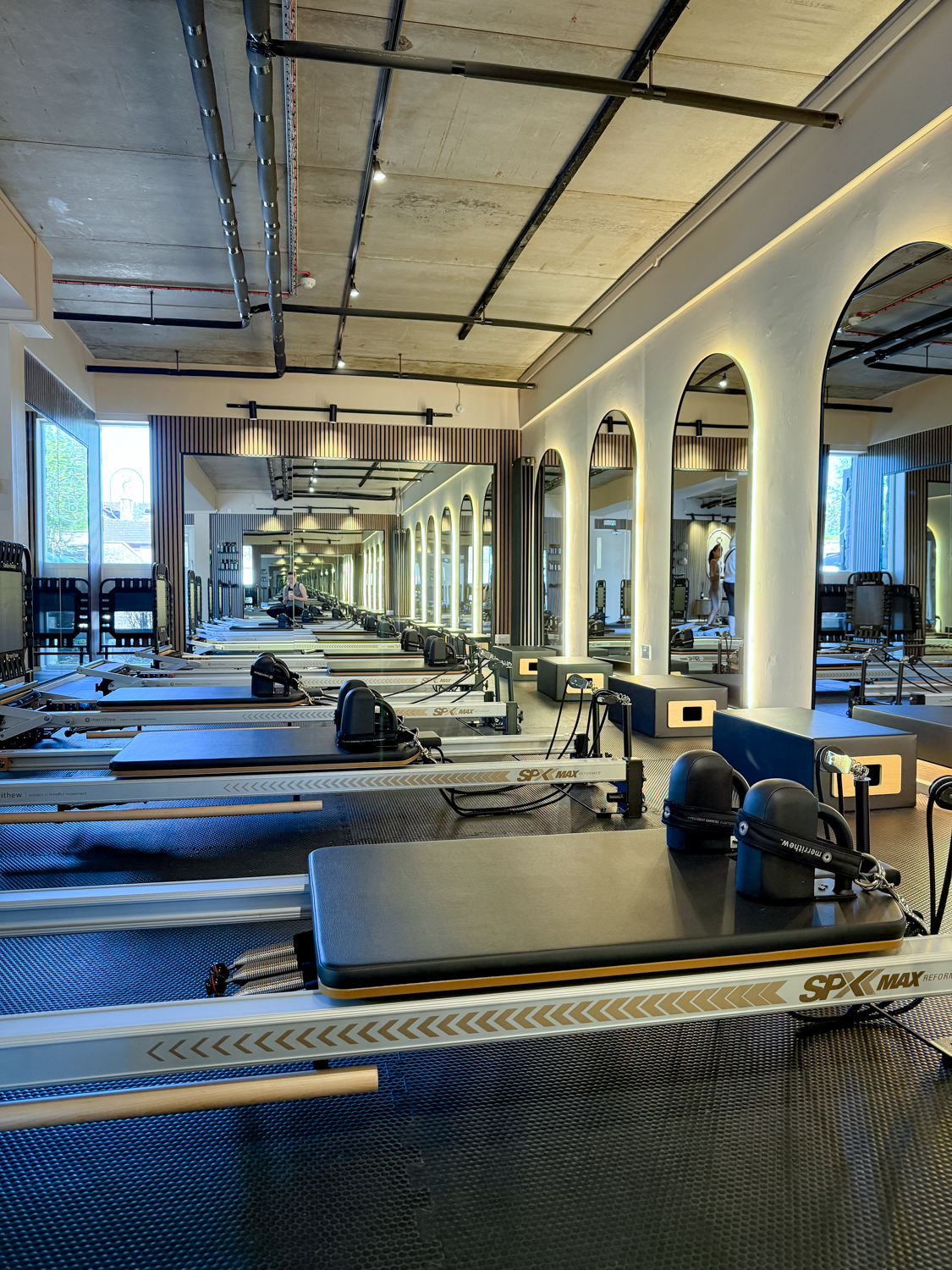
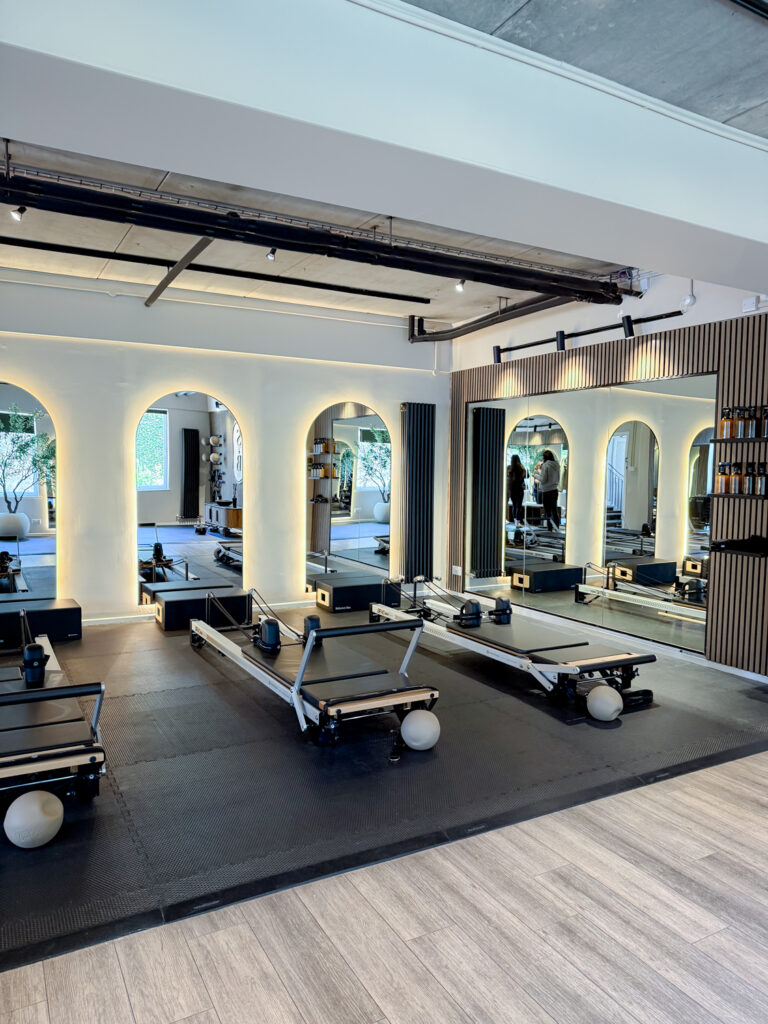
The machine itself consists of a flat cushioned platform (the carriage), a footbar at one end, straps and ropes at the other, and a set of colour-coded springs underneath that control how hard or easy each movement is. It sounds complicated written down, but once you're on it, it starts to make sense surprisingly quickly.
What makes reformer pilates different from other workouts is the emphasis on slow, controlled movement. There's no bouncing, no rushing, and absolutely no momentum. Every single movement is deliberate, and you'll feel muscles you genuinely didn't know existed. It's the kind of workout where you might look calm and composed on the outside, but your legs are trembling and your core is on fire. It's beautifully deceptive, and I mean that as a compliment.
Why I Decided to Try It
I'll be honest, I've never been a gym person (apart from a very brief stint in 2023). The thought of trudging to a weights section or pounding away on a treadmill has never appealed to me, and I'd pretty much resigned myself to the idea that exercise just wasn't really “my thing.” But as I've gotten older, I started to notice things. My posture was dreadful from working at a desk all day. My lower back was constantly achy. I felt stiff getting out of bed in the morning in a way that I definitely hadn't five years ago.
I'd seen reformer pilates cropping up everywhere; on social media, in magazines, in conversations with friends, and what kept catching my attention was how many people described it as transformative rather than punishing. It wasn't about getting drenched in sweat or pushing through pain. It was about strengthening from the inside out, improving flexibility, and actually feeling good in your body. That narrative really resonated with me.
There was also something about the aesthetic of it all that appealed, and I'm not ashamed to admit that. The studios are beautiful. The reformers look sleek and considered. Even the workout clothes associated with pilates tend to be more refined, think clean lines and muted tones rather than neon and mesh. For someone who blogs about everyday luxury and finding beauty in the details of daily life, reformer pilates just felt like it fitted.
What My First Class Was Actually Like
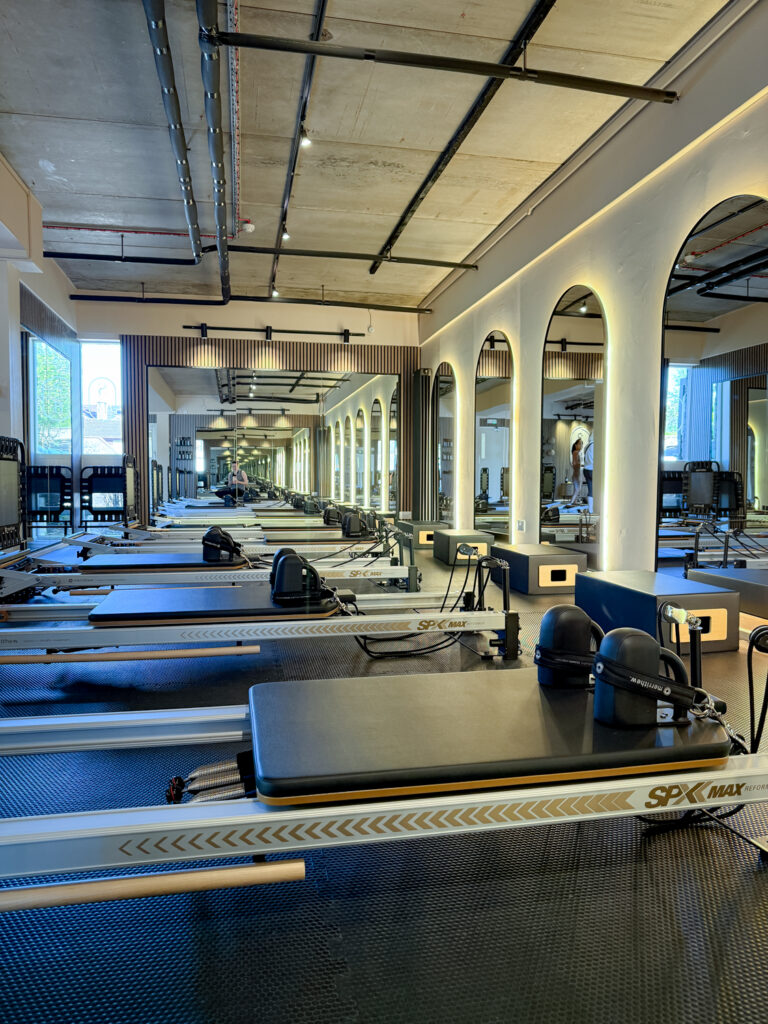
Let me paint you a picture. I arrived about fifteen minutes early, which I'd recommend to anyone who's new, partly to get your bearings without the pressure of everyone watching you work out where to put your bag. The studio itself was gorgeous, calm lighting, clean lines, and reformers lined up in neat rows. It immediately felt like a space I wanted to spend time in.
The instructor introduced herself and walked me through the basics of the machine before the class started, which took so much of the anxiety away. She showed me how the springs worked, how to adjust the footbar, and how to position myself on the carriage. It was a lot of information, but she made it clear that she'd be guiding us through everything and that I shouldn't worry about remembering it all.
The class itself was 50 minutes, and it went by in a blur. We started with footwork on the bar, basically pressing the carriage out and bringing it back in using different foot positions, which sounds simple but immediately gets your legs and core working. From there, we moved through arm work using the straps, core exercises, side-lying sequences, and stretches that had me making involuntary noises.
Was I graceful? Absolutely not. Was I sometimes a beat behind everyone else? Definitely. Did I have a moment where I couldn't work out which spring to use and had to sheepishly ask for help? I did. But here's the thing, nobody cared. Everyone was focused on their own practice, and the instructor was genuinely encouraging without being patronising.
The Benefits I've Noticed Over the Last Few Months
Now that I've been doing this for around seven months (admittedly with some gaps) I feel like I'm in a good position to talk about the benefits honestly, without the rose-tinted glasses of a brand new convert. These aren't things I noticed after one class. They've crept in gradually, and some of them have genuinely surprised me.
My posture has improved noticeably. I catch myself sitting up straighter at my desk without having to consciously think about it. The chronic lower back ache that I'd been living with for ages has reduced significantly, not disappeared entirely, but enough that I've actually noticed its absence, which says a lot. Interestingly, I notice it creeping back during the weeks I skip classes, which tells me the pilates is absolutely what's keeping it at bay.
I feel stronger in a way that's hard to articulate. It's not about visible muscle definition or anything dramatic. It's more that everyday movements feel easier. Carrying shopping bags, picking things up off the floor, even getting out of bed in the morning, there's a solidity to how I move now that wasn't there before. And on the weeks where I was more consistent, I could feel myself progressing in class, holding positions longer, managing heavier springs, moving with a bit more control. That progression is genuinely addictive, and it's one of the main reasons I've committed to being more regular with it.
The mental health benefits have been unexpected and wonderful. There's something about the concentration required during a reformer class, the focus on breath, alignment, and controlled movement, that forces you to be completely present. I can't think about my to-do list or stress about emails when I'm trying to maintain a plank on a moving carriage. It's become an hour where my brain genuinely switches off from everything else, and that feels like an absolute luxury.
I'm also sleeping better. I can't say with certainty that it's the pilates, but the correlation is there, and I'm not about to question it.
Is Reformer Pilates Worth the Money?
This is the big question, isn't it? Because let's not pretend reformer pilates is cheap. Depending on where you are in the UK, you're looking at anywhere from around £15 to £35 per class (my classes are £15-16 depending which one I do), sometimes more in London and larger cities. That's a significant investment, especially if you're going regularly.
Here's my honest take on it. If you compare it purely to a gym membership on a cost-per-session basis, reformer pilates is more expensive. There's no getting around that. But I think that comparison misses the point slightly. A reformer class is a guided, instructor-led session with a small group, using specialist equipment. There are only 6 reformers in the studios I go to. You're paying for expertise, for correction, for someone to notice when your form is off and help you adjust. That level of attention and quality is what you're investing in, and for me, that changes the value equation entirely.
I also think there's something to be said for actually enjoying your exercise. I have tried and abandoned more exercise classes than I care to admit. With reformer pilates, even during my less consistent phases, I never once thought about quitting entirely. I always wanted to go back. I haven't had to drag myself to a single class, and when you actually want to show up, the cost per session starts to feel much more justified.
My advice would be to give it at least three or four classes before you make a decision. The first one is mostly about getting oriented, and it takes a couple of sessions before you start to feel the flow of it. If after a month you're not feeling it, that's completely fine. But if you are, you'll understand why people get so passionate about it.
What to Wear and Bring
This was something I obsessed over before my first class, so let me save you the spiral. Wear fitted clothing, leggings and a top that stays close to your body. Loose or baggy clothes can get caught in the reformer springs or bunch up when you're lying down, which is uncomfortable and distracting. You don't need anything fancy. A good pair of leggings and a fitted long-sleeve top or vest works perfectly.
Most studios will ask you to wear grip socks, those little socks with rubber dots on the soles. Some studios sell them, and some include them in your first class fee, so check in advance. They stop your feet from slipping on the footbar and the carriage, and once you've worn them, you'll understand why they're non-negotiable. I like the ones from alo.
Bring water, because you'll need it. Skip the heavy perfume or aftershave, because you'll be in close quarters with other people in a warm room. Tie your hair back properly, a loose ponytail will come undone the moment you lie on the headrest. And leave your ego at the door, because this workout will humble you in the best possible way.
Why I'm Finally Getting Consistent (and My Plans Going Forward)
Here's the thing I've learned about reformer pilates over the last seven months, consistency is everything. During the weeks I showed up regularly, I felt incredible. During the stretches where I let it slide, all those little benefits started to fade, and every time I went back, I felt like I was starting over. That cycle of stopping and starting was honestly more frustrating than just committing properly, which is exactly why I've drawn a line in the sand.
I'm now treating it as a non-negotiable part of my weekly routine, not something I'll fit in “if I have time.” And the difference even in the last few weeks of being consistent has been remarkable, I'm progressing faster, enjoying it more, and actually craving the sessions rather than having to convince myself to go.
Looking ahead, I'm already thinking about how to bring this into my life at home. My partner and I have been talking about converting our garage into a home gym later this year, and a reformer is absolutely on my wish list. The idea of being able to roll out of bed and onto a reformer without having to drive anywhere is incredibly appealing. And from a design perspective, creating a beautiful workout space at home is a project I'm genuinely excited about.
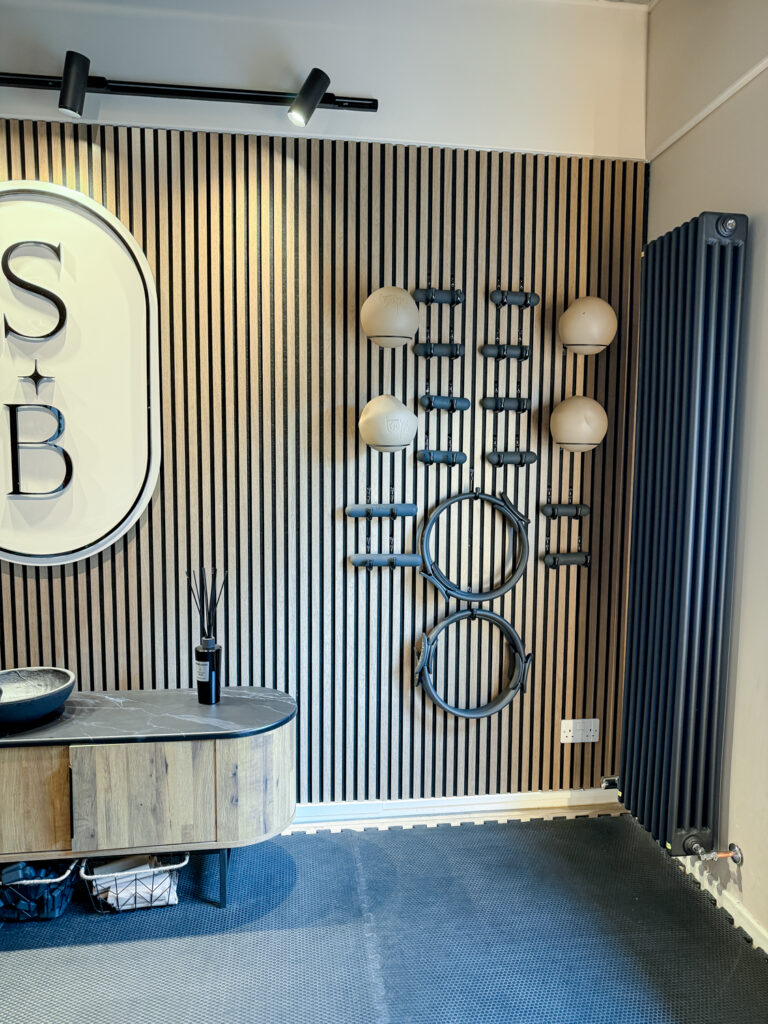
I'll definitely be sharing that journey here on the blog when it happens, because I think there's so much potential to create a space that's functional but also really considered and intentional. Think warm lighting, beautiful flooring, thoughtful storage. A room that makes you want to work out, not one that feels like a cold, clinical afterthought. It's everyday luxury applied to fitness, and I'm excited.
For now, though, if you've been on the fence about trying reformer pilates, I'd really encourage you to give it a go. It's one of those things where the anticipation is so much worse than the reality. You don't need to be flexible, you don't need to be fit, and you definitely don't need to have any idea what you're doing. You just need to show up, and the rest will follow.
I'd love to hear from you if you've tried reformer pilates, or if you're thinking about starting. Drop me a comment or come find me on Instagram, I'm always up for chatting about this stuff.