April 14, 2026
Small Garden Makeover on a Budget: How to Turn Bare Decking Into an Outdoor Living Room

I'm Gillian, a Scotland based home & lifestyle blogger. Follow along as I navigate this new journey sharing my life from home.


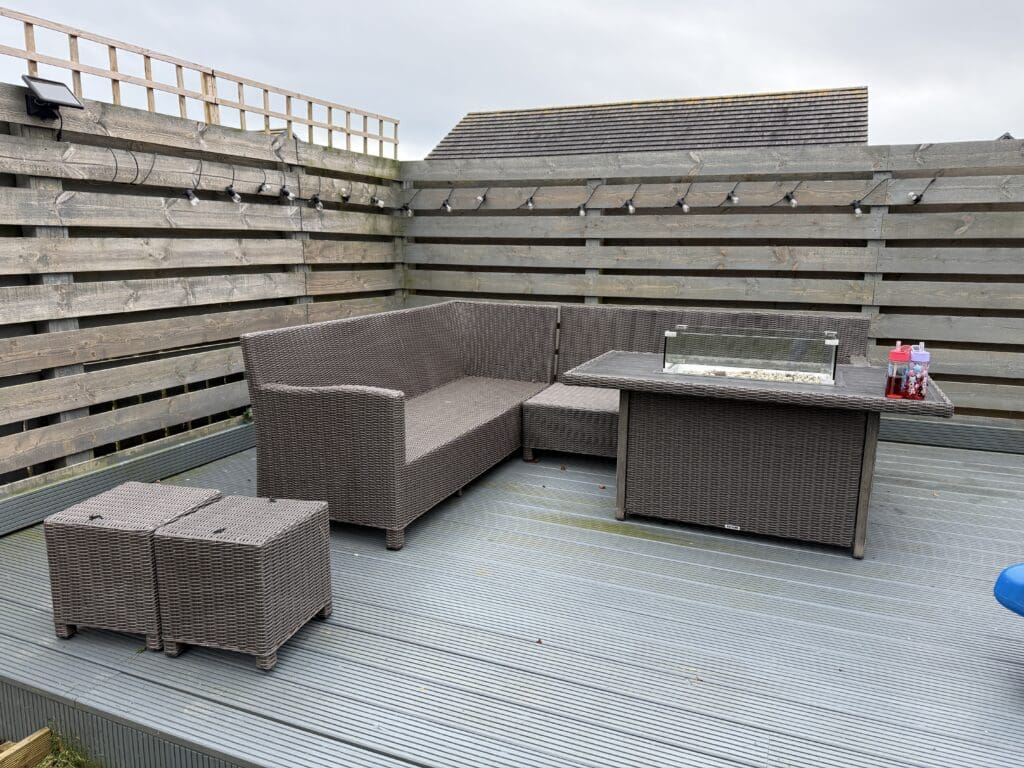
Four weeks ago, this garden was a write-off. Not in a dramatic, brambles-swallowing-the-shed kind of way, but in the quiet, creeping neglect that happens when you spend an entire Scottish winter pretending the back door doesn’t exist. Weeds had taken over the flower beds. The decking had nothing on it except a lonely rattan dining set and a vague sense of missed potential. The grass needed attention. Everything needed attention, frankly.
So when the first proper spring weekend arrived and the sun decided to show up (briefly, because Scotland), the whole garden got the treatment. Not just a quick tidy, but a proper four-week project to turn every corner of this outdoor space into somewhere that actually earns its keep.
Starting From the Ground Up
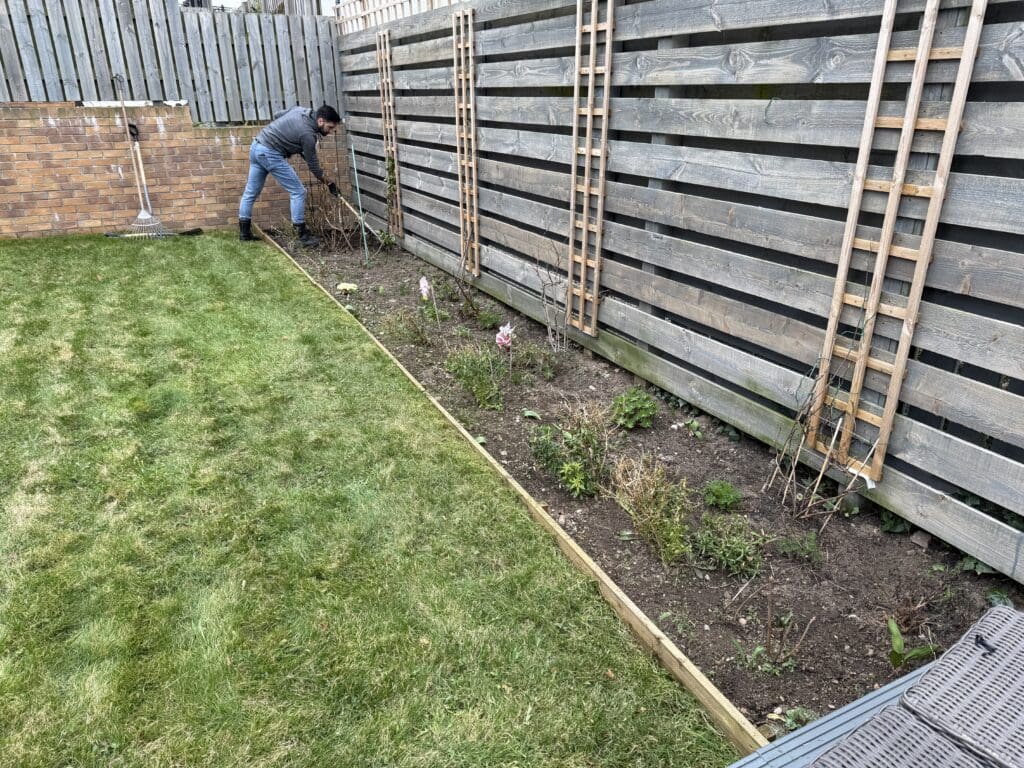
Before anything decorative happened on the deck, there were weeks of the decidedly unglamorous groundwork that nobody puts on Pinterest. Clearing out the flower beds came first, pulling up weeds that had settled in over winter like they owned the place and cutting everything back to give the plants underneath a fighting chance. It’s the kind of job you put off for months and then wonder why you waited, because it took one solid afternoon and the difference was immediate.
Next came the vegetable patch. Building raised beds along the side of the garden had been on the “we should really do that” list for about two years, and this was finally the spring it happened. They’re nothing fancy, just simple timber frames filled with good compost, but they’re in and they’re planted. If you look closely at the photos you can just about see the first seedlings starting to push through, which feels unreasonably exciting for what is essentially a row of very small green things in dirt.

Fruit trees went in around the same time. A raspberry bush in a large pot at the edge of the deck and a few other bits dotted around the garden that, with any luck, will actually produce something edible by summer. The strawberry planter is the one getting checked most obsessively. Every morning. Without fail.
The point of all this groundwork was that the garden needed to function as a whole space before any one part of it could feel finished. Styling a deck when the beds behind it are full of weeds is like arranging cushions on a sofa in a room you haven’t hoovered. The foundation matters, and getting it right made everything that came after feel intentional rather than cosmetic.

Then Came the Deck
With the beds cleared, the veg patch built, and the fruit trees settled, attention finally turned to the decking. And this is where the real transformation happened, because the deck went from “a platform with some furniture on it” to something that genuinely feels like an extra room.
The shift that changed everything was treating the outdoor space like an actual living room. Not a garden with furniture in it, but a room with purpose, zones, and personality. Think about how you’d approach a blank living room. You wouldn’t just drop a sofa in the middle and call it done. You’d add a rug to anchor the space. Think about lighting. Layer textures and create little moments, a reading corner here, a coffee table arrangement there, that make the room feel considered rather than just furnished.
Gardens deserve exactly the same thinking, and yet most of us treat our outdoor space as an afterthought. A table gets plonked on the patio, a couple of chairs appear from the garage, and that’s it until October.

Zones, Not a Shopping List
The single most useful thing you can do before spending a penny on the deck is stand in your garden and decide what you actually want to do out there. For me, that came down to three things: somewhere comfortable to eat, somewhere relaxed to lounge with a drink, and enough flexibility to rearrange when the pizza oven comes out.
The dining zone already existed. That rattan corner sofa set with the fire pit table was one piece worth keeping, and honestly, once everything else came together around it, it looked ten times better than it had sitting out there on its own. Context matters more than the furniture itself.
The lounging zone was the biggest change. Adding a pair of rocking chairs with deep padded cushions gave the deck a second seating area that feels completely different from the dining set. Lower, more relaxed, the kind of seats you sink into with a book or a glass of wine rather than sitting upright at a table. Between them, a slim glass-topped side table holds drinks without taking up floor space, and a tall rattan solar lantern adds warmth once the sun dips. It’s a tiny footprint, but it created a whole new reason to be outside.

The beauty of keeping the lounging furniture lightweight is that everything can be shifted around easily. When we get the pizza oven fired up for a proper pizza night, the rocking chairs slide back to open up the space, and the whole deck reconfigures into an outdoor kitchen setup. Furniture that moves with how you actually live rather than dictating where you sit is always worth choosing, especially in a smaller garden where every square metre has to work hard.
The Rug That Changed Everything
If you take one thing from this post, let it be this: buy an outdoor rug. Nothing, and I mean nothing, transforms a hard deck or patio faster than a large rug anchoring the furniture.
Before the rug went down, the decking felt like exactly what it was, a flat platform bolted up in the garden. The moment a big navy geometric rug covered the centre of the space, it became a room. Suddenly there were boundaries, texture, and visual warmth underfoot. The furniture had something to sit on rather than just in front of. The whole deck felt pulled together in a way that no amount of rearranging chairs could have achieved.

Outdoor rugs are one of those things that sound unnecessary until you’ve lived with one. They’re flatweave, weather-resistant, and easy to hose down, so they’re genuinely practical rather than just decorative. And at a fraction of the price of an indoor rug, they’re one of the best value upgrades you can make to any outdoor space. If you’re browsing garden décor ideas, an outdoor rug should be at the very top of your list.
Layer Your Lighting
Good lighting is the difference between a garden you use until 7pm and a garden you use until midnight. And it doesn’t need to involve a single electrician.
Solar is your best friend here. The tall rattan solar lantern between the rocking chairs charges all day and gives off a beautiful warm glow once it gets dark. No cables, no batteries, no faffing. Just put it somewhere sunny and forget about it. Paired with a set of smaller wire lanterns with LED pillar candles tucked beside the sofa, there’s now enough ambient light to keep the whole space usable well into the evening.

String lights strung along the fence panels finish the job. They’ve been there for a couple of years now and still feel like the best twenty quid ever spent. The combination of overhead festoons, decking spotlights, mid-height solar lanterns, and low-level LED candles creates layers of light at different heights, which is exactly the same principle that makes a well-lit living room feel so inviting.
Work With What You Already Have
One of the biggest myths about garden makeovers is that you need to start from scratch. You really don’t. Half of what made this transformation work was reframing pieces that were already there.
The rattan sofa set looked lost and underwhelming when it was the only thing on the deck. Surrounded by a rug, lanterns, and a second seating area, it suddenly makes sense as part of a bigger picture. The blue ceramic pot that’s been kicking around for years got repositioned to the corner of the deck where it adds a pop of colour against the grey fencing. Even the kids’ playhouse tucked down the side of the garden became a backdrop rather than an eyesore once the foreground had some personality.
The lesson is that most gardens don’t need everything replacing. They need editing. Move things around, remove whatever isn’t earning its place, and add just enough new pieces to fill the gaps. It’s the same declutter-then-elevate approach that works in every room of the house.

Small Touches, Big Impact
Once the bones of the space are sorted, it’s the smaller details that take things from “nice garden” to “actual outdoor living room.”
Cushion coordination was the easiest win. Keeping everything in the same grey and navy palette across both seating areas ties the whole deck together visually, even though the furniture styles are quite different. You don’t need matching sets. You just need a colour story.
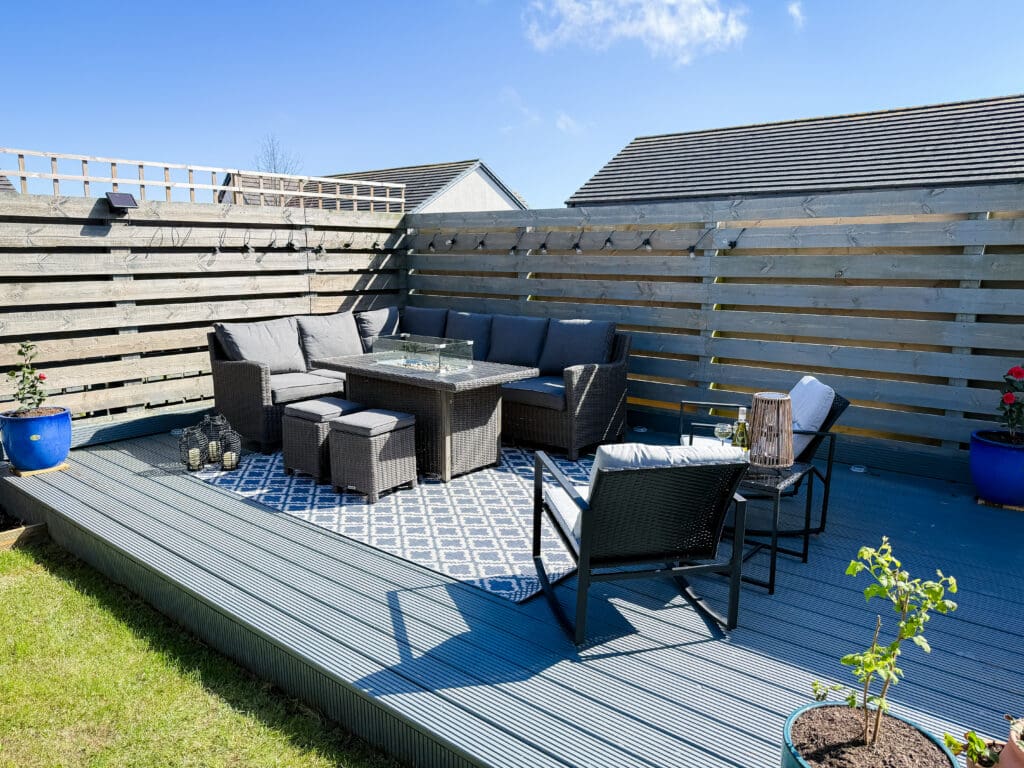
Fresh plants bring everything to life. We added camellia in the pots against the fence and it’s producing the most gorgeous deep pink blooms. Combined with the new strawberry planter and the raspberry bush at the edge of the deck, there’s enough greenery to soften all that grey timber and composite without the maintenance of actual beds or borders.
And something to actually drink from. This sounds ridiculous, but styling the space with proper wine glasses rather than plastic tumblers changed how it felt to sit out there. Everyday luxury doesn’t have to mean expensive. It just means treating your Tuesday evening glass of wine like it matters, even if you’re drinking it on a deck in Scotland while the sun disappears behind the neighbour’s roof.
How to Plan a Budget Garden Makeover (Without It Feeling Budget)
The whole point of this makeover was proving that you don’t need a landscaper or a four-figure budget to create an outdoor space that feels special. Here’s what actually matters when you’re working within a budget:
Prioritise the pieces you’ll touch. The rug goes underfoot and the chairs are where you sit, so those are worth getting right. Nobody’s going to notice whether your fence panels are stained or weathered if the space in front of them looks considered and inviting.
Mix price points freely. Rattan dining sets and rocking chairs from somewhere like Very sit happily alongside a terracotta strawberry pot from the local garden centre and festoon lights from Costco. When the overall look is cohesive, nobody can tell (or cares) which piece cost what. Good garden furniture doesn’t have to mean the most expensive option; it means the right option for the space you’re working with.
Buy once, buy well for the anchors. The rug, the main seating, and the lighting are the three things that define the space. Everything else can be swapped, moved, or added over time.
Don’t underestimate rearranging. Before adding anything new, try moving what you have. Pulling the dining set into the corner rather than centring it on the deck freed up the entire second half for the lounging zone. That one spatial decision unlocked the whole layout and it cost precisely nothing.
Think about how the space will flex. A garden that only works one way is a garden you’ll get bored of. Choosing furniture that’s easy to rearrange means the same deck can be a lounge on a quiet weeknight, a pizza night setup at the weekend, and a full entertaining space when people come over.
The Before and After (Honestly)
Looking at the before photo now, it’s hard to believe it’s the same deck. Same boards, same fence, same footprint. The only structural change was adding a few pieces of furniture, a rug, some lanterns, and a handful of plants. Everything else was rearranging, restyling, and rethinking.
Four weeks of work across the whole garden, from weeding beds to building veg patches to styling the deck, and the entire space finally feels like it belongs to us rather than just sitting there. A garden makeover on a budget isn’t about compromise or “making do.” It’s about being intentional with every decision, exactly the way you’d approach any room inside.
Now if you’ll excuse me, there’s a bottle of white wine with my name on it and two rocking chairs that aren’t going to sit in themselves.

This post is in collaboration with Very.co.uk. All opinions, styling choices, and questionable wine consumption are entirely my own.
Leave a Reply
If you like the sort of recommendation that still holds up six months later, leave your email below and I'll write to you on Sunday.
Most Sundays, once the house has gone quiet and it's edging towards nine, a letter goes out. It's the one I'd write to a friend with good taste and not nearly enough time: one thing worth reading, one thing worth buying, and one thing to skip. No noise, no pressure to spend, just the considered version of what I've actually been using, loving, or quietly sending back.