There is a particular kind of tiredness that arrives at the end of a long winter, and it has very little to do with sleep. It is the quiet realisation, somewhere around the middle of March, that the same three jumpers have been on heavy rotation since November, that the coat hanging by the door has become invisible to me, and that nothing in the wardrobe quite matches the version of myself I would like to start the new season as.
Spring asks something of us. Not a full reinvention, because that rarely lasts past April, and not a haul, because most of those purchases never get worn the way we imagined when we clicked. What spring asks for, I think, is one good decision. One piece, chosen carefully, that quietly shifts the way the rest of the wardrobe works.
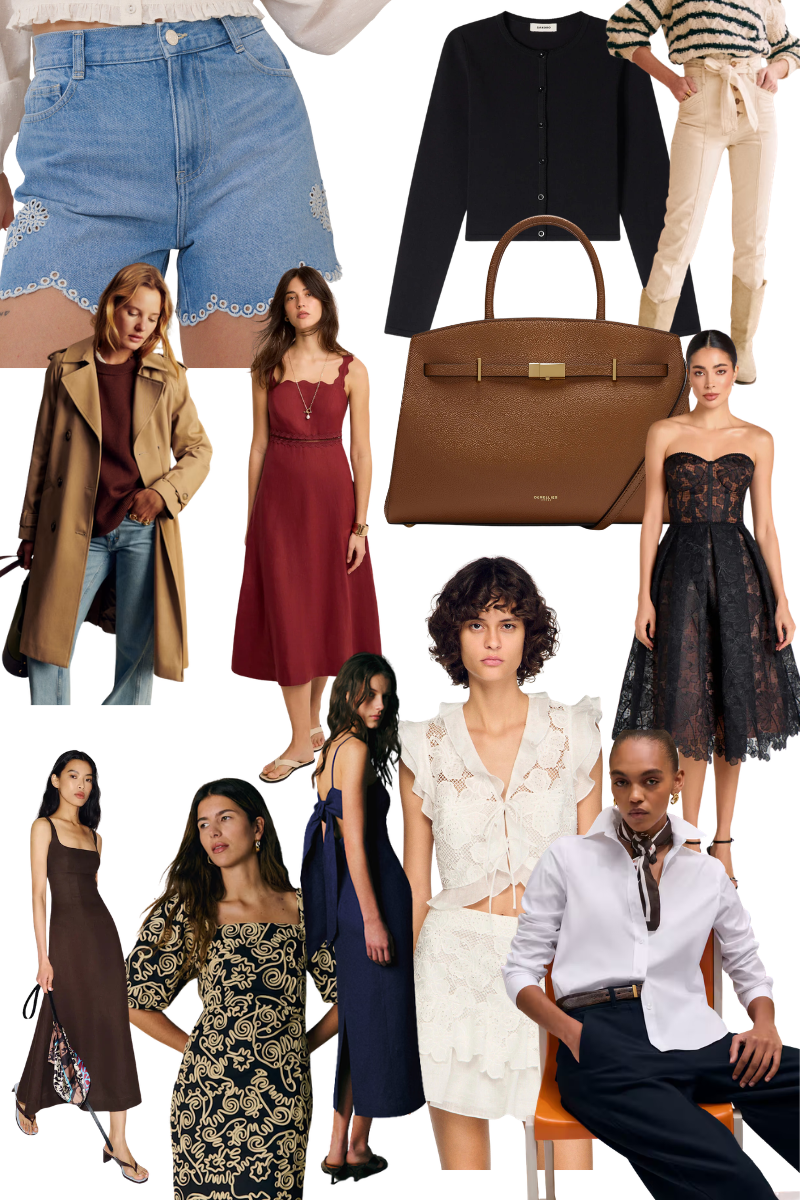
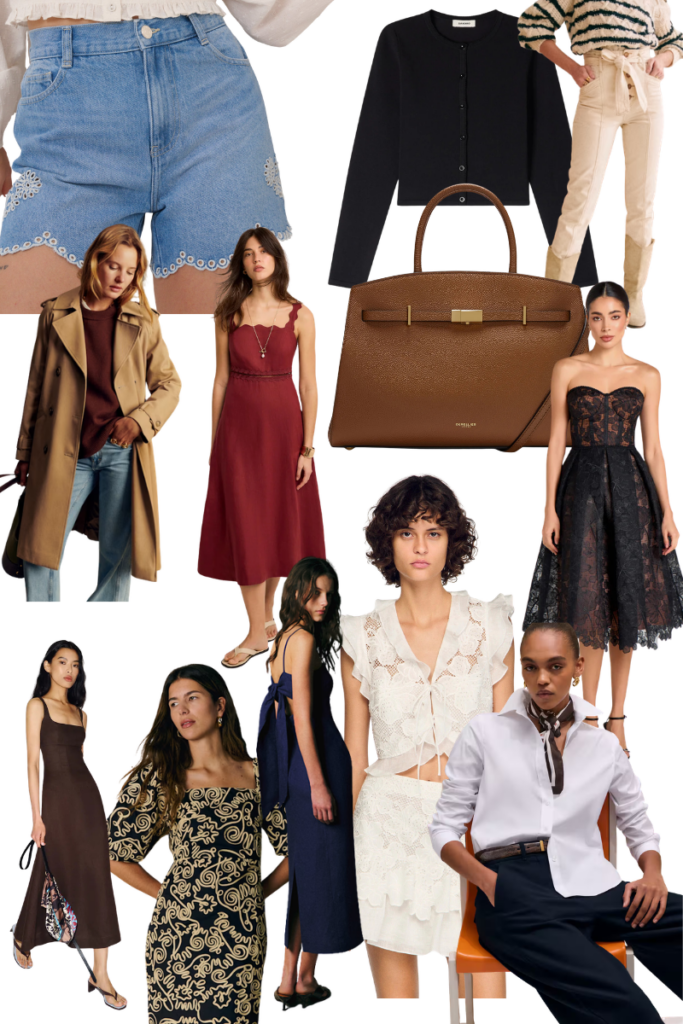
This is an edit of twelve pieces I have been thinking about for the season ahead. None of them are impulse buys. All of them sit in the mid to upper end of the price register, between roughly £100 and £400, and each one has earned its place here on the basis of fabric, longevity, or the kind of design detail that justifies the spend. The point of the post is not that anyone should buy twelve things. It is that there might be one piece in this list worth bringing into your wardrobe this spring, and the rest is here as company for it.
The thinking behind the edit
Before getting into the pieces themselves, a word on how they were chosen, because every spring round-up online seems to operate on slightly different rules.
The first filter was material. Anything in here that calls itself linen is genuine linen, anything labelled cotton is properly woven, and the knits are weighted enough to hold their shape past May. The fast-fashion habit of polyester masquerading as something more elevated has made me increasingly suspicious of garments that look beautiful in photographs but fall apart by the second wash. A spring wardrobe investment piece needs to survive the season it was bought for, and several after.
The second filter was cost-per-wear. A £280 dress that genuinely gets worn forty times across two summers costs less than a £60 dress worn three times before it pills, sags, or bores you. Almost every piece in this edit was chosen with that maths in mind, and the prose alongside each one tries to be honest about which scenarios will earn the trousers, the trench, the bag, their cost.
The third filter was harder to articulate, and it might be the most important one. Each piece needed to feel like an extension of the wardrobe I already have, not a departure from it. Investment dressing is rarely about reinvention. It is about quietly upgrading the things you already reach for, replacing a tired version of something with a better one, and finding pieces that work hard in conjunction with what you own rather than competing with it.
The pieces are loosely grouped into three categories below. The ones for everyday, the ones for the diary, and the ones that pull a wardrobe together.
The ones for everyday
These are the pieces that earn their cost-per-wear quickly because they slot into ordinary life. School pickups, work-from-home days, weekend lunches, the slow drift through April when the weather cannot decide what it wants to be.
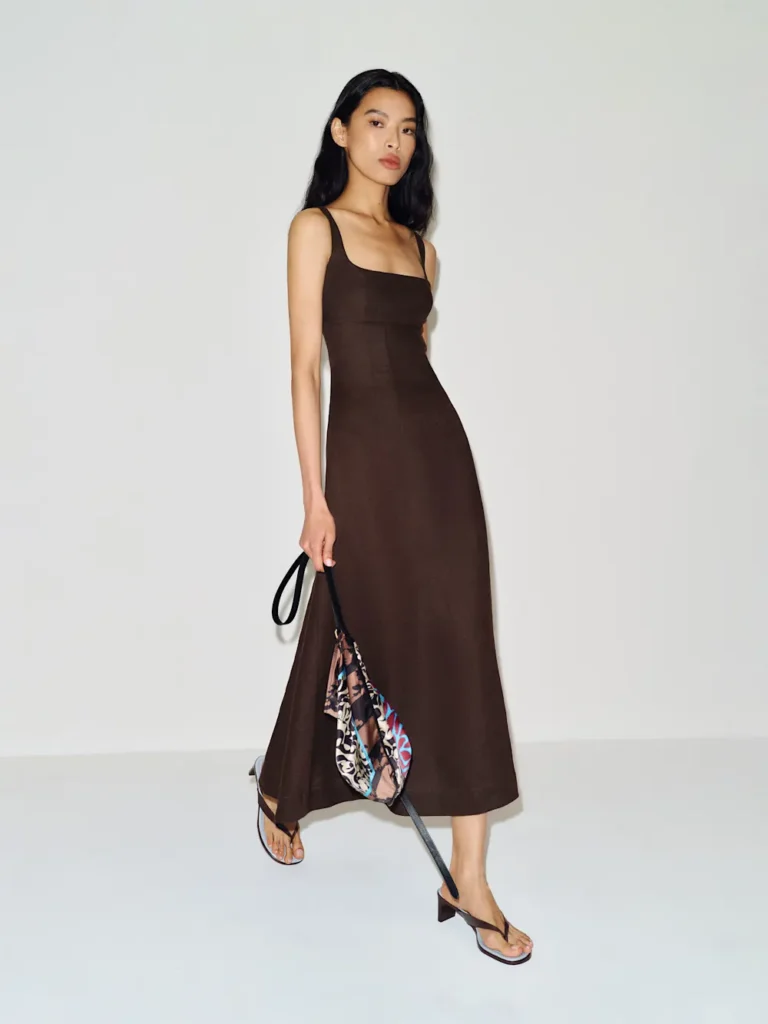
Reformation Sabine Linen Dress
The Sabine is the kind of dress that solves a recurring problem rather than creating a new one. Properly woven linen, a silhouette that flatters without clinging, and a length that works with both flat sandals and a pair of low boots while the mornings are still cool. Cost-per-wear on a piece like this is genuinely impressive once you start counting summer weddings, holidays, garden parties and the warm Tuesday in August when nothing else feels right. The honest caveat is that linen creases, and anyone who needs their clothes to look pressed all day will find this frustrating. Anyone who has made peace with linen’s natural rumple, however, will reach for it constantly.
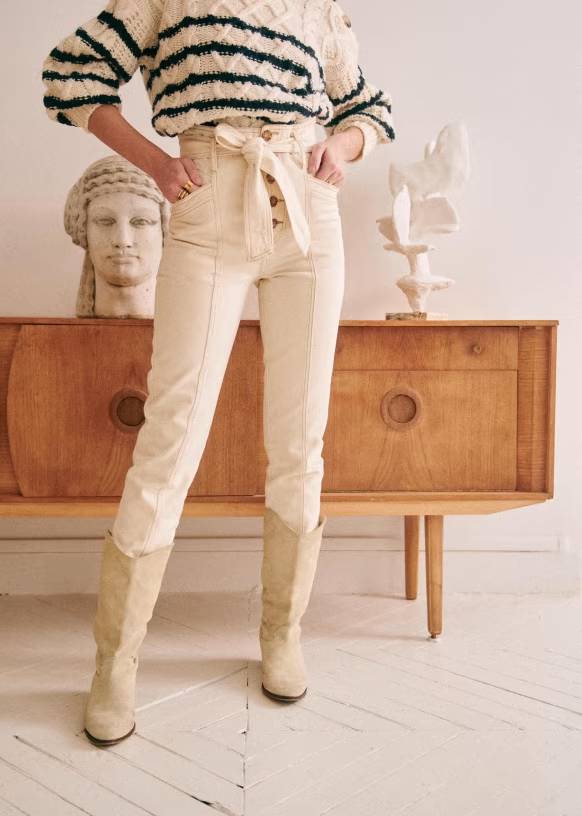
Sezane Maxime Trousers
A spring wardrobe without a really good pair of trousers will always feel slightly incomplete, and the Maxime is the pair I keep returning to as the answer. The cut is high-waisted and ankle-length with a paperbag tie at the waist, which means they balance the proportion of every shirt and knit you might tuck into them. The cotton is properly weighted so they hold their shape through a working day, and the ecru sits at the more useful end of neutral, warmer than ivory and softer than stone. Trousers are the most quietly transformative thing you can add to a wardrobe in your thirties, and a pair like these will outwork three pairs of jeans across the season. The honest note is that paperbag waists are not for everyone, and anyone who prefers a flat front will want to look at the Sezane Christiano cut instead.
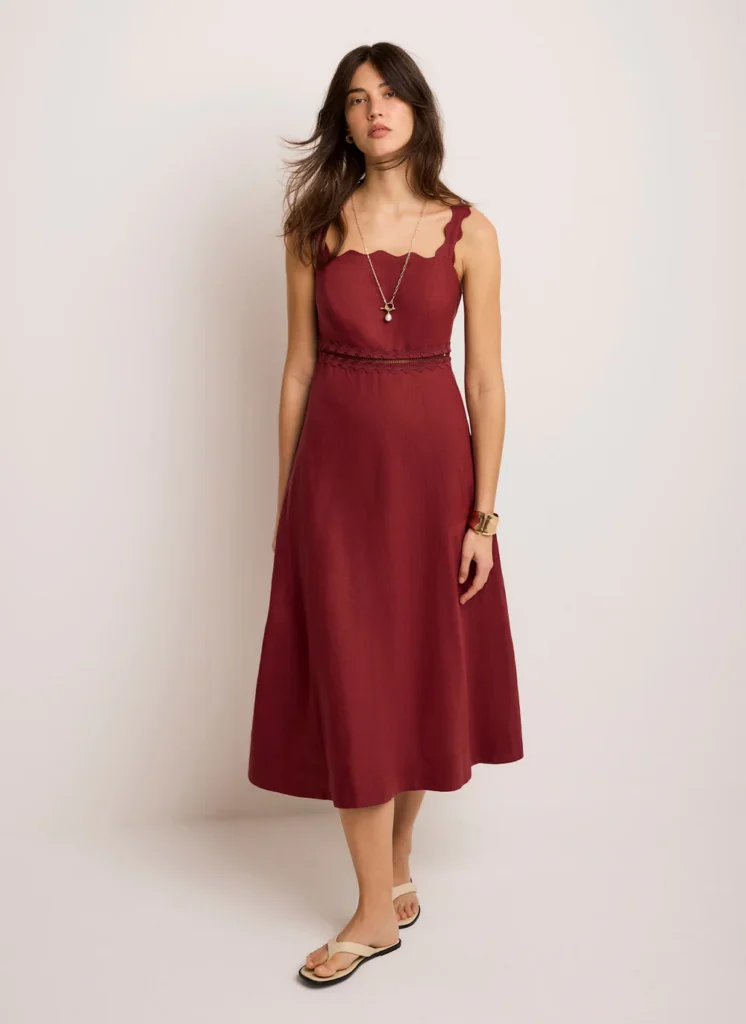
Mint Velvet Burgundy Linen Midi Dress
Including this one because not every spring investment needs to come from the French brands or the heavily-marketed direct-to-consumer labels. Mint Velvet quietly produces some of the most reliably good linen pieces on the British high street, and the burgundy here is a clever choice for spring because it bridges into autumn rather than peaking in July and then sitting unworn. Wear it now with a denim jacket and white trainers, in summer with bare legs and sandals, in early autumn with tights and ankle boots. That is the test of a real investment piece, and this one passes it. The price point is also more accessible than most of the list, which matters.
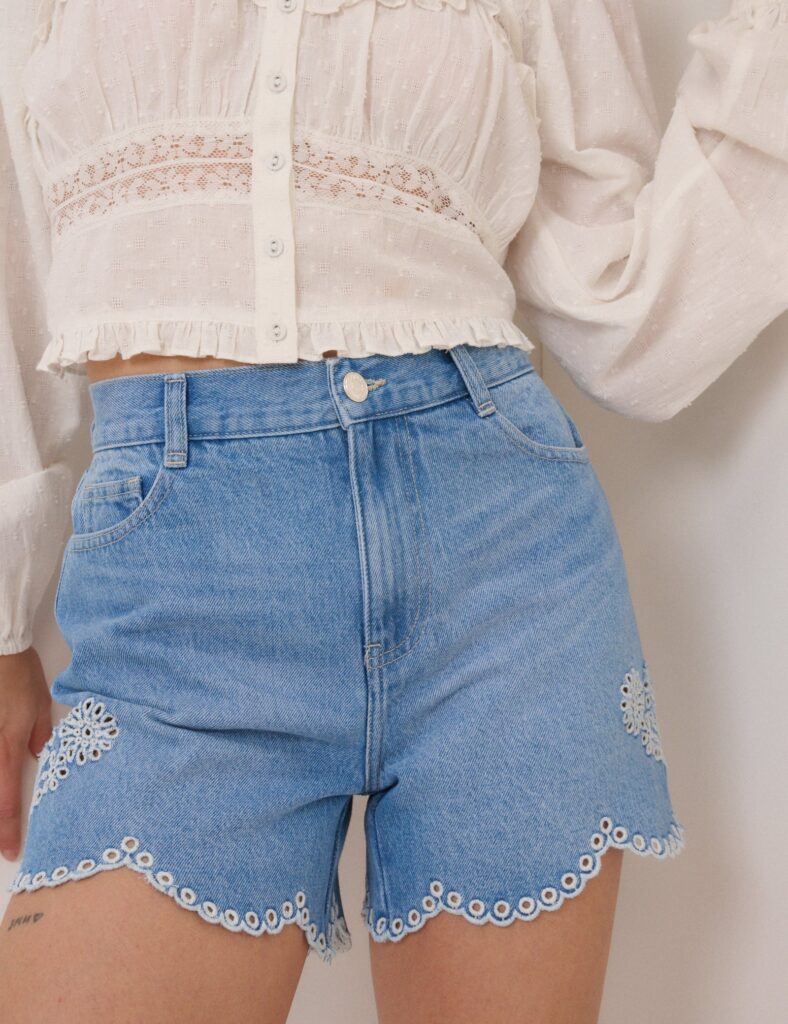
Nobody’s Child Roman Embroidered Shorts
A small confession before this one. Embroidered shorts are not, strictly speaking, an investment piece in the classical sense. They will not last twenty years. They are in the edit because the right pair of summer shorts, paired with a plain white shirt or a fine knit, becomes the easiest holiday outfit in the wardrobe and the one that travels through three or four seasons with very little effort. Nobody’s Child has quietly become reliable for this kind of detail, the embroidery is genuinely well-done rather than stuck-on, and the price point is sensible. They feel like an elevated alternative to a denim short without trying too hard, which is the part I keep coming back to. Wear them now with bare legs and a cardigan, in July with a linen shirt, on holiday over a swimsuit.
The ones for the diary
Every spring brings a small constellation of events. The wedding in June that needed planning back in February, the milestone birthday, the christening, the work dinner, the long lunch that needs an outfit slightly better than the one you wore last weekend. These are the three pieces I have been thinking about for those moments, and the case for each of them is essentially the same. Buy once, wear properly, and stop apologising about the cost-per-wear when an event piece is genuinely beautiful.
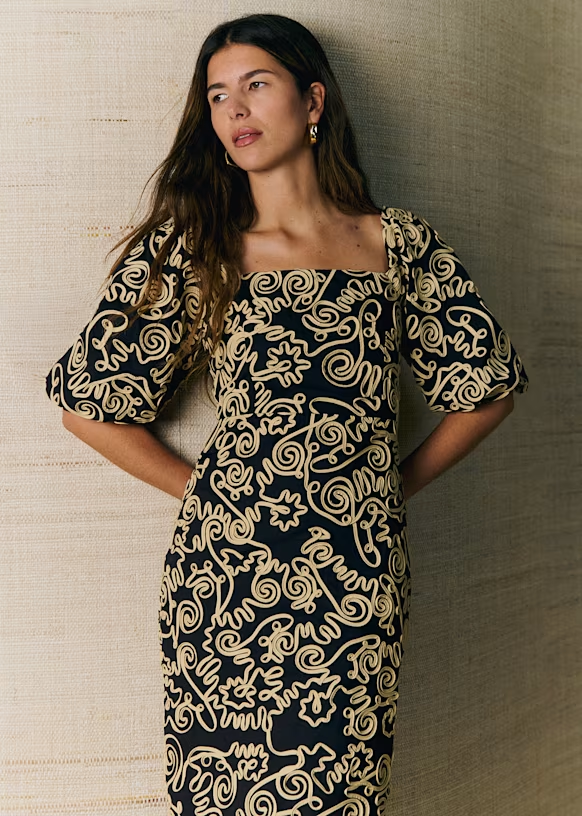
Sezane Myda Dress (Black with Cream Dori Embroidery)
Sezane have managed something quite difficult with the Myda, which is an event dress that does not look like an event dress at first glance. The embroidery is restrained, the silhouette is clean, and the black-and-cream palette means it can be styled formally with heels and a clutch or much more casually with flat sandals and a denim jacket. That dual function is the entire argument for spending properly on it. A dress that lives in two registers gets twice the wear. The honest caveat is that Sezane sizing runs slim through the bust, which is worth knowing before ordering.
Sezane Mylena Dress (Cobalt Blue)
The case for the Mylena is colour, and colour as an investment is something I have come around to slowly. There is a tendency, when buying carefully, to default to neutral. Black, cream, navy, taupe. The problem is that wardrobes built entirely on neutrals can quietly become invisible, and there comes a point in your thirties when blending in stops being the goal. Cobalt blue is a generous colour. It flatters most skin tones, photographs beautifully, and reads as confident rather than loud. This is the dress for the wedding where you do not want to disappear into the background, and it will outlast a dozen safer choices.
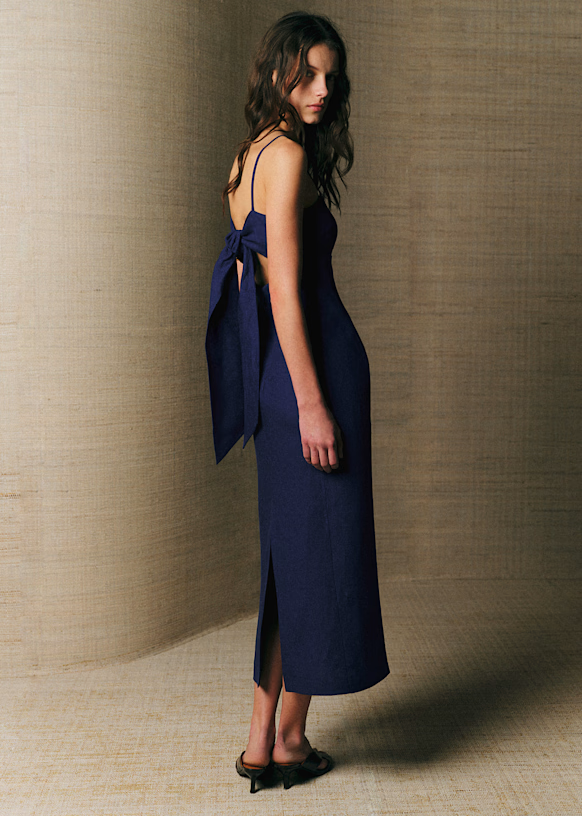
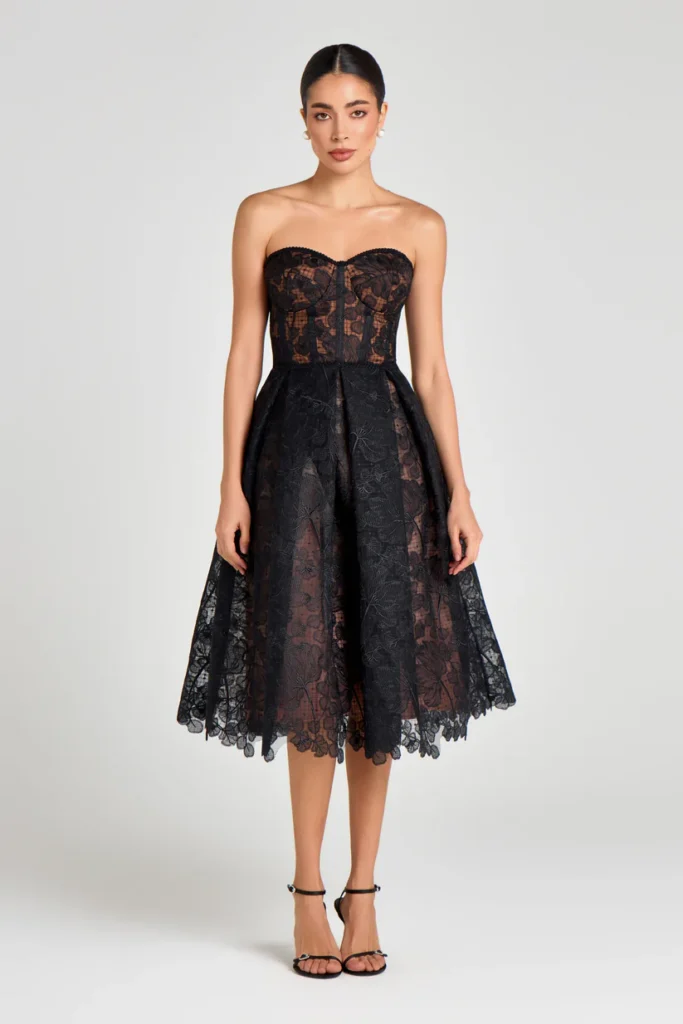
Nadine Merabi Olivia Dress
The most overtly statement piece in the edit, and the one that most needs the cost-per-wear logic to be honest. The Nadine Merabi Olivia dress is not an everyday piece, and pretending otherwise would be a disservice. What it is, however, is the answer to a particular kind of evening, the ones where the photographs end up framed and the dress gets remembered for years afterwards. If there is a thirtieth, a wedding where you are part of the close family, or a summer party that has been months in the planning, the cost-per-wear maths starts to make sense. If your year does not contain those evenings, this is not the piece for you, and the Olivia above will earn its place more comfortably. This is the one piece from this list that I have actually purchased this season for a wedding. I bought it in navy, and I can honestly say it’s worth every penny. (note: size up and have it tailored if you are larger than a D cup, the bust runs smaller than I expected)
The ones that pull a wardrobe together
These five pieces are the ones that change the shape of the wardrobe rather than adding to it. A trench that finishes everything, a white shirt that elevates a pair of jeans, a bag that quietly raises the register of every outfit it meets. Investment pieces in the strictest sense, because their value is measured by how much harder they make everything else in the wardrobe work.
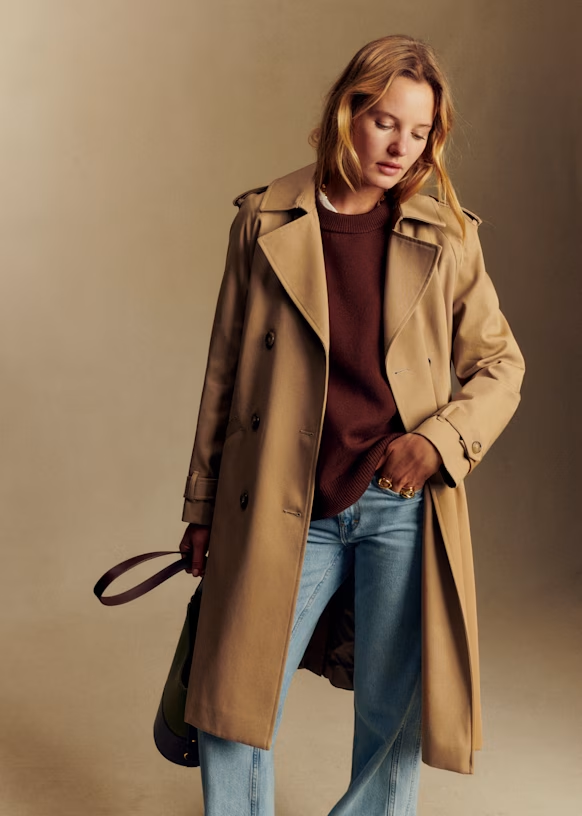
Sezane Scott Trench Coat
The trench is the single most useful coat I can imagine recommending for spring in this country. The Scott is Sezane’s iconic version, water-repellent organic cotton, raglan sleeves, a proper tie belt, and a cut that has been refined enough times to feel quietly definitive. The argument for spending on a trench rather than buying a cheaper one is structural. A good trench gets better with age, the way a leather bag does. It softens, it shapes itself to you, and the silhouette holds long after the lining of a high-street version would have started fraying. Wear it now over a knit and jeans, in May over the Sabine, on holiday over a sundress, into October over a fine roll-neck. The camel is the most versatile colour, but the olive green has a quieter personality if you already own something neutral.
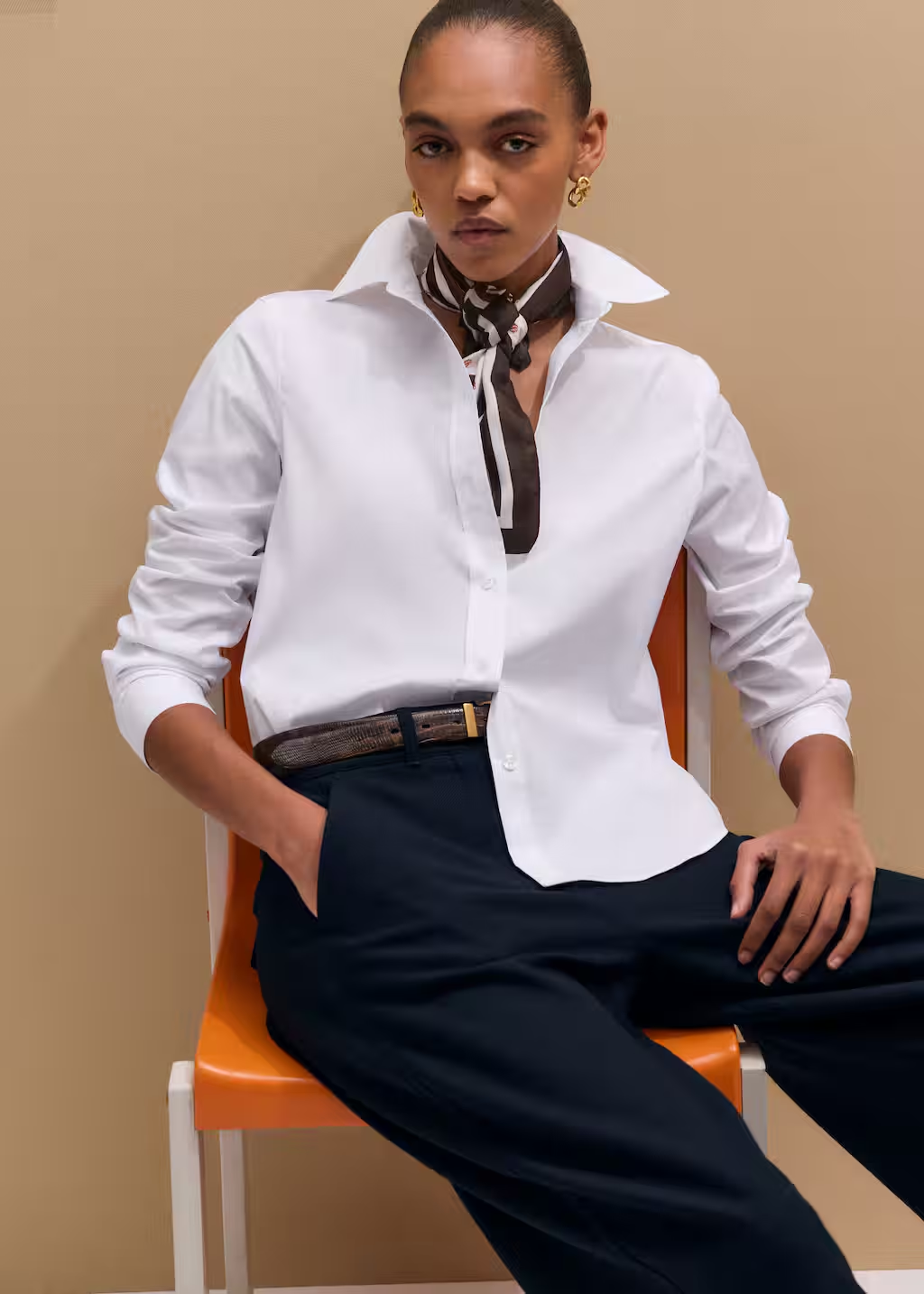
A Properly Made White Shirt (Me+Em)
The white shirt section of this post is the most important and the easiest to underestimate. A genuinely good white shirt, made from properly woven cotton with a considered cut, is the single most transformative piece a wardrobe in your thirties can acquire. It elevates jeans, sharpens trousers, layers under knitwear, and travels well. The reason this entry links to the Me+Em shirts page rather than a specific product is that the brand cycles through cuts and fabrics each season, but the quality holds across the range. Look for a long-sleeved cotton voile or poplin in fresh white, with a relaxed but considered fit, and try to ignore the temptation to save money on a thinner version. The fabric weight is what makes the cost-per-wear maths land, and the cheaper alternatives never quite get the proportion right.
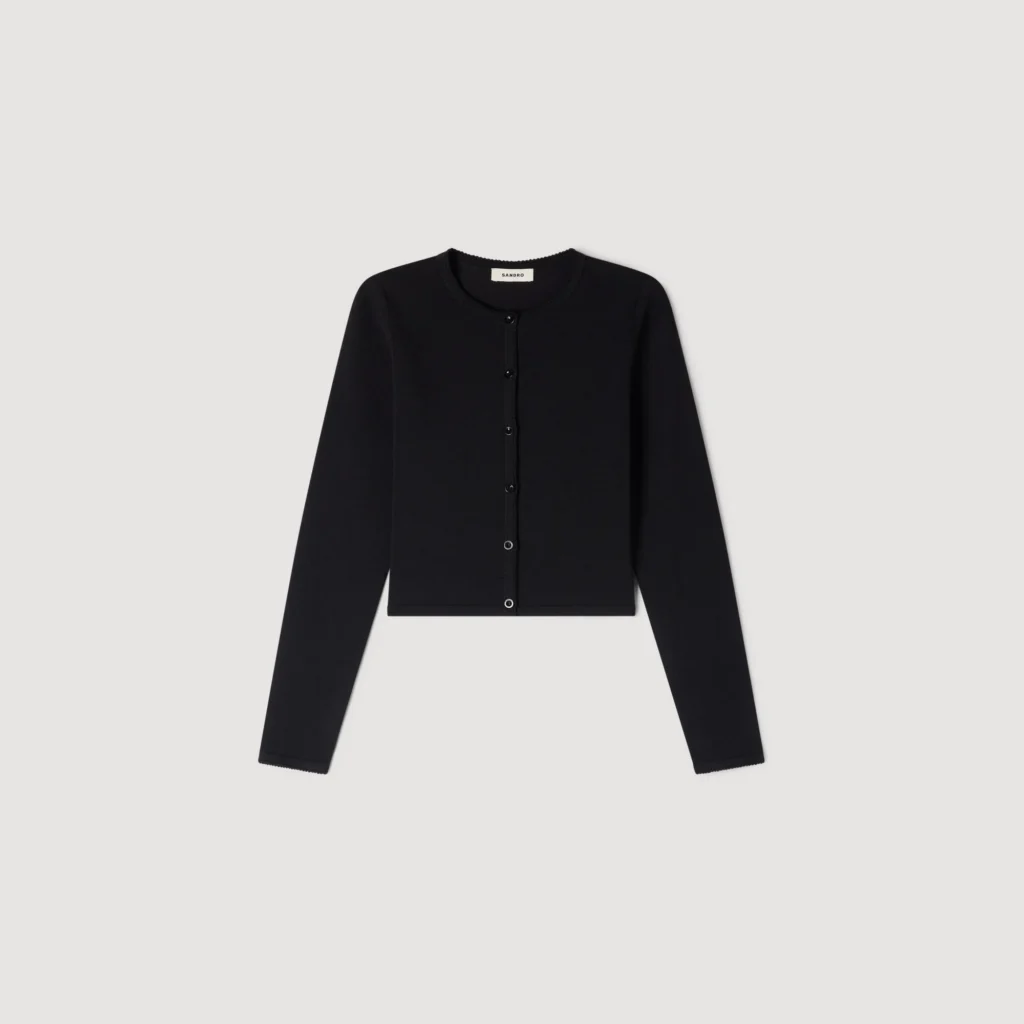
Sandro Cropped Cardigan
A cropped cardigan is the layering piece I find myself reaching for from late February until at least the middle of June, and the Sandro version has a weight to the knit that places it firmly in the investment category rather than the throwaway one. The proportion is the part worth paying for. A cardigan that sits at the natural waist transforms a midi dress, lengthens a pair of high-rise trousers like the Maxime above, and can be thrown over a slip dress on a cool evening without overwhelming the silhouette underneath. The price is not insignificant, but layered against the wear count over four or five months a year, the maths makes itself.
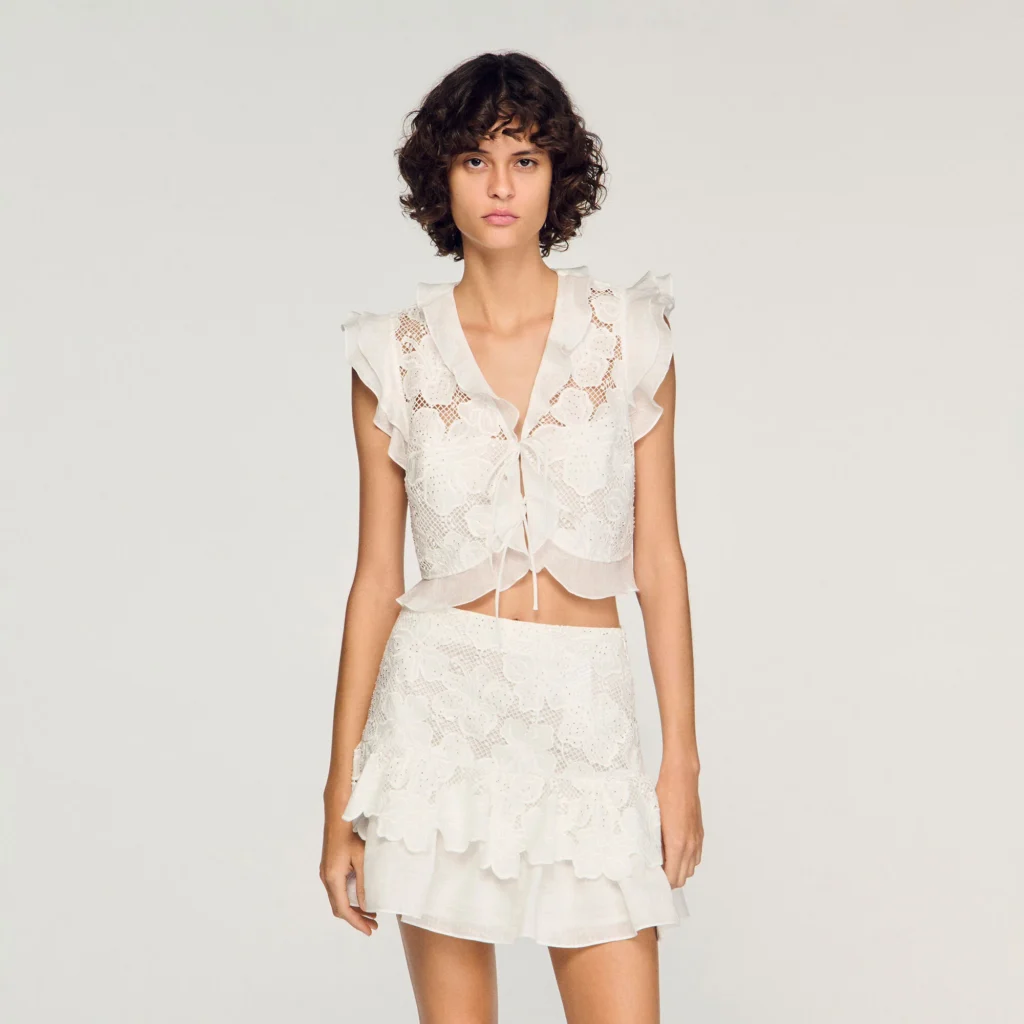
Sandro Guipure Lace Crop Top
The argument for this one is what it does to the rest of the wardrobe, rather than what it does on its own. A guipure lace top in cream is the piece that transforms a black trouser suit into a dinner outfit, that sits beautifully under a linen blazer, and that gives an old pair of high-waisted jeans a second life through summer. It is also the antidote to the camisole habit that creeps into spring wardrobes. Camisoles look apologetic. Lace looks deliberate. There is a real distinction there, and it shows in photographs.
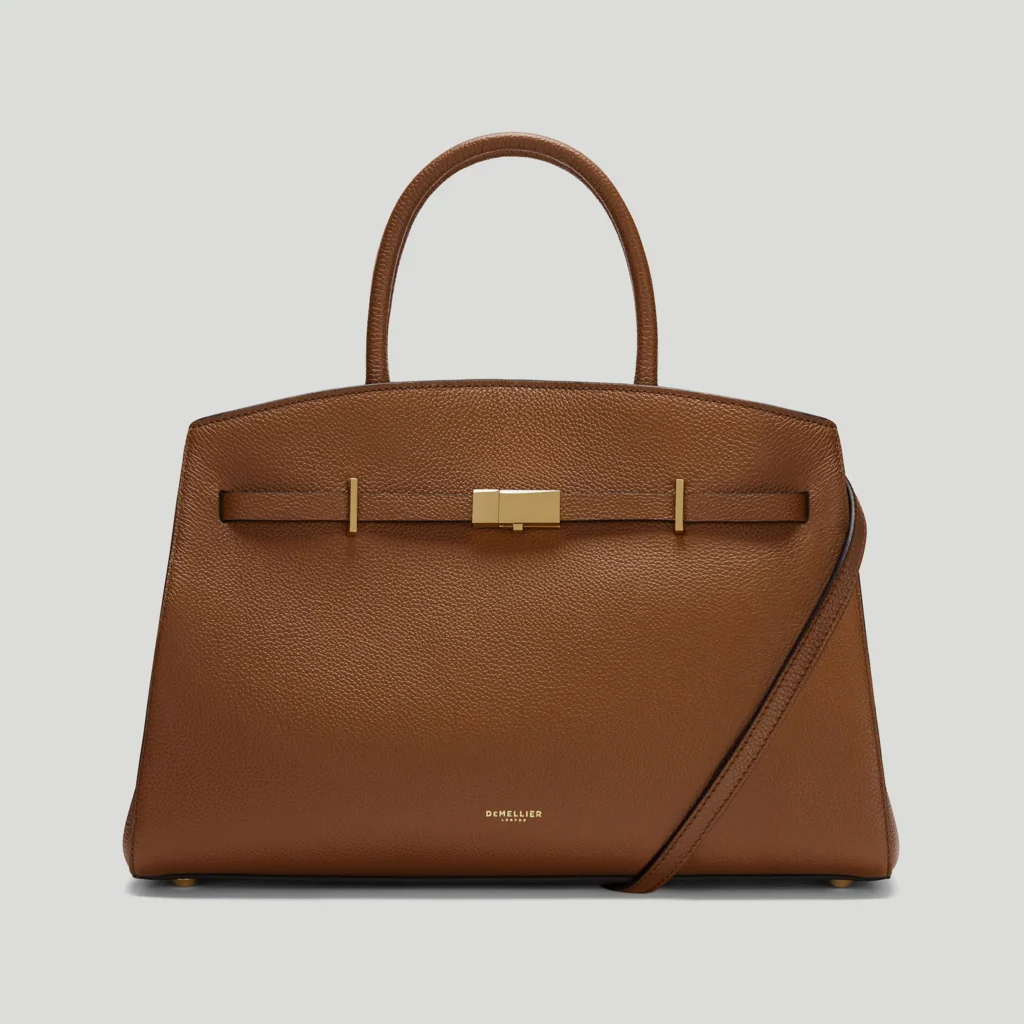
DeMellier Midi Hudson
Closing the edit on the piece at the top of my own wishlist this season, with the small caveat that I have not yet bought it and am genuinely hoping someone reading remembers my birthday is coming. The Hudson midi is one of those rare pieces where the design has weight to it, the leather is properly sourced, and the price reflects an actual object rather than a marketing budget. DeMellier sit in a particular sweet spot for British buyers, more accessible than Polène in availability terms, more interesting in shape than the standard mid-luxury options, and made with a level of craft that justifies the cost. The Midi sizing is the smarter choice for everyday use, large enough for an iPad and the school-run essentials, small enough not to look like a holdall. The honest part is that even if no one does remember the birthday, this is the piece I will eventually buy myself, and that is usually the strongest test of an investment. The bag you keep coming back to in the months after you first see it is the one that earns its place.
A closing thought
The honest thing to say at the end of an edit like this is that none of these pieces are necessary. The wardrobe will survive the spring without any of them, and several of them are clearly more want than need. That is the point of writing about them as investment rather than essentials. Investment is a deliberate choice, made carefully, and it should feel like one.
The piece that ends up in the wardrobe is rarely the most expensive one on the list, and almost never the most photographed. It is usually the one you keep coming back to in the days after you first see it (*cough* the DeMillier Hudson midi), the one that quietly answers a question you had not articulated, the one that fills a small gap rather than chasing a trend. If there is a piece in this edit that has done that for you, that is the one worth buying. If there is not, that is also a useful answer.
The wardrobe gets better one good decision at a time, not twelve at once.
Leave a Reply
If you like the sort of recommendation that still holds up six months later, leave your email below and I'll write to you on Sunday.
Most Sundays, once the house has gone quiet and it's edging towards nine, a letter goes out. It's the one I'd write to a friend with good taste and not nearly enough time: one thing worth reading, one thing worth buying, and one thing to skip. No noise, no pressure to spend, just the considered version of what I've actually been using, loving, or quietly sending back.