Is Olaplex Worth It? My Honest Review After 5 Years of Use

There's no getting around it: Olaplex is expensive. When you're standing in Boots staring at a tiny bottle with a £28 price tag, it's completely reasonable to wonder whether this is genuinely different from everything else on the shelf or just very good marketing. I had the same thought five years ago when I first picked up Olaplex No.3, and honestly, I wasn't convinced it would be worth the money.
Five years later, I haven't missed a single wash without it. That alone should probably tell you everything you need to know, but let me explain exactly why, what I've noticed, and which products in the range are genuinely worth buying versus the ones you can skip.
What Olaplex Actually Does (Without the Science Jargon)
Before I get into my experience, it helps to understand what makes Olaplex different from regular shampoo and conditioner, because it genuinely is different. It's not just a premium version of what you're already using.
Every time you colour, heat-style, or even just brush your hair, you're breaking tiny bonds inside the hair strand called disulfide bonds. These are the structural links that keep your hair strong, elastic, and shiny. When enough of them break, your hair starts to feel dry, brittle, and straw-like. Traditional conditioners work by coating the outside of the hair to make it feel smoother, but they don't actually repair anything underneath. Once those bonds are broken, a regular conditioner just glosses over the damage.
Olaplex works differently. The key ingredient across the range is something called Bis-Aminopropyl Diglycol Dimaleate (try saying that three times fast), and it's patented technology that actually reconnects those broken bonds from the inside. It's not a coating or a temporary fix. It's rebuilding the internal structure of the hair strand itself. That's why hairdressers started using it first, mixing it into colour treatments to prevent damage during the process, before it ever became a consumer product.
The reason I'm explaining this is that it matters for understanding whether Olaplex is worth the money. If your hair isn't damaged, you might not notice much difference. But if you colour your hair, use heat tools regularly, or have years of accumulated damage (hello, that was me), the difference is significant.
Before we get into it
Before getting into the range itself, one quick note. The original Olaplex was never something you could pull off a shelf. It started life as a two-step salon treatment, the No.1 and No.2, mixed into colour and bleach services to stop hair falling apart at the chemical level. You still can't buy those two as a consumer, so they sit slightly outside the scope of this post. If you're curious about whether the in-salon version is worth booking, and how it compares to the bottles you can order yourself, have a read of my Olaplex Stand-Alone Treatment review. Everything below is the at-home range, which is what most of us are actually working with.
The Products I Actually Use (and the Ones I've Skipped)
The Olaplex range has grown a lot since I first started using it. There are now products numbered from 0 through to 9, plus a few extras. I haven't tried every single one, because frankly, not all of them are necessary. Here's what I've actually used over the past five years and what I think of each.
Olaplex No.3 Hair Perfector is where it all started for me, and it's still the product I'd recommend above everything else in the range. It's a pre-shampoo treatment that you apply to damp hair, leave on for at least ten minutes (I usually leave mine for about half an hour while I potter around the house), and then wash out. This is the product that does the heavy lifting when it comes to bond repair. After five years of using it before every single wash, the cumulative difference in my hair is remarkable. It's stronger, it snaps less, and it holds colour for noticeably longer than it used to. If you only buy one Olaplex product, make it this one.
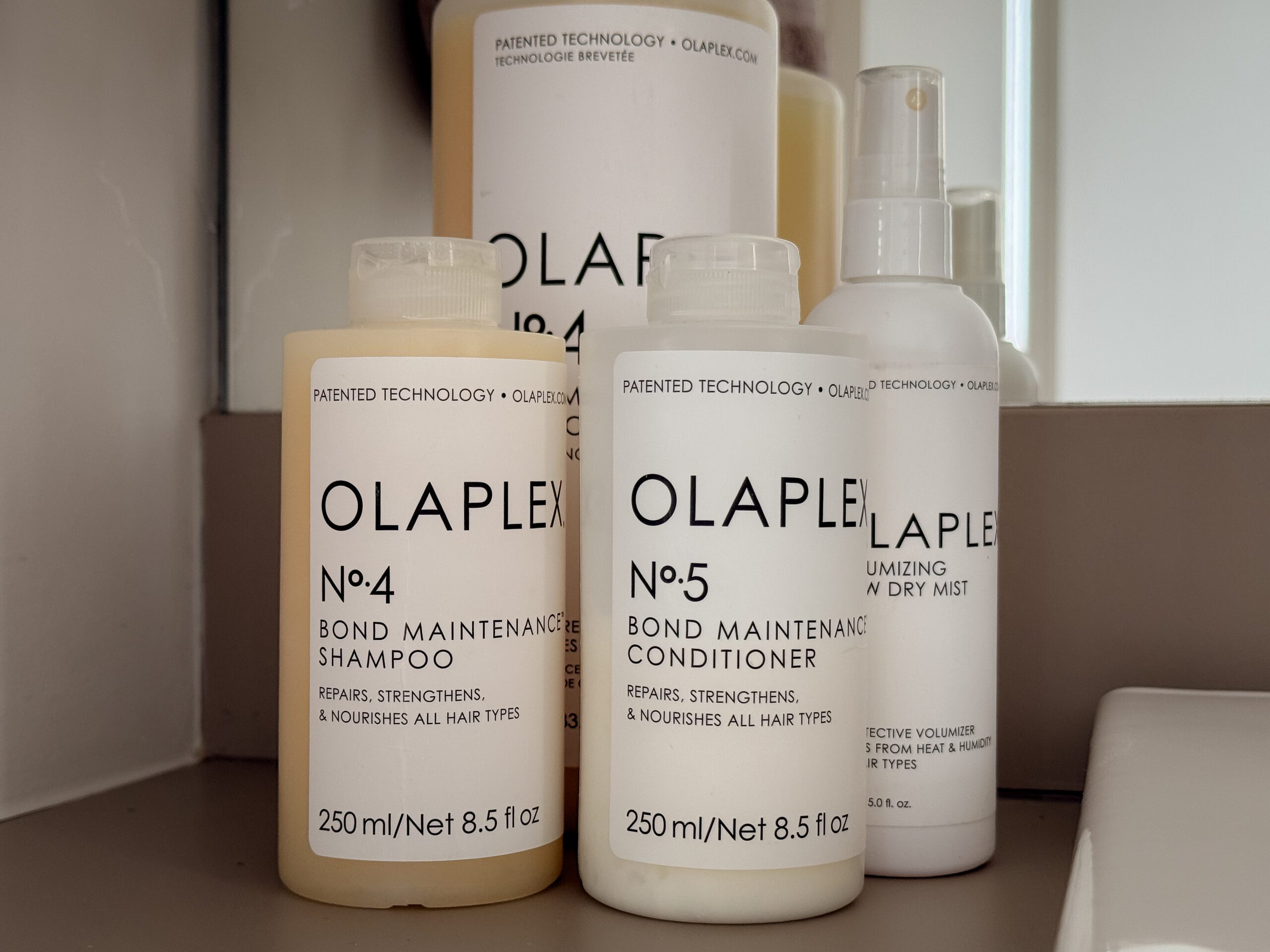
Olaplex No.4 Bond Maintenance Shampoo is a gentle, sulphate-free shampoo that I use as my regular wash. It doesn't lather the way a supermarket shampoo does, which took some getting used to at first, but my hair has never felt stripped or squeaky after washing with it. It's a solid shampoo, though I'll be honest: this is the product in the range where I think you could swap in another good sulphate-free shampoo and not notice a dramatic difference. I use it because it's part of my routine and I like the consistency, but it's not the miracle worker that No.3 is.
Olaplex No.5 Bond Maintenance Conditioner pairs with the shampoo, and I do think this one pulls its weight more than No.4. My hair feels genuinely softer and more manageable after using it compared to other conditioners I've tried over the years. It detangles without weighing my hair down, which is something I've always struggled with. It's not going to change your life on its own, but as part of the system, it's a noticeable step up from a standard conditioner.
Olaplex No.0 Intensive Bond Building Treatment is the newer addition to my routine. You apply it before No.3 to prime the hair and apparently allow the bond repair to penetrate more deeply. I'm going to be completely transparent here: I'm not sure I can tell the difference between using No.3 alone versus layering No.0 underneath it. My hair already felt great with just No.3 after years of use, so adding No.0 on top hasn't been a dramatic revelation. If you're just starting out with Olaplex and your hair is quite damaged, it might make more of a difference. For me, it's a nice addition but not essential.
The Olaplex Volumizing Blow Dry Mist is my most recent discovery and it's quickly become a staple. I use it before styling with my Shark FlexStyle, and it adds volume and heat protection without weighing my hair down or making it feel crunchy. The fact that it protects up to 232°C means I don't have to worry about heat damage during styling, and the volume it adds works beautifully with the FlexStyle's blowout finish. If you use any kind of heat tool regularly, this is genuinely worth adding to your routine.
I haven't tried Olaplex No.6 Bond Smoother, No.7 Bonding Oil, No.8 Bond Intense Moisture Mask, or No.9 Bond Protector. Not because I think they're bad, but because my current routine already covers everything I need and I'd rather be honest about what I've actually used than pretend I've reviewed the entire line.
What I Actually Notice After Five Years
This is the part that matters most, because short-term reviews can only tell you so much. Here's what five years of consistent Olaplex use has done for my hair.
The biggest change is strength. My hair used to snap constantly. I'd run my fingers through it and find broken pieces everywhere, especially after colouring. That's almost completely stopped. My hair feels elastic and resilient in a way it never did before I started using Olaplex, and I genuinely believe that's down to years of cumulative bond repair rather than any single product or treatment.
Colour longevity has improved massively. My colour used to fade quickly and look dull within a few weeks of a salon visit. Now it holds vibrancy for noticeably longer, which honestly saves me money in the long run because I can stretch the time between appointments. When I factor in the cost of one extra salon visit per year that I no longer need, Olaplex starts to look like a much smarter investment.
The texture of my hair has changed for the better. It's smoother, softer, and shinier on wash day than it was before I started the routine. My hairdresser has commented on the improvement multiple times over the years, which is always reassuring because they see hundreds of heads of hair and can spot the difference.
What Olaplex hasn't done is perform miracles. It hasn't transformed my hair into something completely different or reversed decades of damage overnight. The improvement has been gradual and cumulative, building up over months and years of consistent use. If you try it once and expect your hair to feel completely different the next morning, you'll probably be disappointed. It's a long game, and the results come from sticking with it.
So, Is Olaplex Worth the Money?
After five years, my honest answer is yes, but with a few caveats.
If you colour your hair, use heat tools regularly, or have noticeable damage from years of styling, Olaplex is genuinely worth the investment. The No.3 Hair Perfector alone has made a tangible, visible difference to my hair over time, and at roughly £28 a bottle (which lasts me about six to eight weeks depending on how generous I'm being with it), the cost works out to around £3 to £4 per week. Less than a coffee. When I think about it in those terms, it feels very reasonable for the results I've seen.
If your hair is naturally healthy, you don't colour it, and you rarely use heat, you probably won't notice enough of a difference to justify the price. Olaplex is repairing damage that already exists, so if there isn't much damage to repair, the effects will be subtle at best.
My advice if you're on the fence: start with just No.3. Use it before every wash for at least two months before you decide whether it's working for you. The results aren't instant, and you need to give it time to do its thing. If after eight weeks you're noticing stronger, shinier, less breakage-prone hair, then you'll know it's worth continuing. If not, you've only invested in one bottle.
Once you're sold on No.3, the shampoo and conditioner are the natural next step, and here's where a bit of canny buying earns its place. The standard 250ml bottles are lovely, but the cost per wash mounts up quickly. What I actually do is buy the No.4 and No.5 duo in the 1000ml bottles instead. Olaplex reckons each litre bottle is good for around 400 washes, which drops the cost right down to something close to negligible (roughly 40p a wash once you've done the sums). For two products I reach for every single time I wash my hair, that's what tips them from a nice-to-have into genuinely worth it. The pump bottles last an age too, and look far tidier lined up in the shower, which is a small thing but a real one.
And if you use heat tools, the Volumizing Blow Dry Mist is the one I'd add after that, because it genuinely serves a dual purpose as both a styling product and a heat protectant.
The rest of the range? Nice to have, but not essential for most people. No.3 is where the real work happens, the shampoo and conditioner are the easy upgrade once you're buying in bulk, and everything beyond that is a matter of taste rather than need.
Frequently Asked Questions
No, and this is one of the most common misconceptions about Olaplex. No.3 is a pre-shampoo treatment, not a conditioner. You apply it to damp hair before you wash, leave it on for a minimum of ten minutes, and then shampoo and condition as normal. It works underneath the surface of the hair strand to rebuild broken bonds, which is completely different to what a conditioner does. You still need a conditioner after using it.
I use it before every wash, which for me is two to three times a week. That's what's worked for my hair over the past five years. If your hair is very damaged, you might benefit from using it with every wash to start with and then reducing to once a week as your hair improves. There's no risk of overusing it since it's a repair treatment rather than a protein treatment, so it won't make your hair feel stiff or brittle.
Yes. The bond-repair technology works on the internal structure of the hair strand regardless of whether your hair is fine, thick, straight, curly, or coily. What might vary is which products in the range suit your hair type best. Finer hair might find No.5 conditioner is enough moisture, while thicker or curlier hair might benefit from adding the No.8 Bond Intense Moisture Mask for extra hydration.
It can significantly improve damaged hair over time, but it can't resurrect hair that's completely destroyed. If your ends are split, Olaplex won't glue them back together; you'll still need a trim. What it does is strengthen the remaining hair, reduce further breakage, and improve the overall condition gradually with consistent use. I'd describe it as a long-term investment in your hair's health rather than a quick fix.
It can be, but the difference will be less dramatic. Olaplex repairs damage from all sources: heat styling, environmental exposure, mechanical damage from brushing and tying your hair up, and chemical processing. If you use heat tools regularly, you'll likely still notice an improvement. If you air-dry, rarely style, and don't colour, you might find it's not worth the cost because there simply isn't enough damage for it to address.
No.3 Hair Perfector, without question. It's the original product, it does the most meaningful bond repair in the range, and it's the one that will show you whether Olaplex works for your hair before you invest in anything else. If you like the results after a couple of months, then consider adding the shampoo and conditioner. But No.3 on its own, used consistently, is genuinely enough to see a real difference.
Still on the fence? Price tag and all, Olaplex remains one of the best beauty buys of 2026 so far in my book.
Leave a Reply
The Sunday Letter
Most Sundays, once the house has gone quiet and it's edging towards nine, a letter goes out. It's the one I'd write to a friend with good taste and not nearly enough time: one thing worth reading, one thing worth buying, and one thing to skip. No noise, no pressure to spend, just the considered version of what I've actually been using, loving, or quietly sending back.
If you like the sort of recommendation that still holds up six months later, leave your email below and I'll write to you on Sunday.