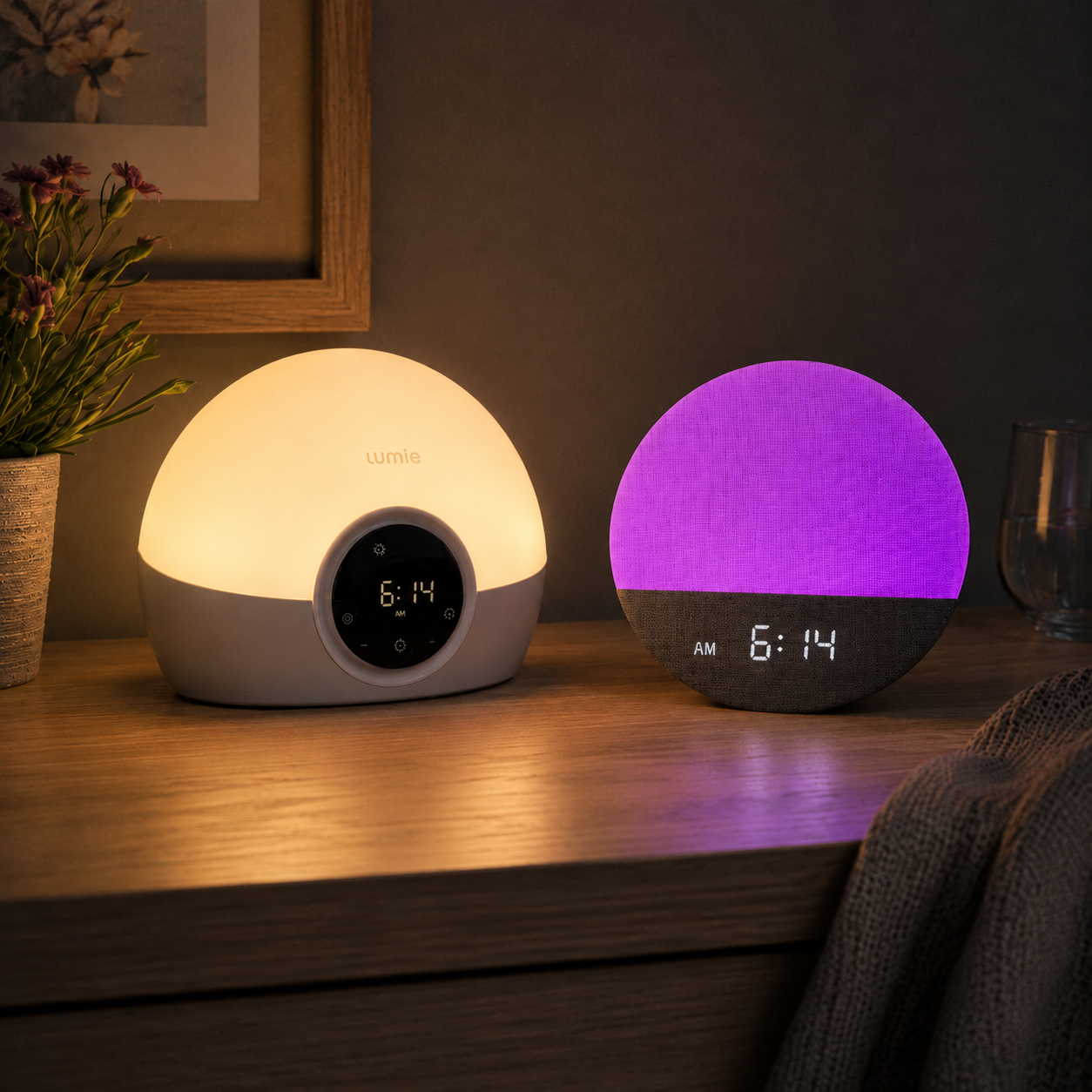

Choosing between the Lumie Bodyclock Spark 100 and the Dreamegg SUNRISE 1 comes down to one honest question: do you want a wake-up light that does a single thing beautifully, or a bedside sleep machine that tries to do everything at once? Both promise the same lovely outcome, which is a morning that starts with light rather than a phone screaming at you from the nightstand. They go about it in completely different ways, and that difference is really the whole story.
Having lived with both on the bedside table, the choice turns out to be less about which is “better” and more about the kind of sleeper you are. So before we get into the detail, here is the short version.
The quick verdict
The Lumie Bodyclock Spark 100 is the one to buy if you want pure, fuss-free sunrise light from a brand that has been making wake-up lights since the early nineties. It strips away the extras and focuses entirely on a beautiful, gradual dawn. The Dreamegg SUNRISE 1 is the one to buy if you want a sound machine, a colour-changing night light and a sunrise alarm rolled into one affordable device. One is a specialist. The other is an all-rounder. Neither is wrong, and the right answer depends entirely on what keeps you up at night, quite literally.
Lumie Spark 100 vs Dreamegg SUNRISE 1 at a glance
| Lumie Bodyclock Spark 100 | Dreamegg SUNRISE 1 | |
|---|---|---|
| Price | Around £79 | Noticeably cheaper, sold mainly via Amazon |
| Sunrise | Fixed 30 minutes, not adjustable | Adjustable wake-up window |
| Sounds | One simple beep, nothing else | 29 soundscapes including rain, birdsong and white noise |
| Light colours | Warm dawn tones, reds to white | 9 ambient colours |
| Wind-down | 30-minute sunset fade | Dimmable ambient light plus sounds |
| Display | Auto-dimming, can switch off fully | Dimmable |
| App or wifi | Neither, fully manual | Neither, fully manual |
| Guarantee | Three years as standard | Check the listing |
| Best for | The sleep purist | Families, light sleepers and value seekers |
What the two have in common
Before the differences, it is worth saying that these devices share more than you might expect. Both are sunrise alarm clocks, which means both gradually brighten the room before your set wake time so your body surfaces from sleep the way it would on a bright summer morning, rather than being yanked out of deep sleep by a sudden noise. That gentle dawn signal is the genuinely useful bit. Early morning light is one of the strongest cues your body clock responds to, and easing into the day this way tends to leave you feeling clearer rather than groggy.
Both are also refreshingly phone-free. No app to download, no wifi to connect, no account to set up, no firmware update nagging at you on a Tuesday night. You set the time on the device itself and that is the end of it. For anyone trying to keep their phone out of the bedroom, which is one of the simplest and most underrated upgrades to your sleep, that alone is a point in their favour. Both also double as a soft bedside light for reading, and both look tidy enough to leave on display rather than hide.
So the question is not really light versus no light. Both give you the light. The question is everything that sits around it.
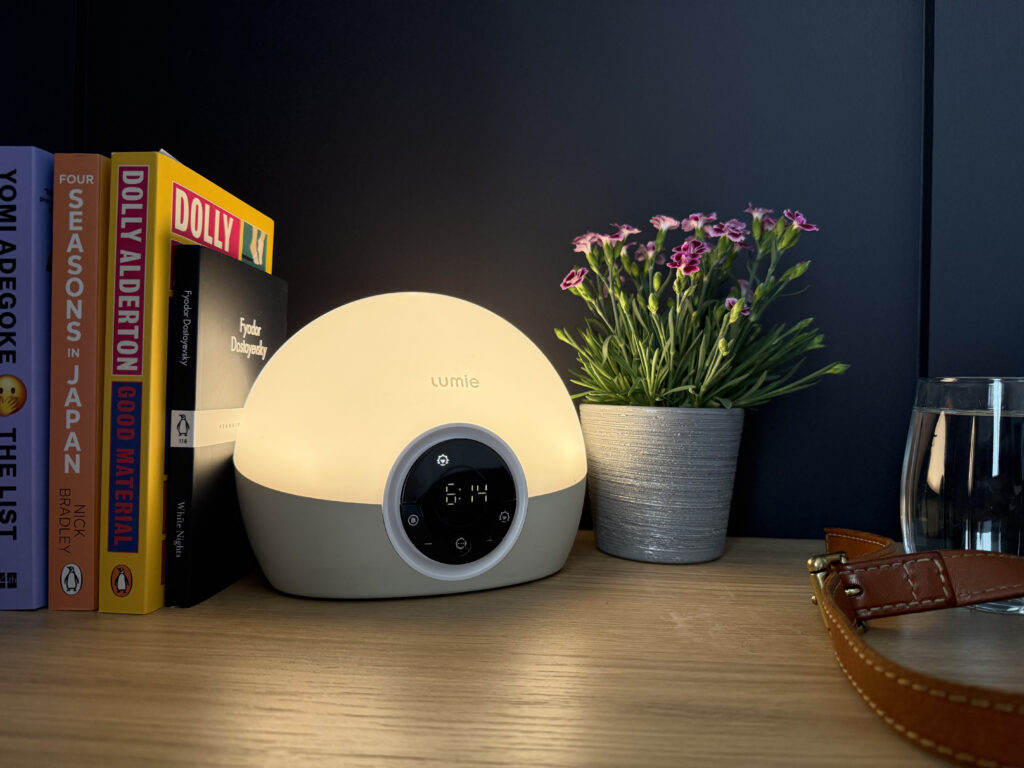
The Lumie Bodyclock Spark 100: the considered specialist
Lumie is a Cambridge company that invented the first wake-up light back in 1993, and the Spark 100 is the entry point to its Bodyclock range. The whole philosophy here is restraint. Over the 30 minutes before your alarm, the lamp brightens from complete darkness through warm reds and oranges up to a brighter white glow, mimicking a real sunrise. That is the headline feature, and it is genuinely lovely to wake to.
What makes the Spark worth recommending is not just the light, it is the things Lumie chose to leave out. The display is light-sensitive and dims automatically as the room darkens, and you can switch it off entirely with a button on the underside, which matters enormously if you are the sort of sleeper who notices every stray glow. There is a 30-minute sunset feature that fades the light down at bedtime, with the option to fade to full darkness or to a low nightlight, which is a thoughtful touch for anyone with small children or anyone who simply does not love pitch black. A tap-to-snooze dome on top is more satisfying than it has any right to be.
The honesty has to cut both ways, though, and there are real limitations. The sunrise duration is fixed at 30 minutes with no way to change it; if you want 20 or 45, you need to size up to the Glow 150. The alarm is a single beep, and that is your only audio option. No radio, no nature sounds, no birdsong. You also have to manually re-enable the alarm each day, which is a genuine quirk that some people find restful and others find faintly maddening.
What you are paying for, at around £79, is durability and pedigree. Mine has lived on the bedside table since 2020 and still works exactly as it did on day one. The LEDs are built to last for years, and Lumie includes a three-year guarantee as standard, which is a reasonable signal of confidence in a market full of disposable gadgets. There is a deeper breakdown in the full Lumie Bodyclock Spark 100 review if you want the long version.
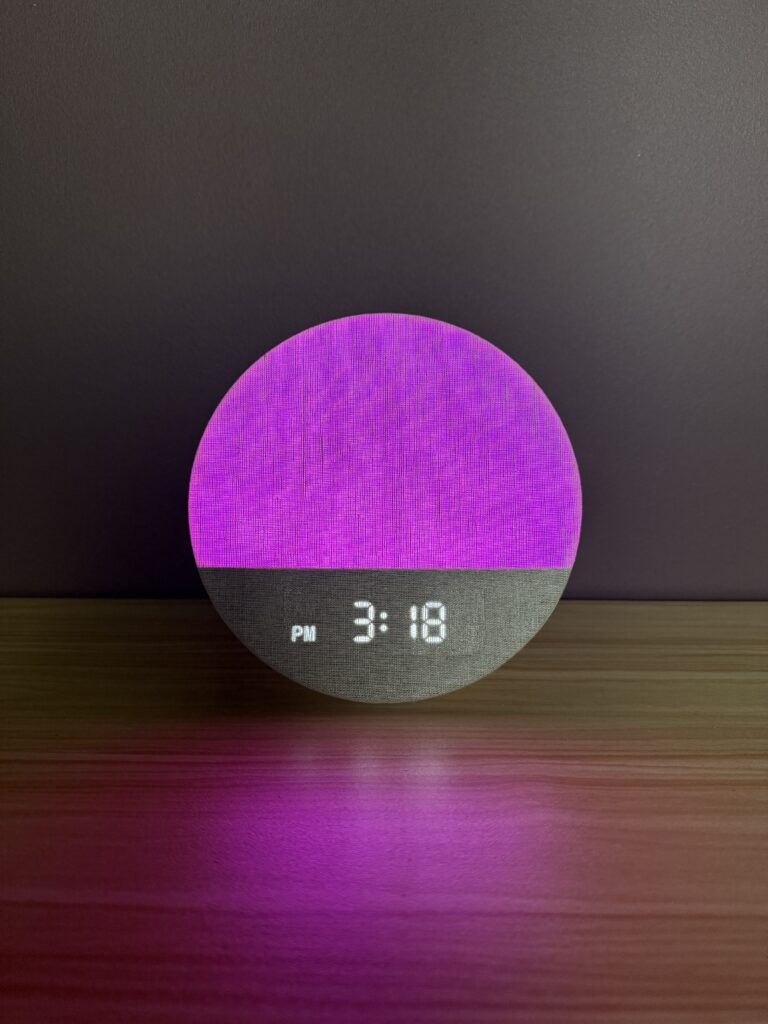
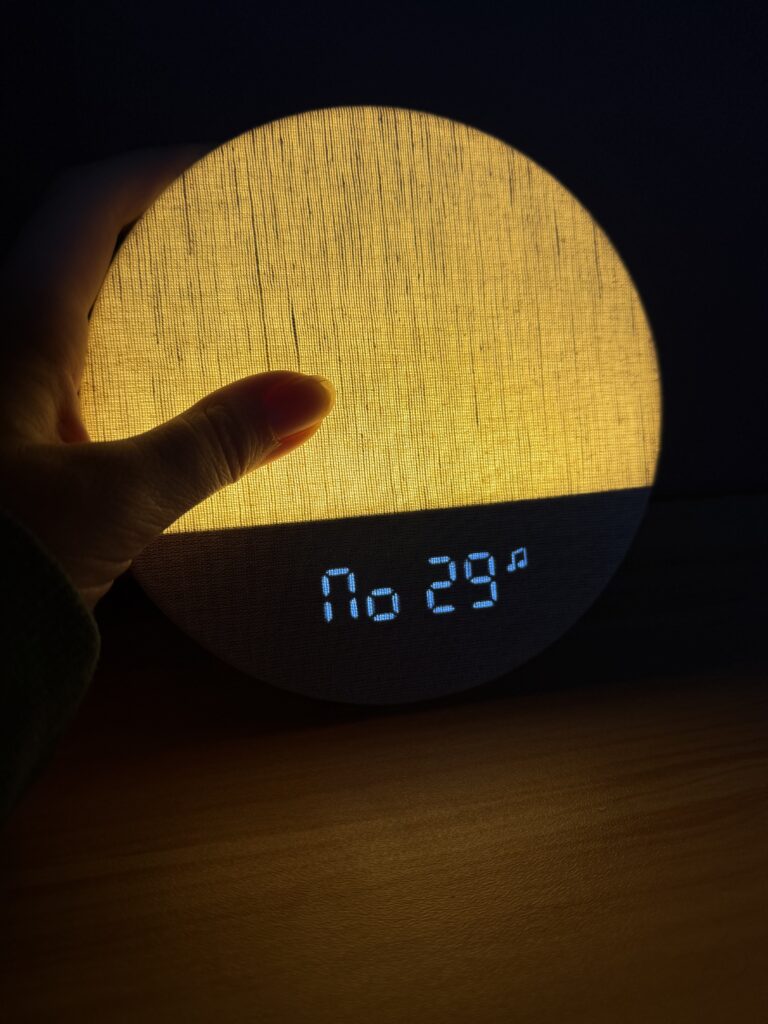
The Dreamegg SUNRISE 1: the all-in-one value pick
The Dreamegg SUNRISE 1 comes at the same problem from the opposite direction. Rather than perfecting one feature, it bundles several into a single device and prices the whole thing keenly. The sunrise simulation is there, gradually filling the room with warm yellow light before your alarm, but it shares the stage with a great deal more.
The standout is sound. The SUNRISE 1 packs 29 soundscapes, from rain and birdsong to white noise and meditation tracks, which makes it as much a sound machine as a wake-up light. For a light sleeper trying to drown out a snoring partner, traffic or thin walls, that is a properly useful feature rather than a novelty. There are also 9 ambient light colours to set the mood, so the device works as a colour-changing night light alongside its alarm duties. Pair a low blue glow with a soft soundscape at bedtime and you have a wind-down ritual without spending a penny more.
That breadth is the selling point, and it makes the SUNRISE 1 a particularly strong choice for family bedrooms. The colour options and gentle nature sounds go down well in children's rooms, and the night light function earns its keep long after the novelty of the sunrise wears off. Like the Lumie, it runs entirely on its own controls with no app, no wifi and no subscription fees, so all 29 sounds and 9 colours are unlocked from the moment you switch it on, which is not something every device in this category can say.
The trade-off is exactly what you would expect from a device doing this much for this little. The light, while pleasant, does not have the same carefully tuned warmth as Lumie's dawn, and the build feels closer to its price than to a premium piece. It is sold mainly through Amazon rather than a heritage brand with decades of light-therapy research behind it. None of that makes it a bad buy, and for the money it is remarkable value, but it is worth going in with clear eyes. The full Dreamegg SUNRISE 1 review covers how it performed over a longer stretch.
Head to head: where they actually differ
Light quality and the sunrise itself
This is Lumie's territory. The Spark 100's dawn is the more natural of the two, shifting through proper sunrise colours rather than simply ramping up brightness, and three decades of refinement show in how convincing it feels. The Dreamegg's sunrise is perfectly pleasant and does the job, but if the light is the single thing you care most about, the Lumie is the more accomplished performer.
Sound and waking up
Here the roles reverse completely. The Spark 100 gives you one beep and nothing else, which suits anyone who wants light to do the waking and dislikes audio alarms on principle. The Dreamegg, with its 29 soundscapes, is the obvious winner for anyone who wants to wake to birdsong or fall asleep to rain. If sound matters to you at all, the Lumie simply does not compete on this front, and that is by design.
Night use and disturbance
Both handle dim bedroom light well, but the Spark 100 edges ahead for properly sensitive sleepers thanks to its auto-dimming display and full off switch. The Dreamegg's colour options are more fun and more flexible, especially for children, while the Lumie is the calmer, more discreet presence once the lights are out.
Faff, controls and daily living
Neither needs a phone, which is a win for both. The Dreamegg is the more set-and-forget of the two. The Lumie's manual daily alarm reset divides people, so it is worth knowing about before you buy rather than discovering it on a Monday morning.
Price and long-term value
The Dreamegg wins on upfront cost and on sheer features per pound. The Lumie wins on longevity and that three-year guarantee, which changes the maths if you keep things for years rather than months. Cheaper today does not always mean cheaper over a decade.
So which sunrise alarm should you buy?
Buy the Lumie Bodyclock Spark 100 if you are a sleep purist. If you want phone-free, beautifully judged dawn light from a brand that has spent thirty years getting it right, and you are happy to pay a little more for something built to outlast the trend cycle, this is your clock. It is the one most likely to still be on your bedside table in five years.
Buy the Dreamegg SUNRISE 1 if you want value and versatility. If you are a light sleeper who needs sound to drift off, a parent kitting out a child's room, or simply someone who wants a sound machine, a night light and a sunrise alarm without buying three separate things, this is the smarter spend. It does more, costs less, and asks very little of you in return.
The genuinely good news is that there is no bad choice here. Both will give you softer mornings than a phone alarm ever could, and both earn their place on the nightstand. The decision is just a matter of knowing whether you are buying a specialist or an all-rounder.
Frequently asked questions
For most people, yes, provided you value the light above the extras. The Spark 100 justifies its price through a more natural dawn, an auto-dimming display, a three-year guarantee and build quality that lasts for years. If you specifically need sounds or an adjustable sunrise, though, a different model or the Dreamegg makes more sense.
Yes. With 29 soundscapes including rain, white noise and nature sounds, it functions as a capable sound machine in its own right, which is one of its biggest advantages over the beep-only Lumie.
Neither does. Both the Lumie Spark 100 and the Dreamegg SUNRISE 1 are controlled entirely on the device, with no app, no wifi and no subscription, which makes them a good fit for a phone-free bedroom.
Sunrise alarms use gradually brightening light to mimic a natural dawn, which can make dark winter mornings feel less brutal and help your body clock adjust. They are not a medical treatment, and anyone struggling significantly with seasonal low mood should speak to a GP, but as a gentle daily aid through the darker months, many people find them genuinely helpful.
The Dreamegg SUNRISE 1, in most cases. Its colour-changing light and soothing sounds make it more adaptable for children, and it doubles as a reassuring night light, whereas the Lumie is the more grown-up, minimalist option.
If sleep is the bit of the home you are quietly trying to upgrade this year, there is plenty more in that vein over in the Beauty and Wellness section, from bedding to the small rituals that actually make a difference.
Leave a Reply
The Sunday Letter
Most Sundays, once the house has gone quiet and it's edging towards nine, a letter goes out. It's the one I'd write to a friend with good taste and not nearly enough time: one thing worth reading, one thing worth buying, and one thing to skip. No noise, no pressure to spend, just the considered version of what I've actually been using, loving, or quietly sending back.
If you like the sort of recommendation that still holds up six months later, leave your email below and I'll write to you on Sunday.