Good Material by Dolly Alderton: The Book That Made Me Question Everything
May 29, 2026
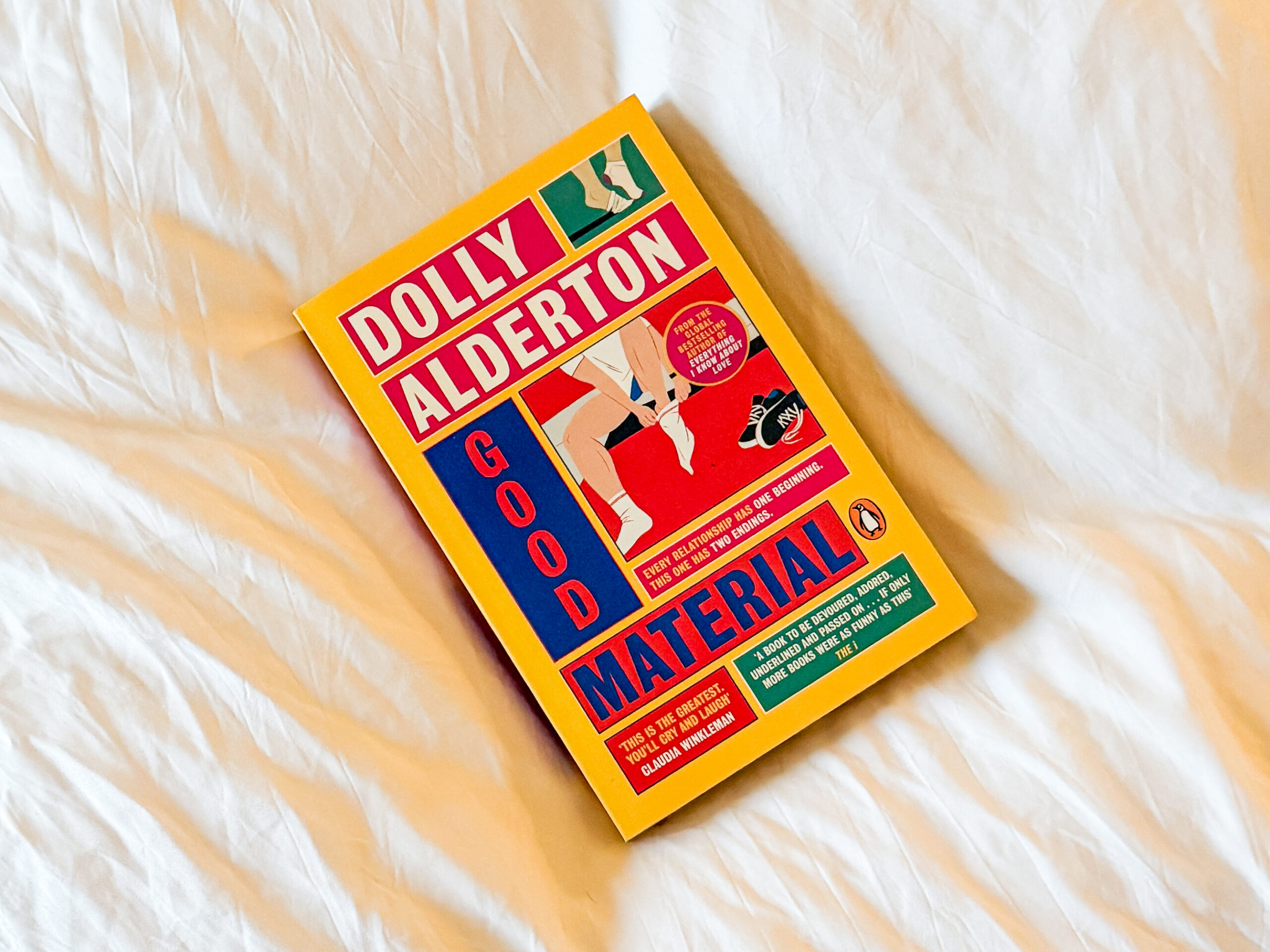

There are books you enjoy, books you admire, and then there are books that get under your skin in a way you weren’t prepared for. Good Material by Dolly Alderton is firmly in that third category.
I picked it up expecting something warm and funny (it is both), and finished it feeling quietly unsettled in the best possible way. Not unsettled about the book itself, but unsettled in that way that only really good fiction manages: the kind that holds a mirror up to your own life and makes you look at it differently. I genuinely put it down and sat with it for a while before I could articulate why it had affected me so much.
The truth? It made me wonder if I’m in the right place. And I think that’s exactly what Dolly Alderton intended.
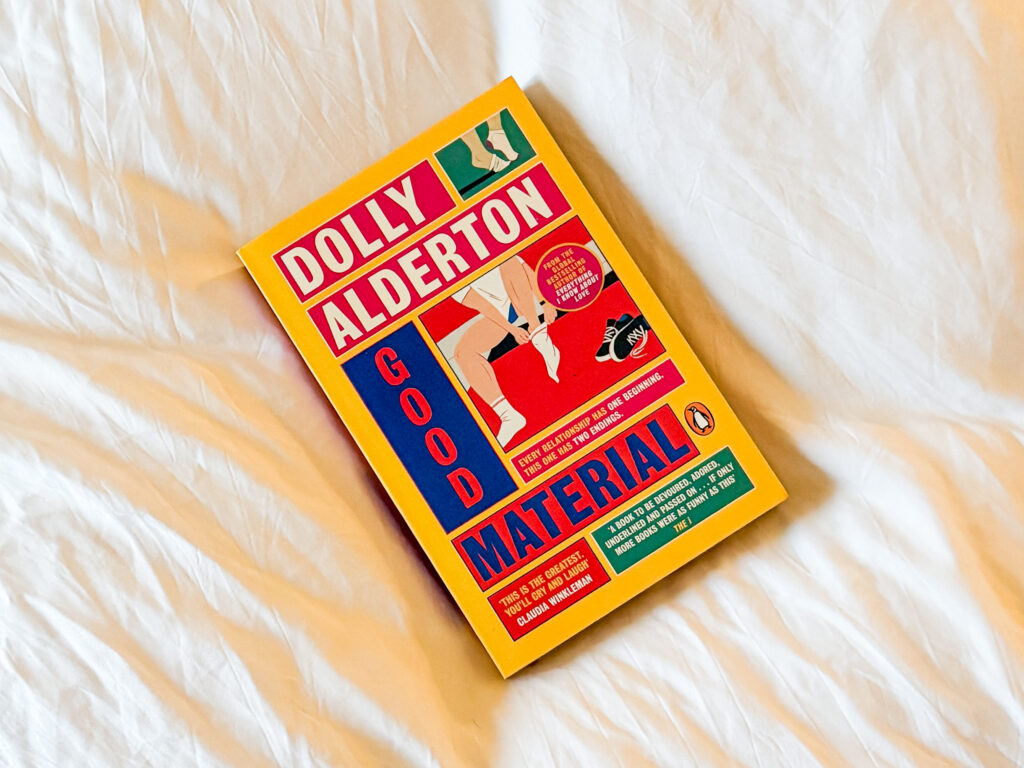
What Good Material Is Actually About
On the surface, Good Material is a break-up novel. Andy, a thirty-something stand-up comedian living in London, gets dumped by his girlfriend Jen without what feels to him like a proper explanation. The book follows his grief, his confusion, his inability to move on, and his slow, sometimes painful, reckoning with who he actually is.
Crucially, this is told from Andy’s perspective, which is an interesting choice from Alderton, who has always written about women so acutely. Giving us a male narrator is not a gimmick, though. It’s a deliberate lens. Because while we are reading Andy’s version of events, Alderton is quietly, forensically showing us everything Andy cannot see about himself.
That gap between what Andy believes happened and what we, as readers, can plainly observe is where the real story lives. And it is uncomfortable in the best possible way.
Why It Hits Differently as a Woman Reading It
Reading Good Material as a woman in your thirties is a specific experience. Because you have almost certainly been Jen at some point. You have been the person who couldn’t quite explain why something wasn’t working, who wanted more than what was on offer, who could see a relationship clearly in a way your partner couldn’t.
Alderton never lets Jen fully speak for herself. We only see her through Andy’s eyes, which means we are always reading between the lines, inferring, recognising things Andy misses. It is a clever, sometimes frustrating technique that mirrors what it actually feels like to be the woman in that dynamic: present, but somehow still not fully seen.
There is a particular kind of loneliness in being with someone who loves you but doesn’t really know you. Good Material articulates that feeling with a precision that stopped me cold more than once.
The Question Dolly Alderton Is Really Asking
Good Material is not really about a break-up. It is about the gap between the life we are living and the life we actually want. It is about the stories we tell ourselves to avoid looking too closely at the things that aren’t working. It is about the way we can be deeply comfortable in a relationship or a situation while also being quietly, persistently unhappy in it.
The title itself is a comedian’s term, meaning material drawn from real life that’s worth using. Andy is always looking for good material in his experiences rather than simply living them. And that, Alderton suggests, might be the whole problem.
By the time the book ends, the question isn’t really “why did Jen leave?” The question is: what does it actually mean to be present in your own life? What does it mean to be the kind of person someone can build something real with?
I read that and felt it somewhere very specific.
What the Book Does Brilliantly
Several things, and I want to be specific, because “Dolly Alderton is a good writer” is not useful information to anyone.
Her dialogue is extraordinary. Every conversation in this book sounds exactly like how people actually speak, with all the things left unsaid doing as much work as the things that are. There is a scene between Andy and a mutual friend where the subtext is so dense you almost need to read it twice, and yet it never feels laboured. It just feels true.
She is also unusually good at writing male interiority without either mocking it or over-romanticising it. Andy is not presented as a villain, but he is also not let off the hook. He is a specific type of man who is recognisable to most women of a certain age, and yet he is also genuinely human. That balance is difficult to achieve. Alderton does it with ease.
The book is also, despite everything, very funny. There are passages that made me laugh out loud, which is a relief given how much of it made me feel slightly exposed.
Did Anything Not Land?
There are moments where Andy’s obliviousness pushes into territory that might frustrate some readers, particularly those with less patience for narrators who are slow on the uptake. If you find yourself wanting to shake him by the collar and tell him to look at himself, that is entirely by design, but knowing it’s intentional doesn’t always make it less maddening.
The ending is also deliberately unresolved in a way that may disappoint if you’re looking for neat conclusions. Alderton is not interested in tying things up. She is interested in the moment just before understanding, which feels honest, but does leave you sitting with a certain amount of ambiguity.
That ambiguity was part of what made it linger for me, though. Some books earn their open endings. This is one of them.

Who Should Read Good Material?
Honestly? Anyone who has ever been in a relationship that looked fine from the outside and felt complicated from the inside. Anyone who has ended something and struggled to explain why. Anyone who has been ended with and spent too long looking for an explanation that wasn’t coming.
It is also an excellent read if you loved Everything I Know About Love, Alderton’s memoir, and have been waiting for her fiction to catch up to the standard of that book. It has. This is sharper, more controlled, and more ambitious than Ghosts, her debut novel.
If you are in your thirties, female, and have a complicated relationship with the idea of “settling” versus “choosing,” this book will get you somewhere tender. Consider yourself warned.
Where to Get It
Good Material by Dolly Alderton is available in paperback, hardback, ebook and audiobook. The audiobook narration is excellent if you prefer to listen rather than read.
Final Thoughts
Good Material is one of those books that does not announce itself as important. It arrives looking like a funny, sad novel about a break-up and turns out to be a rather profound piece of work about self-deception, intimacy and the courage it takes to actually see yourself clearly.
I loved it. I also found it quietly destabilising in a way I wasn’t expecting. It made me think about the stories I tell about my own life, the ways I might be looking for comfort in familiarity rather than asking the harder questions.
That is not a comfortable thing to sit with. It is, however, exactly what good fiction is supposed to do.
Pick it up, read it somewhere quiet, and give yourself an hour after the last page to just think. You will want it.
You can find more of what we have been reading over in the Better Book Club section of the blog. If you are looking for your next read, there is plenty to explore.
Leave a Reply
The Sunday Letter
Most Sundays, once the house has gone quiet and it's edging towards nine, a letter goes out. It's the one I'd write to a friend with good taste and not nearly enough time: one thing worth reading, one thing worth buying, and one thing to skip. No noise, no pressure to spend, just the considered version of what I've actually been using, loving, or quietly sending back.
If you like the sort of recommendation that still holds up six months later, leave your email below and I'll write to you on Sunday.