I'm Gillian, a Scotland based home & lifestyle blogger. Follow along as I navigate this new journey sharing my life from home.


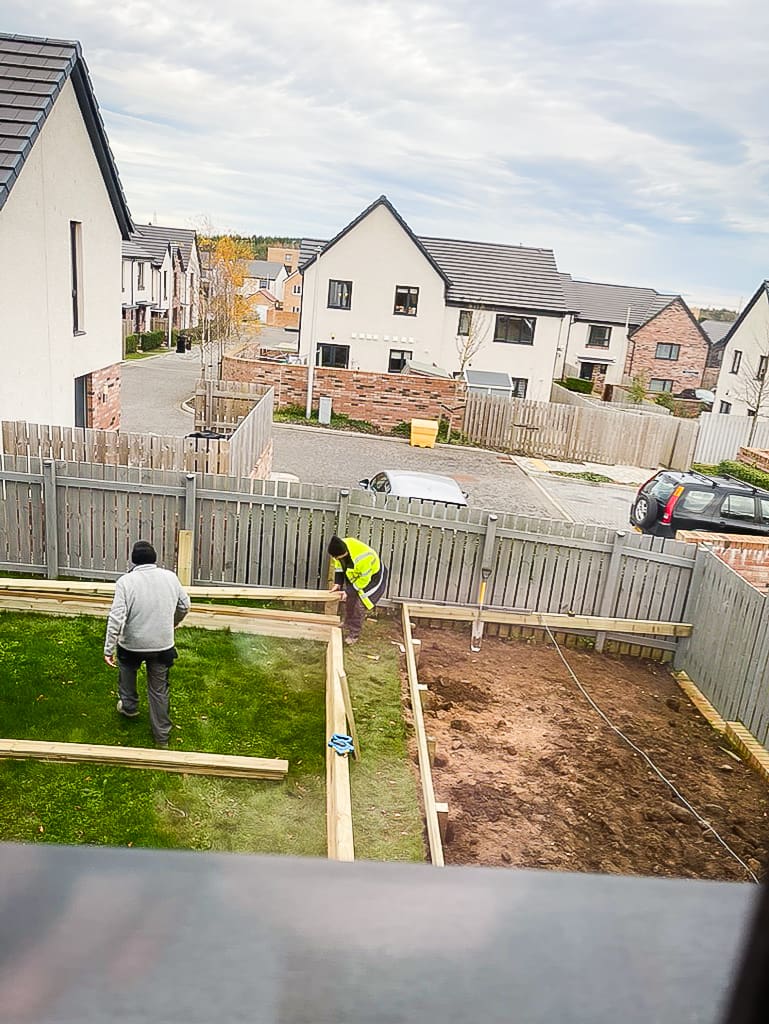
There is a specific sort of deflation that arrives with a new build garden. You collect the keys, picture long summer evenings and pots spilling with colour, then you open the back door to a flat rectangle of patchy turf, a bare fence, and a great deal of nothing. That was us at the end of 2019. Six years on, the garden finally feels like ours, and the honest truth is that most of the change has happened in the last twelve months.
That gap matters, and it is the whole reason for this post. So much of what we see online makes a garden look like a weekend job: turf up on Friday, dinner party under festoon lights by Sunday. Real gardens, especially new build ones, move at a much slower pace. Ours has been a blank canvas transformation done on a normal budget, in fits and starts, around work, small children and the great British weather. If your own plot still looks like a builder’s afterthought, take this as your permission slip to go slowly.

Starting with a true blank canvas
New build gardens come with their own particular headaches. The turf is usually laid over compacted rubble, drainage is an afterthought, and the whole space tends to feel exposed, because the mature trees and hedges that soften older gardens simply are not there yet. Ours sits directly opposite a large open field, which is wonderful for the view and rather less wonderful for the wind that funnels down the side of the house.
For the first few years, though, nothing happened at all, and the reason was never really the garden. Back then I was married to someone who was never going to be a weekend-projects person, so plans got made and then quietly shelved, year after year. Two children, a divorce and a new partner later, the garden and I both got something of a fresh start. Funny how a flat rectangle of turf can end up marking a whole chapter of your life.
So there is no shame in a garden that sits still for a while. Sometimes the plot is simply waiting on the rest of your life to catch up, and that is allowed. Watching how the light moves across a garden, where the puddles gather, and which corners catch the wind is time well spent before you commit to anything permanent. A blank canvas only feels like pressure if you insist on filling it all at once.

The decking and seating area
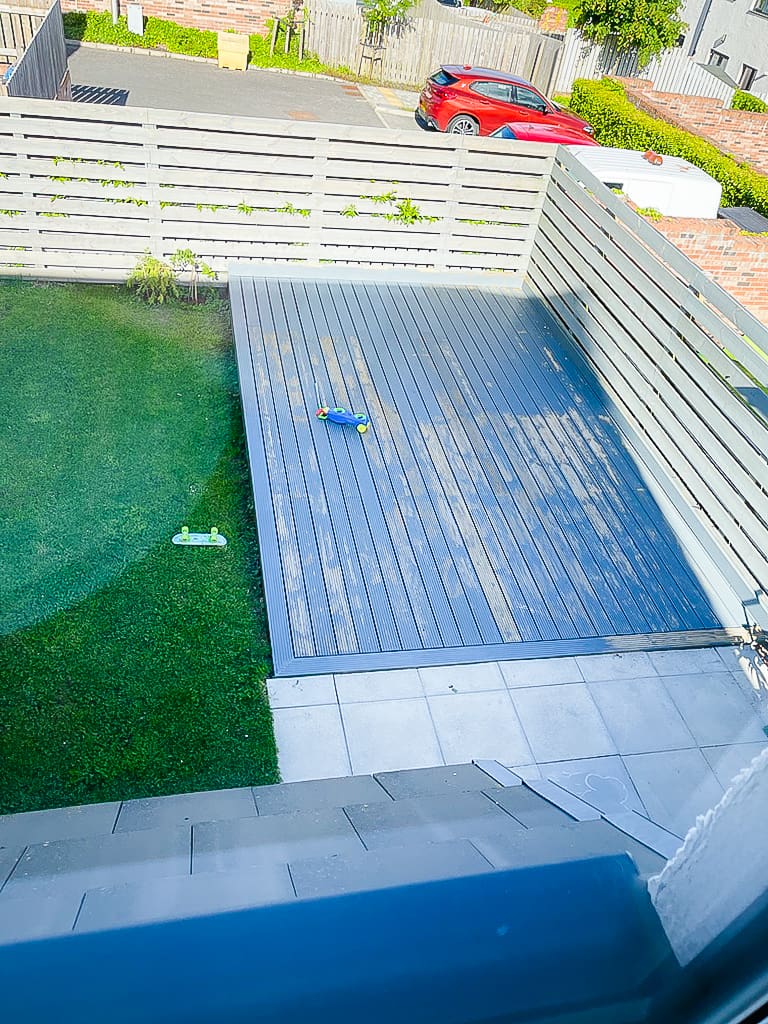
The first proper investment came in 2021, when I had the garden slabbed and a raised deck put in. The original patio was a thin path with a downwards slope, so it was levelled out with new slabs laid over the top; look closely and the newer grey sits just a shade lighter than the old. Raising the deck had a knock-on effect too: with the ground now level, the neighbours’ fence suddenly only came up to knee height, so that needed replacing as well. One job has a habit of quietly becoming three. Getting the hard landscaping right early was still the best decision I made, even though it meant the pretty part had to wait a while longer. Good bones first, flowers later.

Then life got in the way of the garden again. Having moved out of the house for a year in 2023, I came back in the summer of 2024 to find the deck left to rot. Before anything pretty could happen, the whole thing had to be sanded right back and repainted, and the old paint came off with a Ryobi pressure washer rather than hours on hands and knees with a sander. Blasting flaking deck paint off with a pressure washer is one of those jobs that looks alarming for the first ten minutes and then becomes oddly satisfying. The same machine has since earned its place several times over on the patio, which goes green and slippery every winter without fail and comes back a shade lighter every spring. That tired, weathered deck ended up being the real starting point for the makeover, and honestly there was nowhere to go but up.
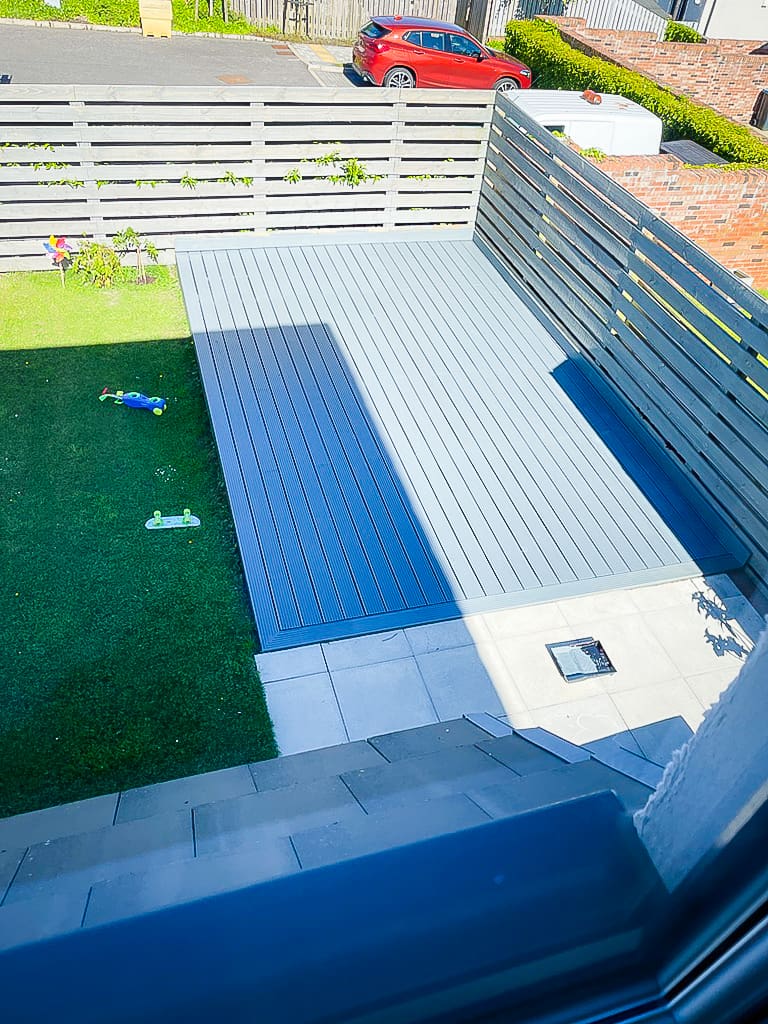
The seating area sat a little empty at first, just a worn out sofa and a table doing their best. This year we added to it properly, and it has finally earned its keep. We added deck lighting, a pair of rocking chairs now sit out on the deck next to the sofa and rug, and they have quietly become my favourite spot in the whole garden: cup of coffee in hand, first thing, while the children tun riot. We also added a proper storage box for the outdoor cushions, and that one solved a genuinely irritating problem. The cushions used to live under a cover through summer, but a single winter finished that cover off completely. Come the colder months they were then shoved into the garage, which was fine until the garage started becoming something else entirely. We are part way through converting ours into a home gym, so the cushions needed a home of their own that could stay outside all year round.
Container gardening on the deck
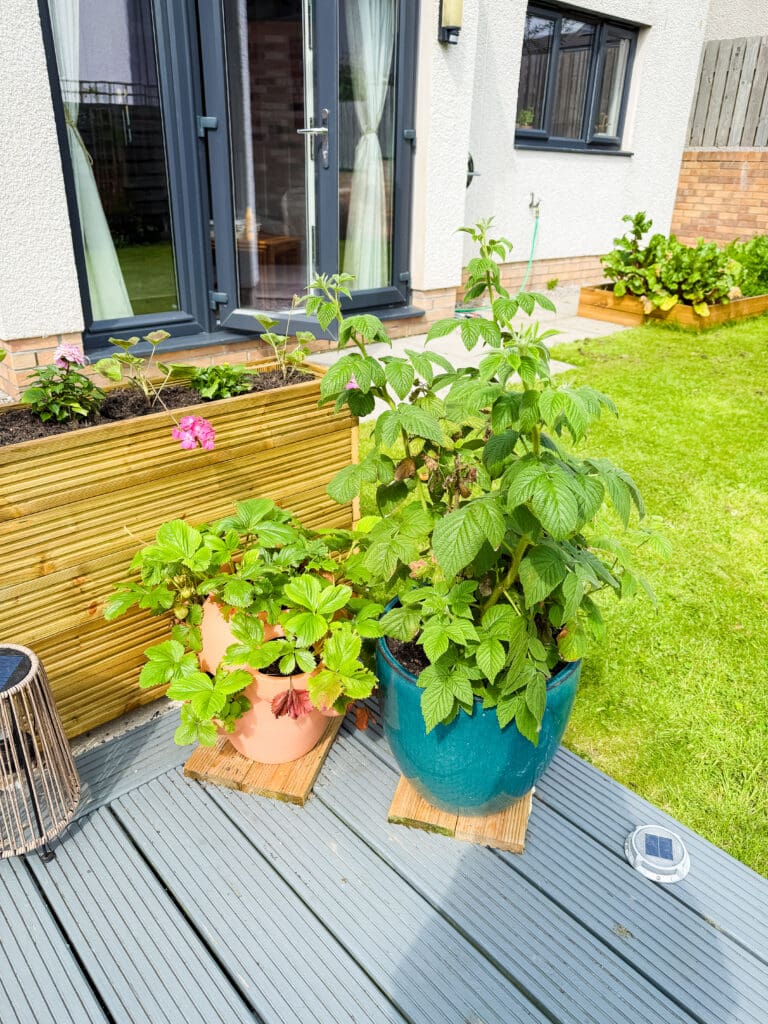
The deck itself has become a container garden in miniature. A strawberry planter went in this spring, along with a golden raspberry bush and two camellia. All of it arrived in 2026, which tells you something about how recent this whole flurry of planting really is. Growing a few edibles a couple of steps from the kitchen door has been one of the small everyday luxuries of the year: expensive to buy, cheap to grow, and lovely to pick still warm from the sun.

Building raised planters and a DIY windbreak
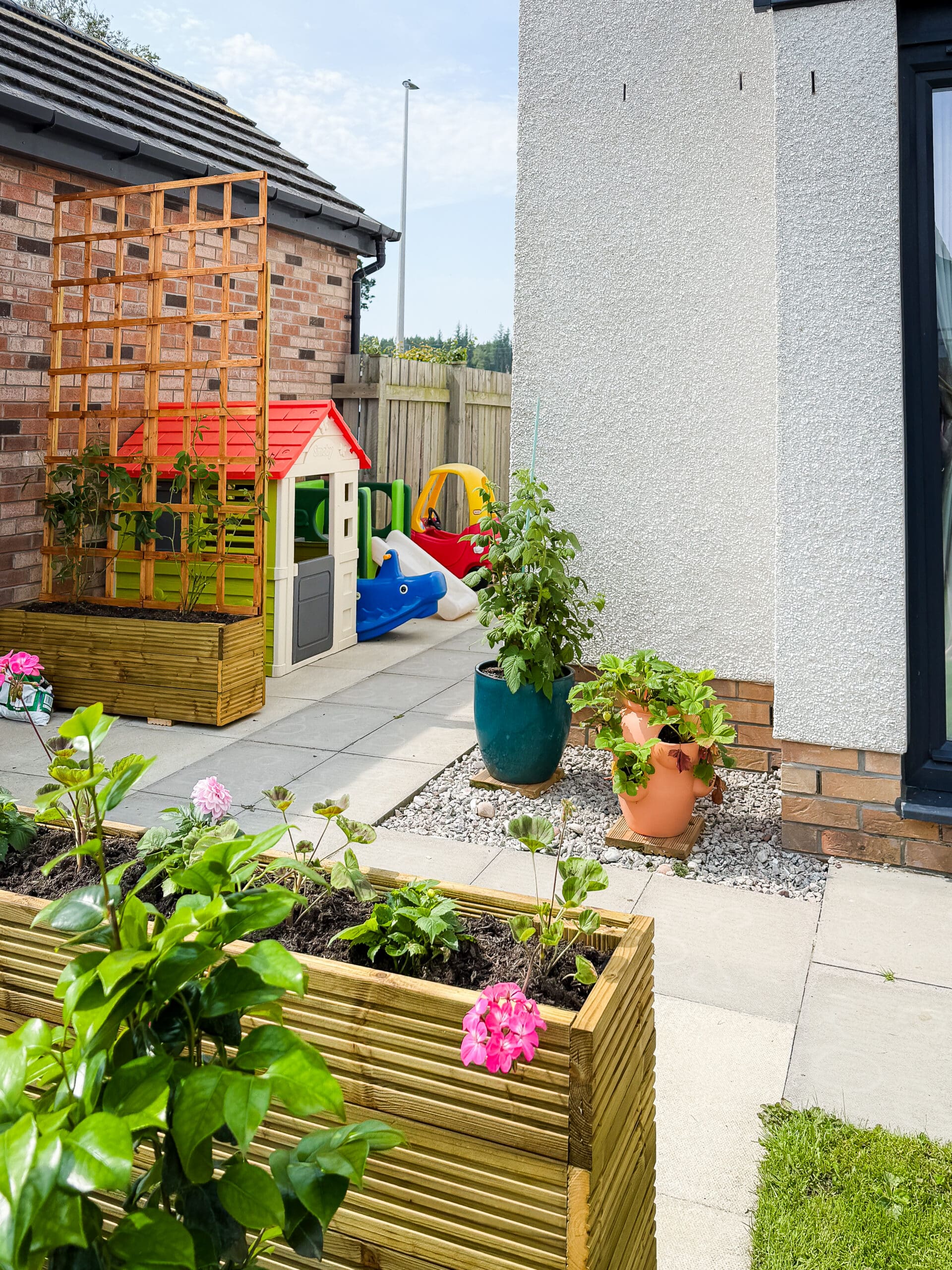
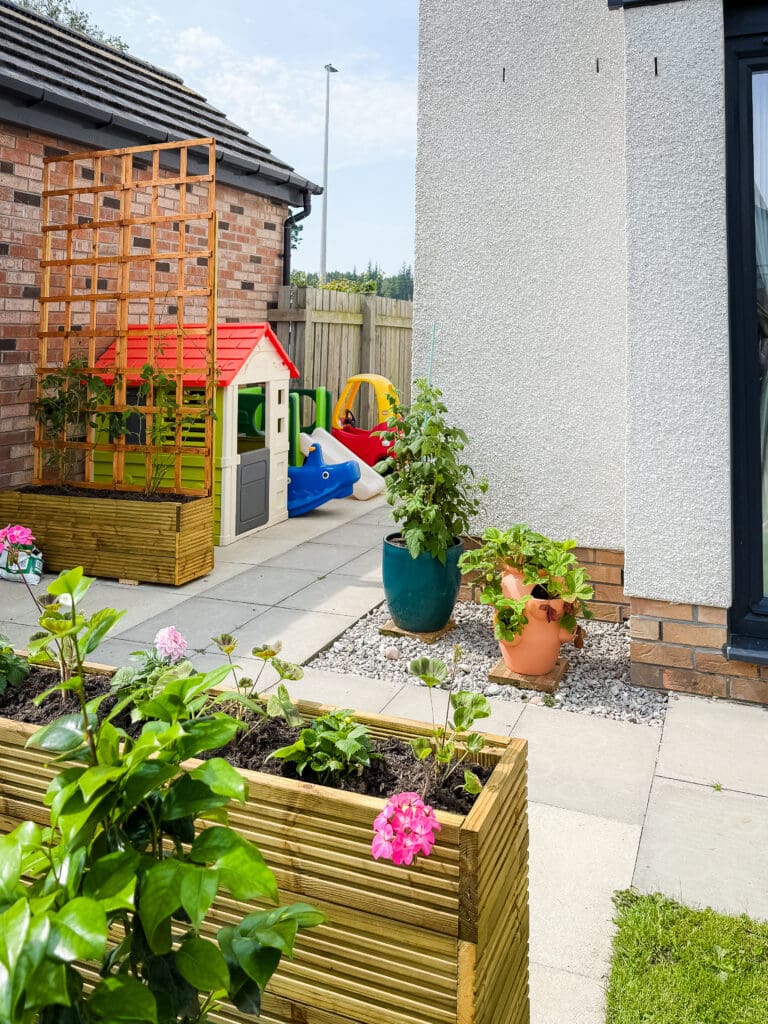
This is the part I have been most looking forward to sharing, mostly because it happened this week, and I’m still looking at my partner with big heart eyes (😍). We (the royal “we”, all him) built a set of deep raised planters, filled now with dahlias and geraniums. The method is the same one we used for our garden raised bed, just taller, with solid bottoms and a membrane lining so the soil stays put and the timber lasts longer. Standing planters like these are worth the extra effort if you want height and structure without digging up your lawn.

The trellis windbreak that also hides the kids’ toys
The cleverest build, and the one solving two problems at once, is the trellis windbreak. Same construction as the planters above, a touch shorter, with a tall trellis fixed to the back. Living opposite that open field means the wind down the side of the house can be genuinely fierce, so the planter now acts as a proper barrier for the seating area. Two Claire Austin climbing roses are settling into it, and once they scramble up the trellis the whole thing should be as pretty as it is practical. The happy secondary benefit: it neatly screens the children’s plastic play toys from view. Function and a bit of a tidy-up, all in a single build.


The edible garden
The raised vegetable planter
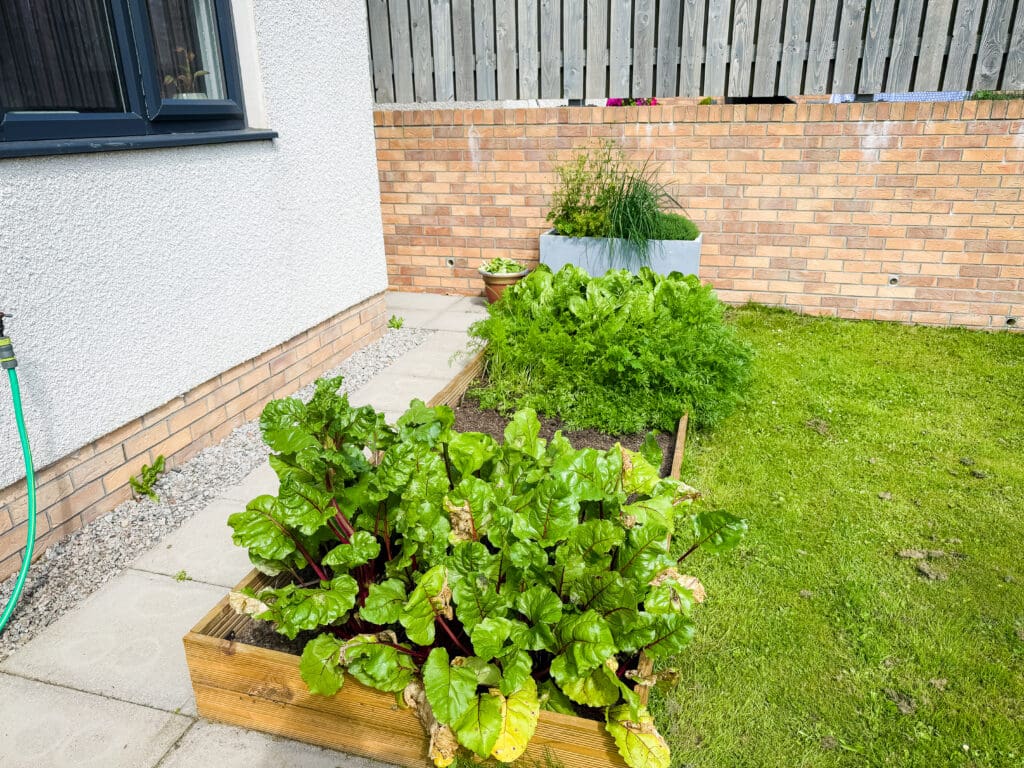
The vegetable planter has been the surprise joy of the last three months. We have pulled more spinach (before it bolted) and more lettuce than any family could reasonably eat, along with spring onions and a crop of very enthusiastic, very tiny carrots. Note to self for next year: sow the carrots far further apart. The beetroot has been an experiment, and a fun one, even if the results lean more towards “interesting” than “abundant”. All of it has taught us more than any perfectly styled plot online ever could.
The herb garden
The herbs are having a proper moment. The parsley has bolted into flower and is busy preparing to re-seed itself, the chives are trying to assert dominance over everything within reach, and the thyme is simply looking lovely with its little flowers. Feeding all of this is a fairly relentless watering routine, and eventually the composter round the side of the house, which is still building up to its first proper batch.
The pleached fruit trees
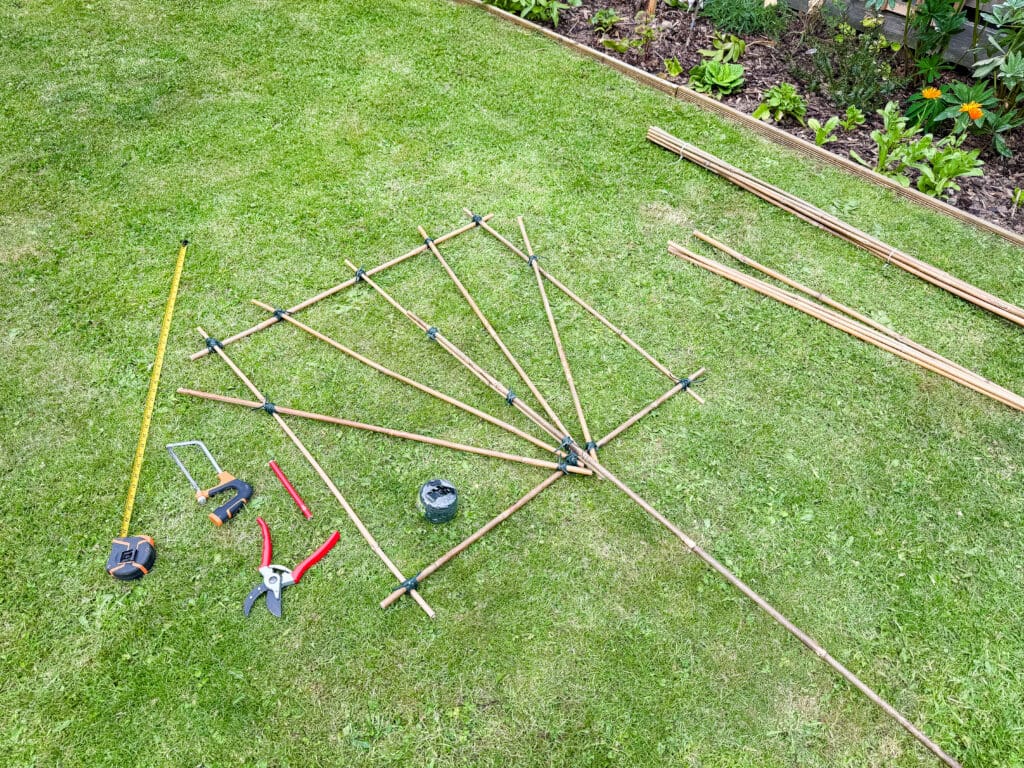
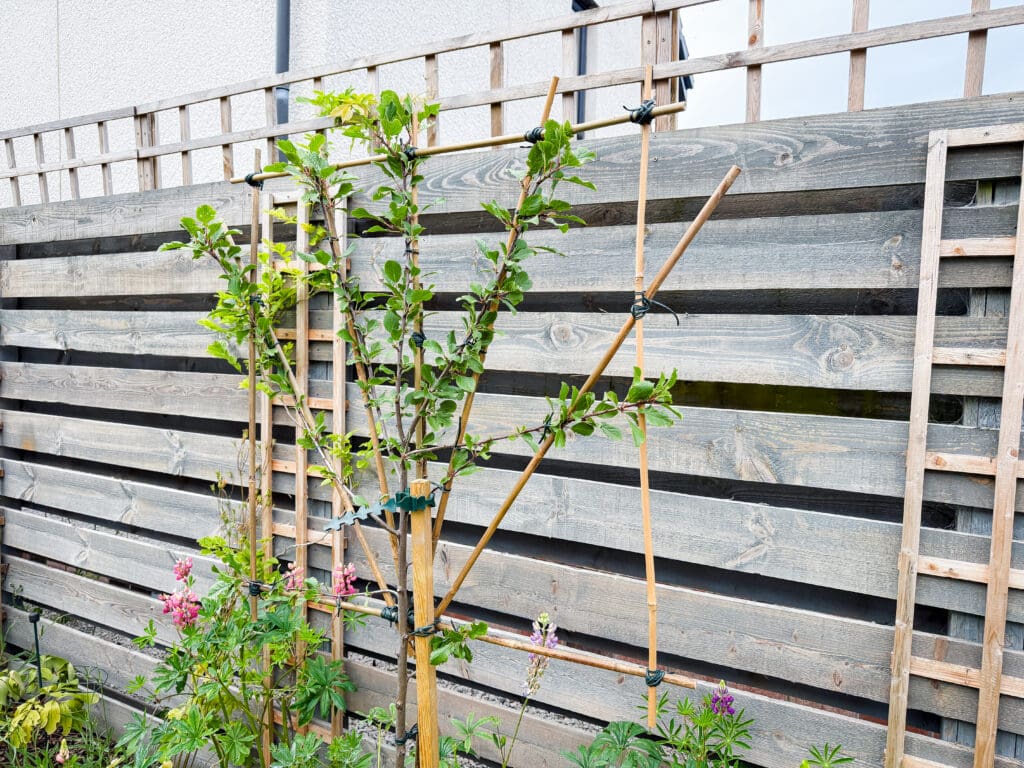
The fruit trees needed a firmer hand than expected. Left to themselves they were heading out sideways over the grass, which meant ducking under branches with the mower and losing usable lawn to a shape nobody had chosen. Pleaching solved it: the branches are being trained flat along the length of the flowerbed, tied in against bamboo canes so they grow along the border rather than out into the middle of the garden. The technique sounds far grander than it is, and the equipment cost roughly the price of a coffee. Bamboo canes, soft ties, and a willingness to keep checking on them through the growing season is genuinely all it takes. Trained trees also crop better in a small garden, because the fruiting wood gets light along its whole length instead of shading itself out.
The compost bin
A compost bin went in down the side of the house at the start of this year, in the narrow strip that was previously doing nothing except collecting dead leaves and the odd football. Every kitchen scrap, grass clipping and handful of weeds has gone into it since, and it has been filled to the brim almost weekly. What has not happened yet is compost. Six months in, the bottom layer is still very much a work in progress, and there is something quietly humbling about a project that refuses to be hurried along. That is rather the theme of this whole garden, admittedly. Everything suggests the first proper batch should be ready to dig out later in the year, which will feed the vegetable planter and the flowerbeds without a single bag bought in. Free soil improver made entirely from things that were already destined for the bin is about as satisfying as gardening gets.

The flowerbeds and lawn
Digging, and then re-digging, the flowerbed
The main flowerbed began as a solo project, cut out of the lawn by hand over a couple of weekends with a spade, a length of string and a great deal of optimism. It was fine. It was also, as became clear later, far too shallow to give anything a proper root run, which is why the first year of planting looked so underwhelming.
Then my partner moved in and, with the tact of someone who had clearly been thinking about it for a while, dug the entire thing out again to double the depth. Border trim went in along the edge at the same time, and that small addition has done more for how the garden reads than almost anything else. A defined edge stops the soil creeping onto the grass, makes mowing along the border straightforward, and gives the whole bed a finished look even in February when there is nothing much in it. New build gardens tend to have sharp, unforgiving lines everywhere, so a proper curved edge softens things considerably.
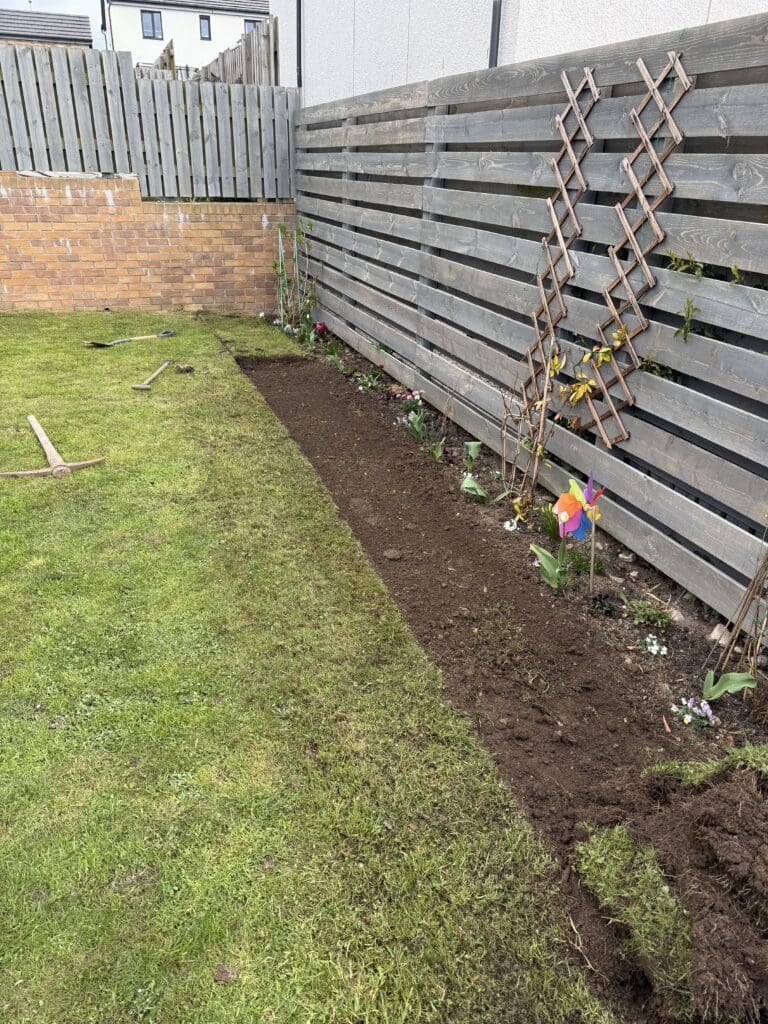
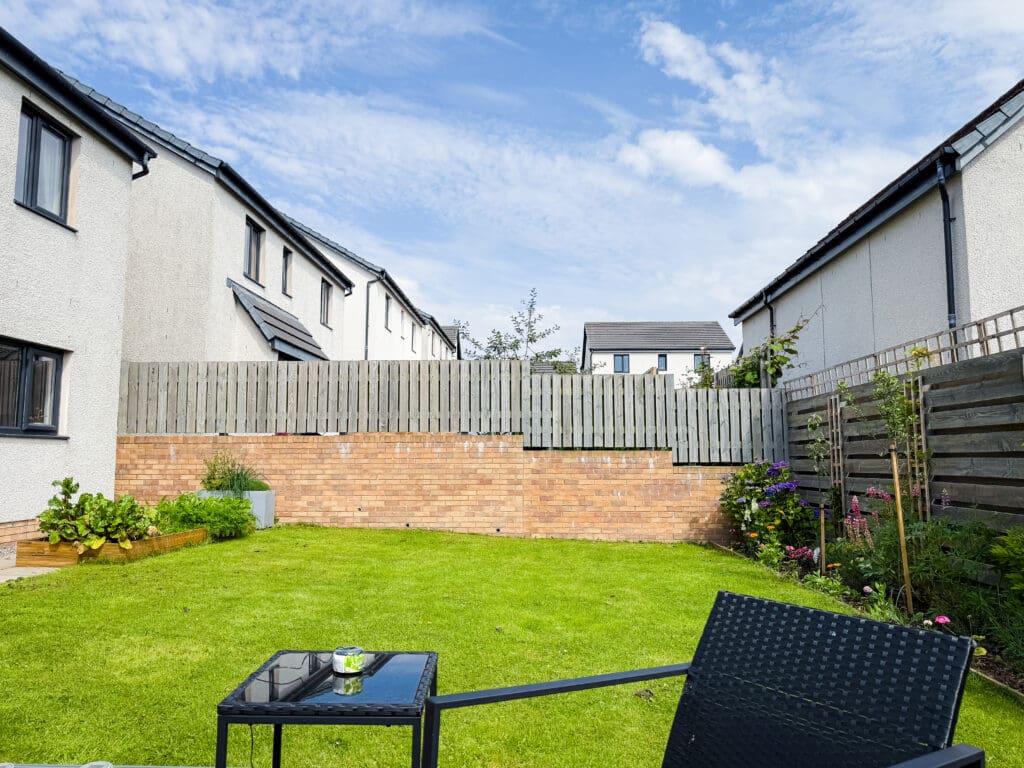
Over in the main flowerbed, the hydrangeas are thriving and doing most of the heavy lifting on colour. The lupins were taking over last month and looked wonderful, but the snails found them first, so they have since been cut right back. The wisteria is finally growing with real intent, reaching the top of the fence trellis at long last, and the lavender is starting to take proper shape.


We also had a lovely flurry of snapdragons, though rust caught them and only a few now remain. Rather than lose them entirely, the whole lot came inside, stems stripped of their leaves, and we enjoyed a good two weeks of them in a vase on the kitchen table. Cutting rusty snapdragons to enjoy indoors is a small trick worth knowing; the flowers keep going long after the plant has given up outside.

The lawn revival
The grass, by mutual agreement, is entirely my partner’s department. Under his care it has gone from a mossy, patchy mess to something noticeably greener and thicker. Most of the credit goes to consistency rather than anything clever: scarifying, feeding, and cutting little and often with a Ryobi cordless mower. Going cordless made more difference than expected, mostly because there is no cable to drag around the raised planters and no faff involved in a quick fifteen minute tidy-up. A mower that lives on a shelf in the garage and starts with a button gets used far more often than one that requires a plan. My working theory is that the lawn is still ninety per cent weeds wearing a very convincing disguise, but the moss has gone and it genuinely looks the part now, which is more than we could say two years ago. New build lawns are a slow battle, and this one is quietly being won (but also maybe not, because this is neither my department, nor any of my business…).

What is coming next
The next project is already sketched out in my head. Before February, the plan is to build a raised planter dedicated purely to cut flowers for the house. The spot I have in mind is a thin strip of weeds in the front garden, tucked behind an existing bush, where nothing useful grows anyway. Using that forgotten corner means giving up no real garden space, and the bush should shelter it nicely from the wind. A dedicated cutting patch has been on the wish list for years, so 2027 might finally be its moment.
If there is one lesson from this slow, six-year, mostly-last-year transformation, it is that a blank canvas is a gift rather than a burden. You get to make every decision at your own pace, learn as you go, and end up with a garden that actually suits your life instead of a magazine’s deadline. Mine took a change of chapter to really get going, and it was worth every year of waiting. Take the pressure off, plant the thing, and let it grow into itself.

Leave a Reply
If you like the sort of recommendation that still holds up six months later, leave your email below and I'll write to you on Sunday.
Most Sundays, once the house has gone quiet and it's edging towards nine, a letter goes out. It's the one I'd write to a friend with good taste and not nearly enough time: one thing worth reading, one thing worth buying, and one thing to skip. No noise, no pressure to spend, just the considered version of what I've actually been using, loving, or quietly sending back.