There’s a moment in every woman’s life when she looks down at her water bottle and thinks, “You know what this needs? Bluetooth.” No? You sure? Well, apparently someone at a product development meeting thought exactly that, because smart water bottles are very much a thing now, and one recently landed on my desk for review.
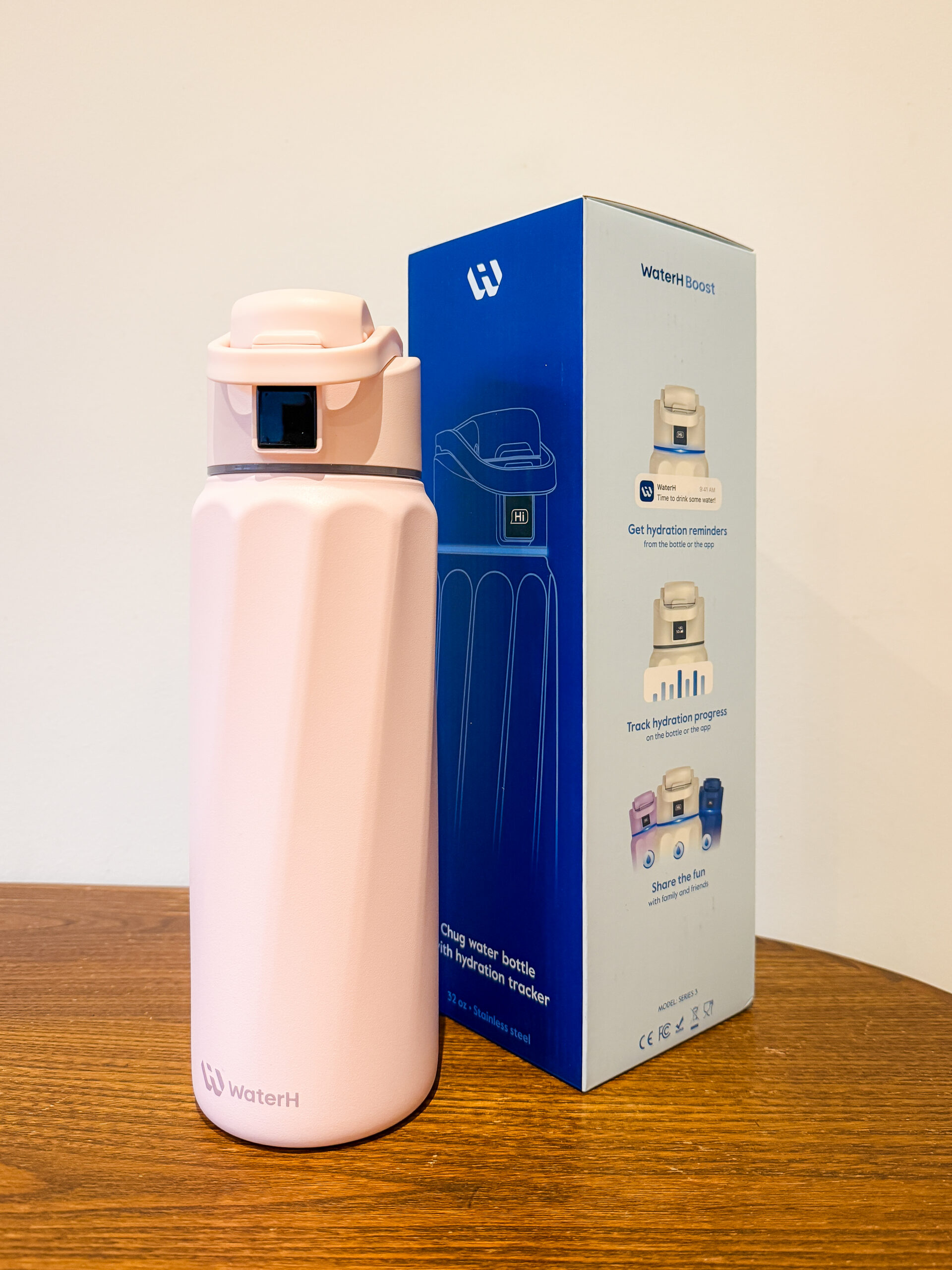
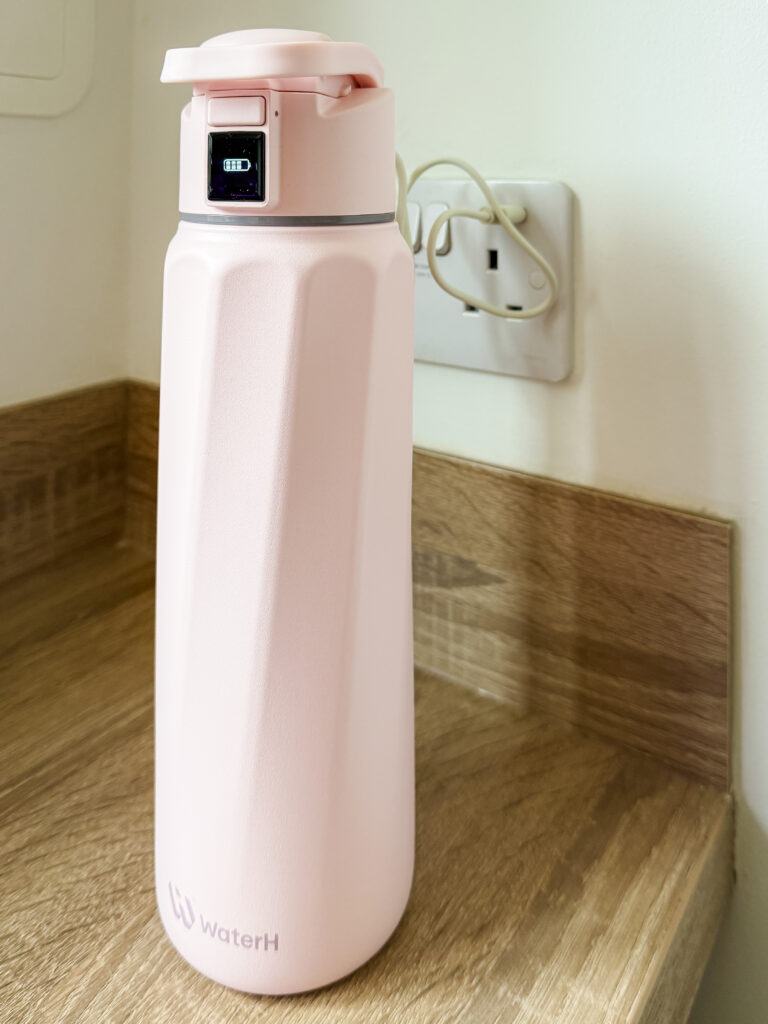
The WaterH Boost is a 32oz (946ml) smart water bottle that connects to an app on your phone, tracks your water intake using built-in sensors, sends you hydration reminders, and even measures the quality of your water. It charges through USB-C. It receives firmware updates. It glows. And after spending time with it, the question that keeps circling my mind isn’t whether this particular bottle is good or bad. It’s something bigger: do we actually need our water bottles to be smart? Has the health and wellness tech space officially tipped over into the absurd?
Because here’s the thing. Staying hydrated matters. Nobody is arguing otherwise. But somewhere between “drink more water” and “let me charge my water bottle and update its software,” we seem to have lost the plot a little.

What the WaterH Boost Bottle Actually Does
Before getting into the bigger conversation, let me explain what you’re getting with the WaterH Boost, because the concept is genuinely interesting on paper.
The bottle itself is a double-walled, vacuum-insulated stainless steel bottle that keeps drinks cold for hours. So far, so normal. Where it gets clever is the built-in sensor that sits in the cap and tracks how much water you drink throughout the day. This data syncs to the WaterH app via Bluetooth, where you can see your daily, weekly, and monthly hydration stats. You set a daily water intake goal based on your weight and activity level, and the bottle’s 360-degree LED light ring glows when it’s time to take a sip.
On paper? Genuinely clever. The kind of product that sounds like it was designed by someone who really thought about the problem of staying hydrated when life gets busy.
My Honest Experience With It
Now for the part where I’ve got to be completely honest.
The WaterH Boost arrived looking sleek enough. The matte finish is attractive, the build quality feels solid, and the wide-mouth opening makes it easy to fill and clean. Setting it up was straightforward: charge the bottle, download the app, connect via Bluetooth, enter your details, and off you go. (although having an app for a water bottle was already making me feel a bit weird)
The problems started almost immediately.
The tracking is wildly inaccurate. My bottle is the 32oz model, which holds 946ml. Halfway through my first fill, the app was telling me I’d already consumed 1,379ml. That’s nearly one and a half litres from a bottle that physically cannot hold that much liquid. When the core selling point of a product is accuracy, and the very first measurement is off by that margin, you lose confidence in the entire system pretty quickly.
Worth noting: WaterH did send me out a replacement water bottle when I told them the readings were completely inaccurate. But unfortunatly that one was measuring in the exact same way. Their customer service is great. But unfortunately, their product is poor.
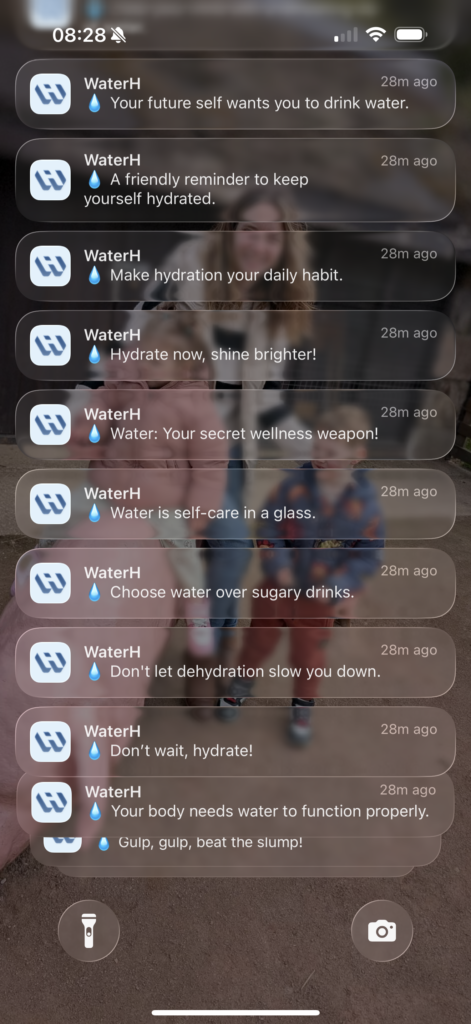
Then there are the notifications. The app lets you set hydration reminders, and mine was configured to nudge me every two hours if I hadn’t had a drink, which seemed reasonable. Instead, it sent around twenty notifications at eight o’clock in the morning. Not spaced throughout the day. Not gentle nudges every couple of hours. Just a wall of “drink your water” alerts before my morning coffee had even cooled down. It felt less like a wellness tool and more like an overly anxious friend who cannot take a hint.

To be fair, the insulation is genuinely good. Water stays cold all day, and the bottle itself is comfortable to carry. But those are qualities you can find in any decent insulated water bottle for a fraction of the price, without the need for a charging cable and a Bluetooth connection.
The Bigger Question: Has Health Tech Gone Too Far?
This is the conversation worth having, and it extends well beyond one water bottle.
Over the past few years, the wellness technology market has exploded. Smartwatches track our steps, heart rate, sleep cycles, and stress levels. Apps monitor our calorie intake, our menstrual cycles, our screen time, and our mood. Smart scales measure our body fat percentage. Smart rings track our recovery. And now, smart water bottles track every sip we take.
At what point does “helpful technology” become “technology for the sake of technology”?
There’s a genuine argument for fitness trackers and smartwatches. They consolidate useful health data into one place, they can flag genuine health concerns, and for many people, the accountability of closing those activity rings or hitting a step count genuinely improves their daily habits. That’s technology solving a real problem in a meaningful way.
A smart water bottle, though? The problem it’s solving is remembering to drink water. And with respect to the engineers who built it, there are simpler ways to solve that problem. A large reusable water bottle that you keep on your desk. A glass you refill throughout the day. A phone alarm, if you really need one. None of these require firmware updates.
The wellness industry has a habit of taking perfectly simple habits and wrapping them in technology, then marketing the technology as the solution rather than the habit itself. Drinking enough water isn’t a tech problem. It’s a behaviour problem, and the fix is usually just having water within arm’s reach and being a little more intentional about it.
When “Smart” Doesn’t Mean Better
There’s also a practical concern that rarely gets discussed in the breathless tech reviews: maintenance.
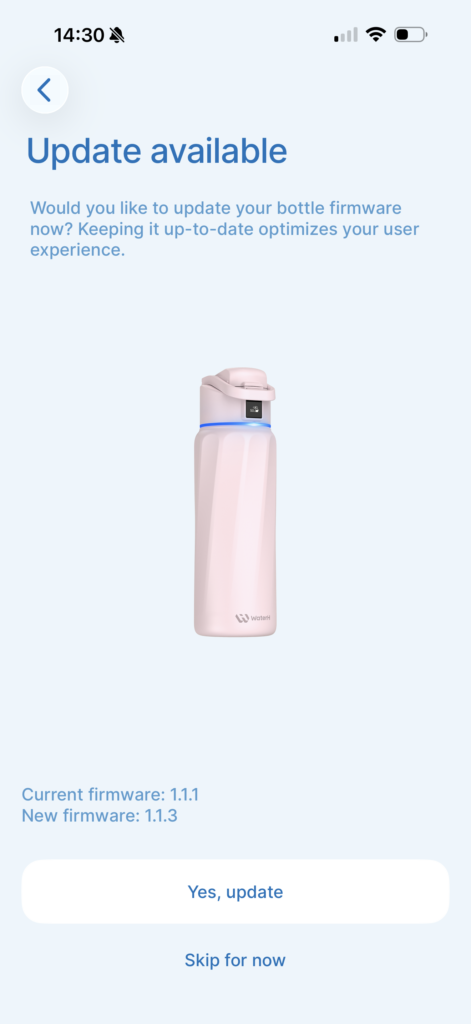
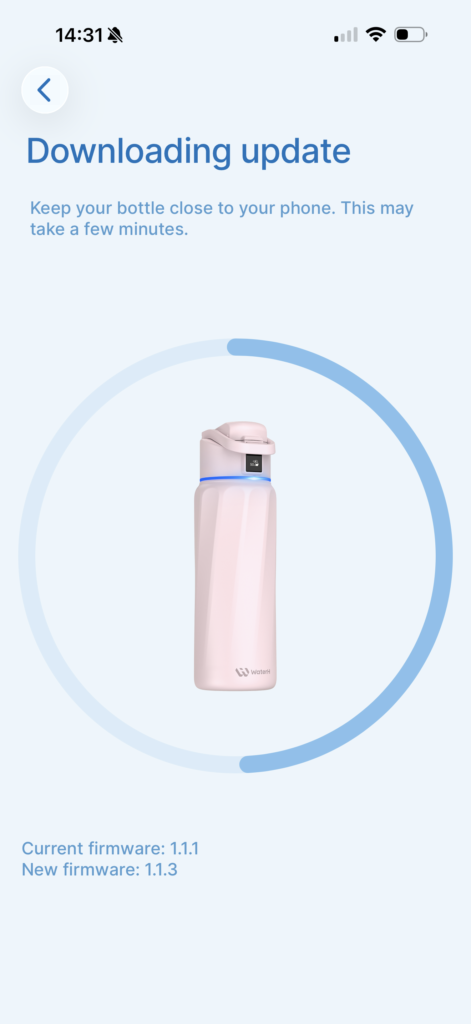
A regular water bottle requires washing. That’s it. A smart water bottle requires washing, charging, keeping the app updated, maintaining a Bluetooth connection, and periodically running firmware updates. On an item you put your mouth on and carry around every single day. There’s something fundamentally funny about standing at the kitchen counter waiting for your water bottle to finish its software update before you can use it, and not in a charming “isn’t modern life quirky” way. More in a “we have genuinely over-engineered the act of drinking water” way.
Then there’s the environmental angle. A standard stainless steel water bottle will last you years, possibly decades, with zero electronic waste. A smart water bottle has a battery that will eventually degrade, sensors that may stop working, and an app that may lose support. When (not if) the tech side stops functioning, you’re left with an expensive, slightly heavier than average water bottle with a dead screen in the cap.
What Actually Works for Staying Hydrated
Since this post is ultimately about hydration, here’s what genuinely works, without any technology involved.
Keep a water bottle visible and within reach. That’s it. That’s the single most effective hydration habit. If your water is sitting right there on your desk, your kitchen counter, or your bedside table, you’ll drink it. Humans are creatures of convenience. We eat what’s easy to reach, we check the phone that’s in our hand, and we drink the water that’s already in front of us.
If you want to be a little more structured about it, a large capacity water bottle with time markings on the side does the same job as a smart bottle’s tracking feature. You can see exactly where you should be by noon, by three o’clock, and by the end of the day. No charging required. No app. No twenty notifications at breakfast.
For anyone who genuinely struggles with hydration, linking water intake to existing habits works brilliantly. A glass of water with every meal. A full bottle before your morning coffee. A refill every time you come back from the bathroom. These tiny, repeated habits add up quickly, and they stick because they’re attached to things you already do every day.
And if you want something that feels a little more intentional, investing in a water bottle you actually love using makes a bigger difference than you might expect. A beautifully designed glass carafe for your desk. A premium insulated bottle in a colour that makes you happy. Something that feels like a small luxury, like a S’well bottle, rather than a piece of tech you have to manage. That’s the everyday luxury approach, and it works.
Who Might Actually Benefit From a Smart Water Bottle
To be balanced about this, there are people for whom a smart water bottle could genuinely help. Athletes and serious fitness enthusiasts who need precise hydration data alongside their other training metrics. People with medical conditions where tracked fluid intake is clinically important. And perhaps people who respond extremely well to gamification and app-based motivation. Although you will need to find a smart bottle that actually tracks fluids correctly for this. And even then, they would need to find one that measures accuratly.
For the vast majority of us, though? It’s a solution looking for a problem. And when that solution costs upwards of £40 to £50, requires charging, and (in my experience) can’t even accurately measure how much water is in the bottle, the old-fashioned approach starts looking not just simpler, but genuinely superior.
The Verdict
The WaterH Boost isn’t the worst product in the world. The build quality is decent, the insulation is impressive, and the concept of gamifying hydration has worked well for some people. But the inaccurate tracking, the notification chaos, and the fundamental absurdity of needing to charge and update the firmware on something you drink water from make it very difficult to recommend.
More broadly, it’s a product that represents a trend worth questioning. Not everything in our lives needs to be smart. Not every habit needs an app. And sometimes, the most luxurious thing you can do is keep things beautifully simple: a gorgeous water bottle, filled with cold water, sitting right where you can reach it. No batteries required.
If you’re interested in other honest product reviews where the pretty packaging doesn’t get a free pass, have a browse through the product reviews section for more.
Leave a Reply
If you like the sort of recommendation that still holds up six months later, leave your email below and I'll write to you on Sunday.
Most Sundays, once the house has gone quiet and it's edging towards nine, a letter goes out. It's the one I'd write to a friend with good taste and not nearly enough time: one thing worth reading, one thing worth buying, and one thing to skip. No noise, no pressure to spend, just the considered version of what I've actually been using, loving, or quietly sending back.