I'm Gillian, a Scotland based home & lifestyle blogger. Follow along as I navigate this new journey sharing my life from home.


Every year I go through the same debate before the decorations come down from the loft. Do I keep doing the same thing, or do I try something new and risk it not working. This year I went back to something more traditional, and it turned out to be the right call.
Our family room got dressed in dark, rich greens with gold and silver running through it. Not the brightest, most maximalist version of Christmas, but the kind that still feels properly festive without looking like it belongs in a shop window.
Here’s how it came together, and what I’d tell you if you’re thinking about doing something similar this year.
Why green and gold works when you want traditional without twee
Green and gold is the colour combination that reads as Christmas without needing a single sprig of tinsel or a plastic Santa in sight. It’s rich rather than bright, which matters if your family room needs to look like a normal room the other eleven months of the year and not just a Christmas grotto for one.
The other thing in its favour is that it works with almost any base palette. Whether your walls and sofa are neutral, deep, or somewhere in between, dark green and gold sit on top of it rather than fighting it. That’s a big part of why it keeps coming back into fashion every few years. It’s not really a trend. It’s just a genuinely good pairing.
Start with the tree, because it sets the tone for everything else
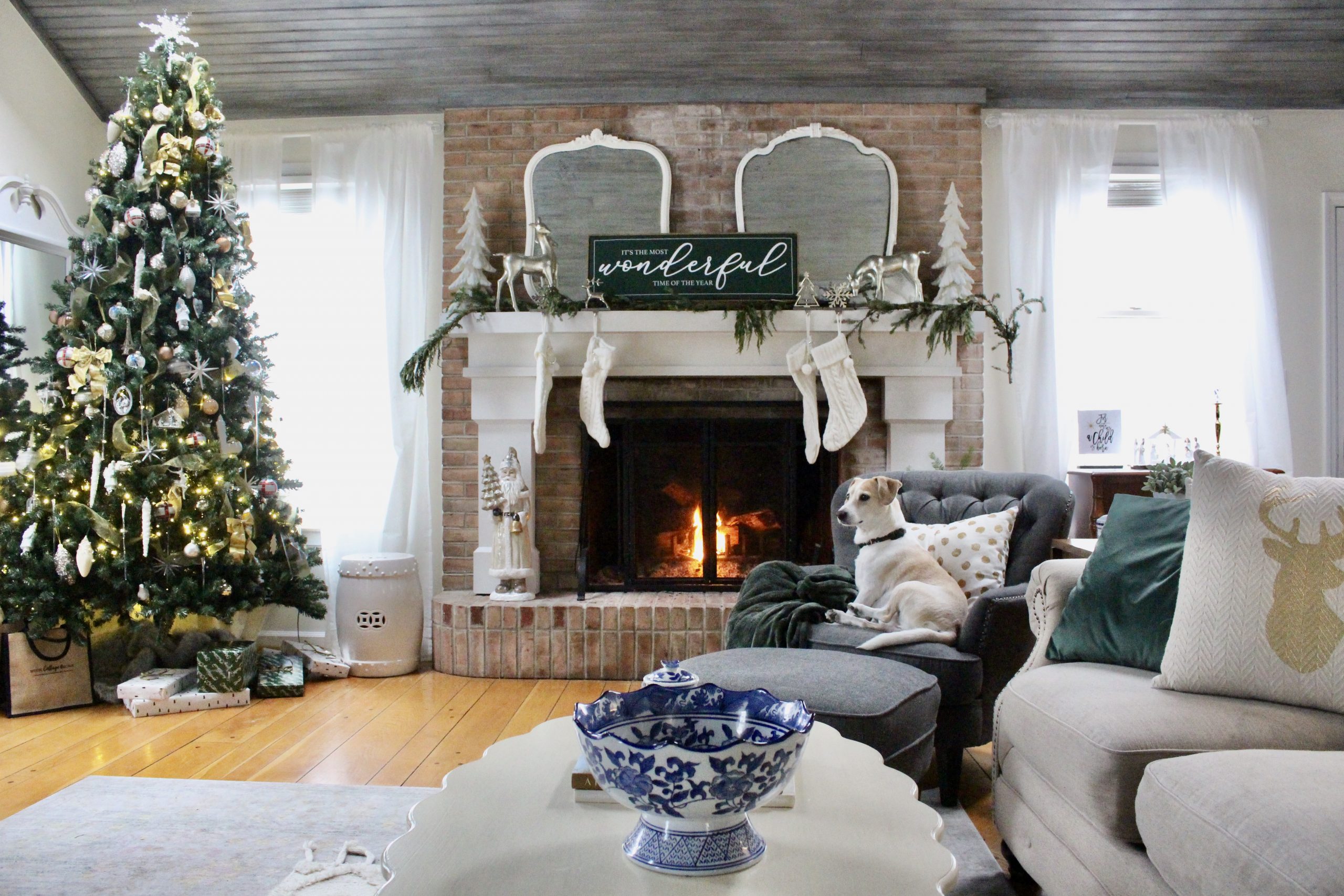
Our tree this year was a nine-foot real one, loaded with glass ornaments, icicles, and gold bows and ribbon threaded through the branches rather than just hung on the ends. That threading detail matters more than it sounds. Ribbon woven in and out of the branches, rather than draped over the top, reads as considered rather than thrown on, and it’s genuinely a five-minute job once you get the rhythm of it.
Glass ornaments over plastic ones make a real difference to how a tree photographs and how it looks in low light, since they catch and reflect far more than a matte bauble does. I’d always rather have fewer, better ornaments than a tree crammed with everything I’ve collected over the years. Editing down is as much a part of decorating a tree as putting things on it.

Let the sofa do some of the work
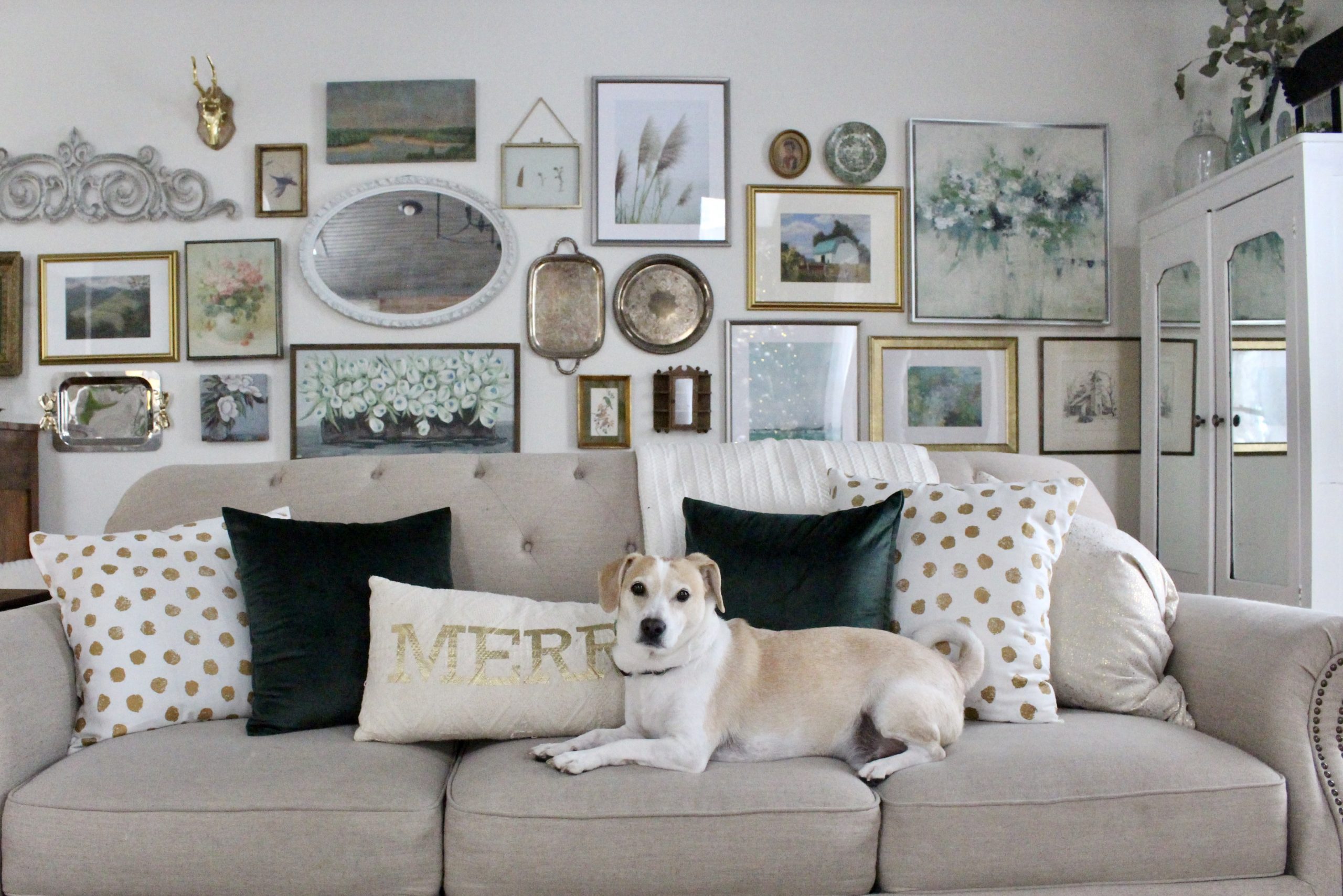
Cushions are the cheapest, fastest way to bring a colour scheme into a room that isn’t already dressed for Christmas, and they’re the first thing I change every year. This time it was dark green velvet covers over cushions I already owned, mixed in with a handful of gold and white ones I’d kept from previous years.
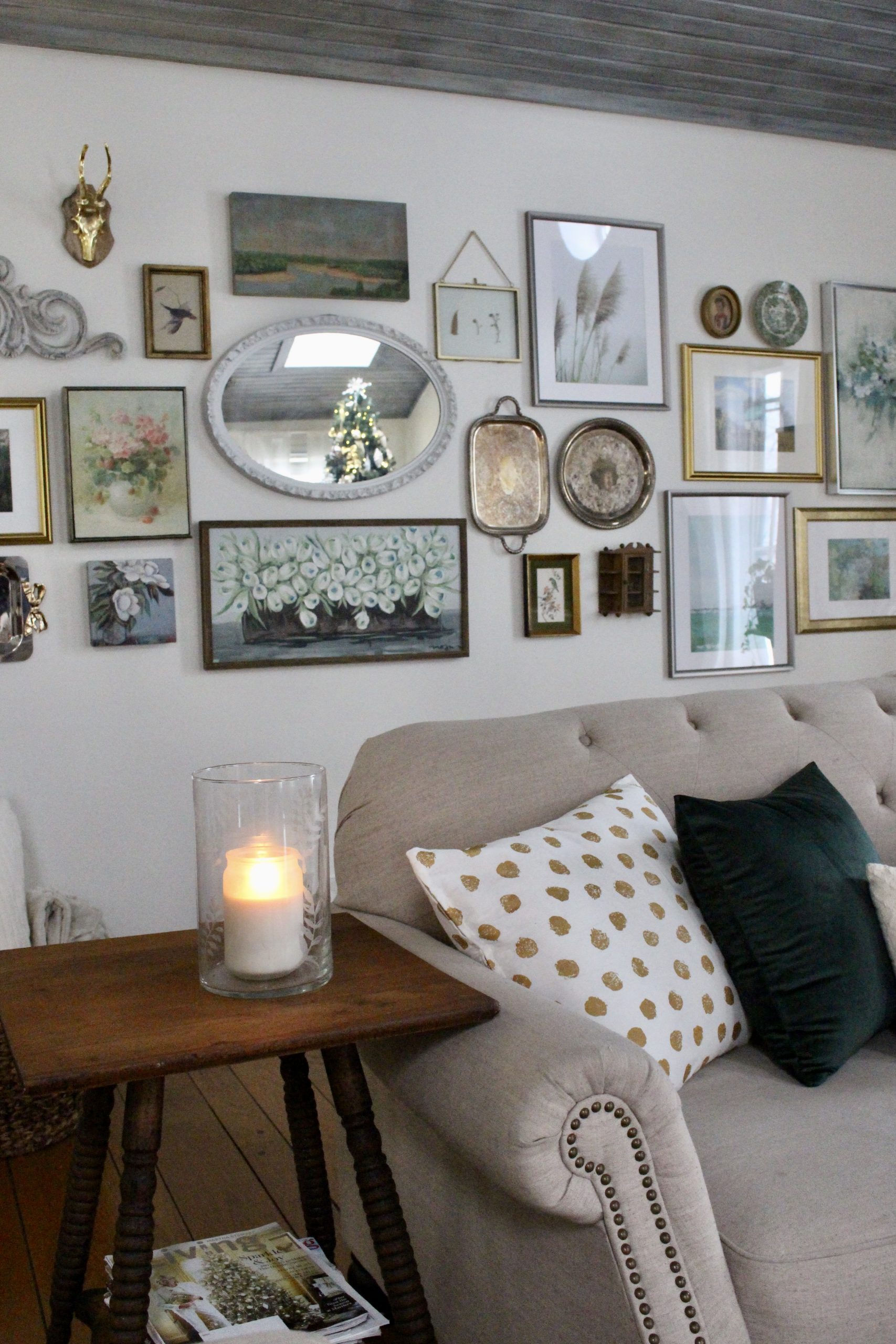
Velvet earns its place here more than almost any other fabric. It has a depth and richness that flat cotton or linen just doesn’t have under the low, warm light most people have on over Christmas, and dark green velvet in particular photographs beautifully against a neutral sofa.
Mixing old and new pillows matters too. You don’t need to replace your whole cushion collection every year to make a room feel refreshed. A couple of new covers layered in with what you already have gets you most of the way there for a fraction of the cost.

The mantel is where the whole look comes together
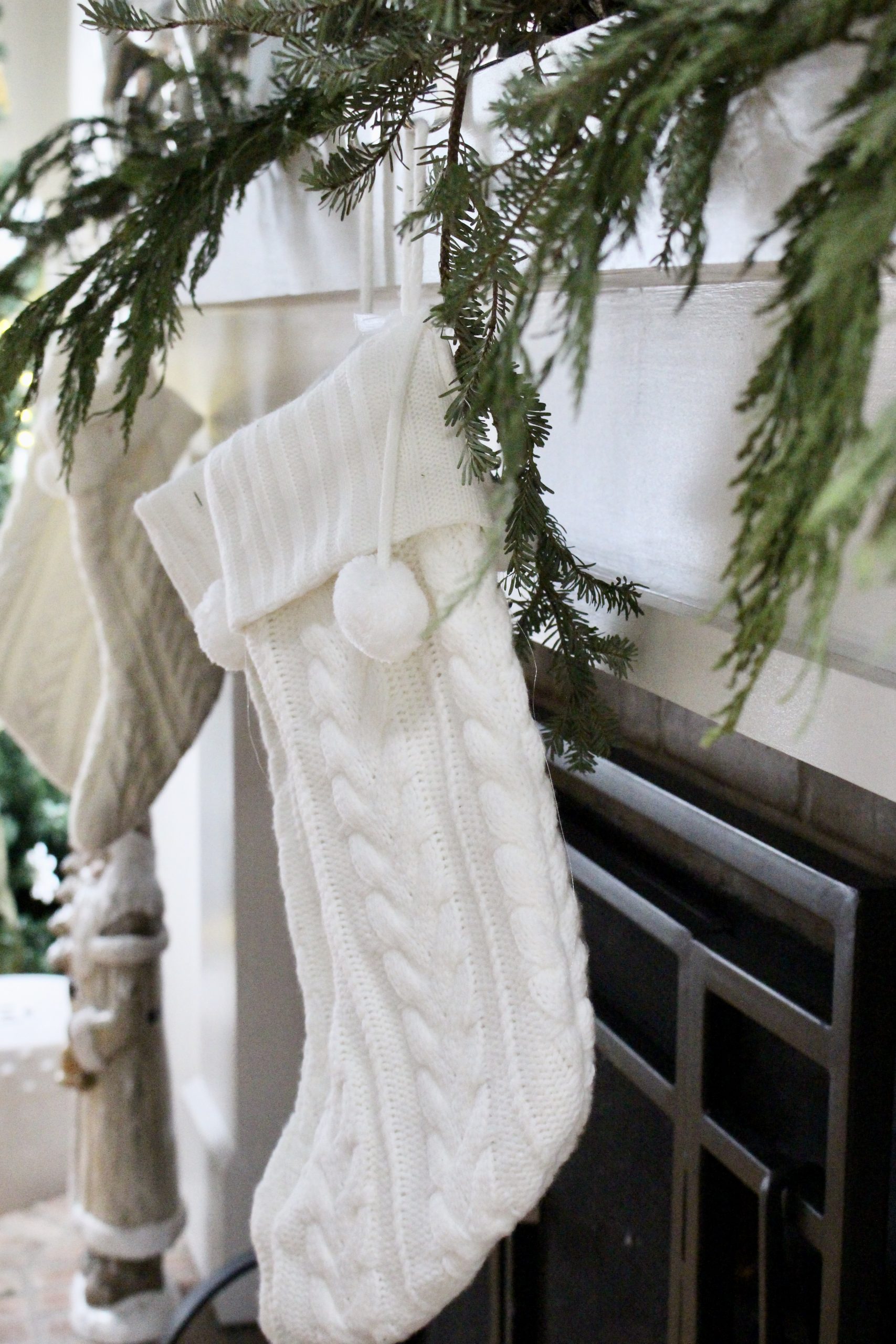
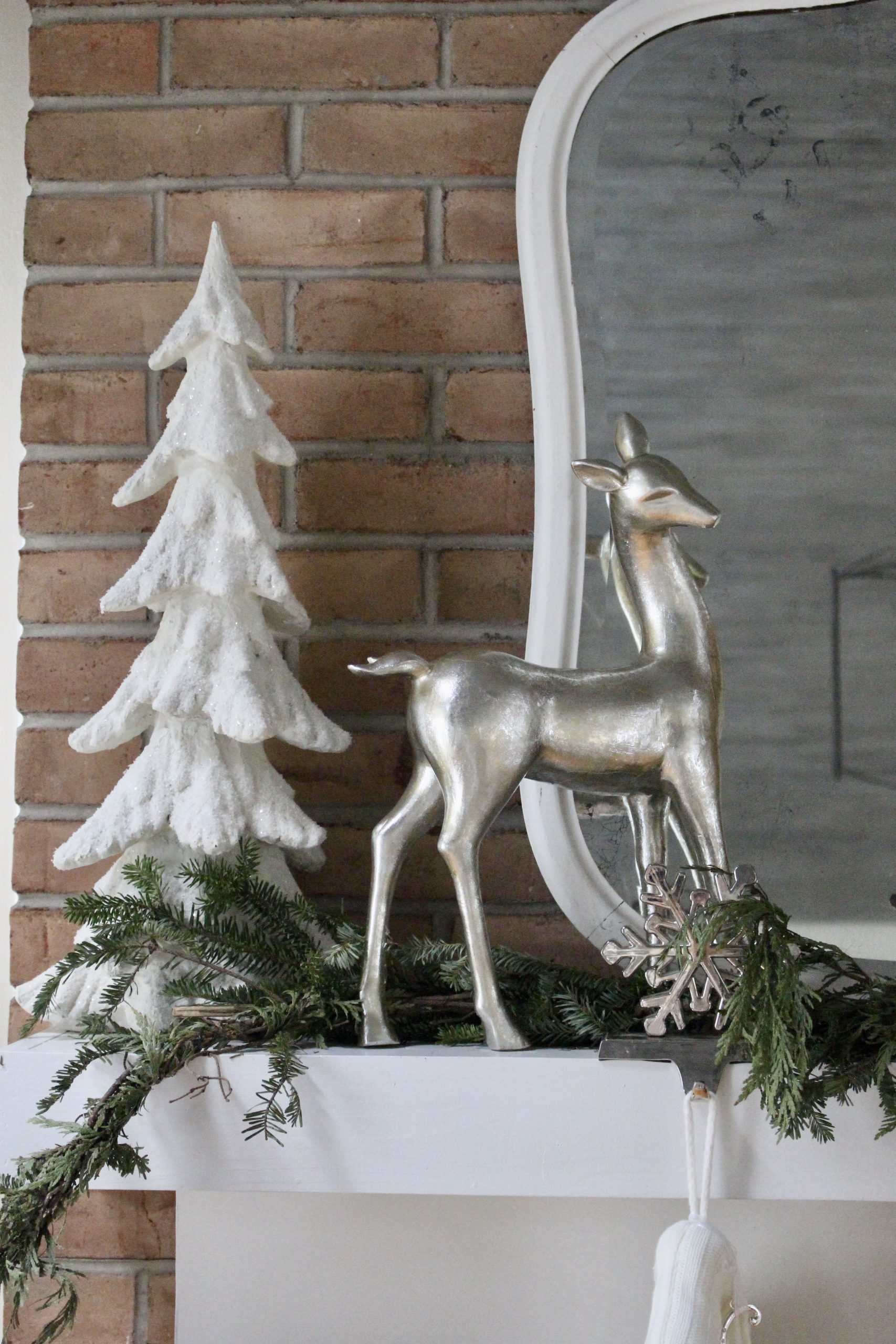
If the tree is the anchor of a Christmas room, the mantel is where you get to have the most fun. Ours got a new wooden sign this year, in a shade that pulled the rest of the scheme together rather than sitting apart from it. On either end sat a pair of white wood trees I’ve had for years now, moved from room to room and Christmas to Christmas, alongside a couple of silver reindeer that have had the same well-travelled history.
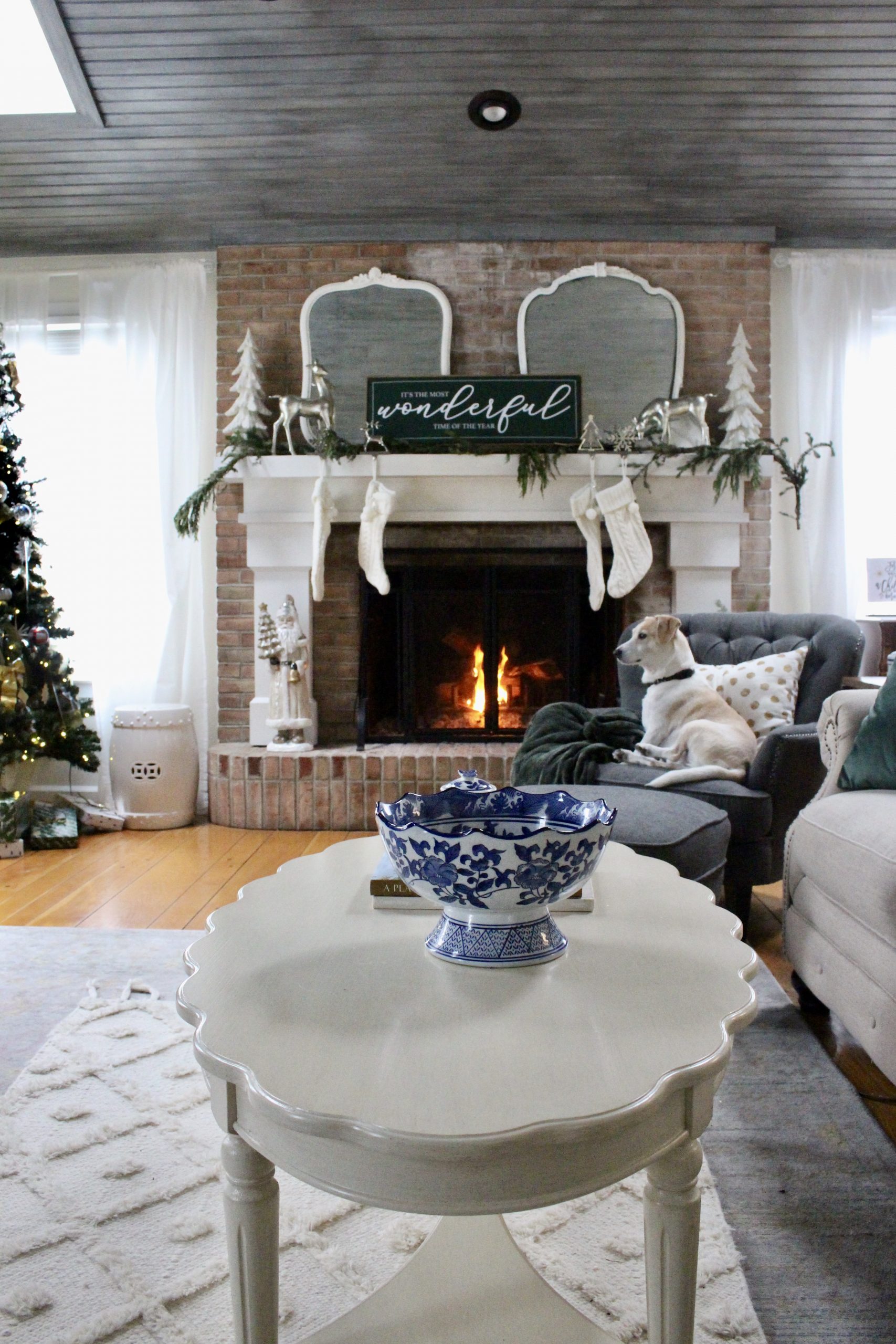
There’s something quite nice about decorations that have knocked around your house for years rather than being replaced every season. They start to feel like part of the family’s Christmas rather than whatever happened to be in the shops that year.

This was the first year I used fresh garland instead of the faux version, and I wasn’t prepared for how much better a house smells with actual pine draped along a mantel. It doesn’t last as long as the artificial kind and it does drop needles, but for the couple of weeks it’s up, it’s worth the extra hoovering.
The mantel formula that actually works
If you’re staring at a bare mantel and don’t know where to start, here’s the structure that tends to work every time, regardless of your colour scheme.
Start with height at both ends. A pair of matching or similar trees, tall candlesticks, or anything vertical anchors the two sides and stops the eye sliding straight off the mantel. Then bring in your garland along the base, letting it drape slightly over the edge rather than sitting in a straight line, which softens the whole thing. A central focal point, whether that’s a sign, a piece of art, or a mirror above, gives the eye somewhere to land in the middle. Finally, scatter smaller pieces, like the reindeer here, in the gaps rather than lining them up, since a slightly asymmetric scatter reads as more natural than a row of identical objects.
Make It Your Own
If your room leans more neutral than ours, gold and cream will do more of the work than green, with just a few sprigs of green to keep it feeling festive rather than simply metallic.
If you want a bolder look, add a deep red into the mix alongside the green and gold. It’s the classic combination for a reason, and a little goes a long way against a dark green base.
If you’re working with a smaller room, keep to the mantel and one other spot, like a console table or windowsill, rather than trying to decorate everywhere. A couple of well-styled spots beat a room where every surface has something on it.
If real garland isn’t practical for you, a good quality faux version with a mix of leaf shapes and some added pine cones or berries gets you most of the way to the same effect, minus the hoovering.
Frequently Asked Questions
Cream, deep red, and warm brown all sit comfortably alongside green and gold without competing with it. Silver also works well as a cooler accent if you want to soften the overall warmth of the scheme slightly.
As a rough guide, allow roughly one and a half times the length of your mantel so it can drape naturally at both ends rather than sitting stretched flat. A six-foot mantel typically needs a nine-foot length of garland to get a proper, relaxed drape.
Real garland smells considerably better and looks slightly more natural, but it drops needles and needs replacing every year. Good quality faux garland lasts for years, sheds nothing, and with a bit of fluffing up looks close enough that most guests won’t clock the difference.
Mix the finishes rather than keeping everything identical. A brushed gold candlestick next to a polished gold bauble, or a mix of glass and fabric ornaments, keeps the scheme feeling collected over time rather than bought as a set.
As a general rule, allow for the tree to reach roughly two-thirds of your ceiling height, leaving enough room for a topper without it brushing the ceiling. In an average family room with a standard ceiling height, that usually means a six to seven-foot tree, with taller rooms comfortably taking a nine-foot tree.
Stick to your existing colour palette and simply add Christmas materials, like velvet, glass, and metallics, in tones that already sit in your room. A green and gold scheme works particularly well for this because it layers over almost any base colour rather than fighting it.
Bringing it together
None of this needs to be expensive or complicated to pull off. The tree does the heavy lifting on its own, the cushions are the fastest win in the whole room, and the mantel is where you get to actually enjoy putting it together. Keep pieces you love from year to year rather than replacing everything, and let the room still feel like your room underneath the decorations.
If you’re planning the rest of your Christmas decorating, have a browse of the home interiors section for more room-by-room ideas.
Leave a Reply
If you like the sort of recommendation that still holds up six months later, leave your email below and I'll write to you on Sunday.
Most Sundays, once the house has gone quiet and it's edging towards nine, a letter goes out. It's the one I'd write to a friend with good taste and not nearly enough time: one thing worth reading, one thing worth buying, and one thing to skip. No noise, no pressure to spend, just the considered version of what I've actually been using, loving, or quietly sending back.