Nanoleaf gifted me this mask. They haven't paid for this post, seen it before publishing, or had any say in what I've written. Some links are affiliate links, which means I might earn a small commission if you buy through them. Nothing changes for you.
I already had an LED mask. That's the first thing worth saying, because it changes everything about how I've judged this one.
I've been using the Shark CryoGlow for a while now, and my partner has used it every single day for about 18 months. So when Nanoleaf sent over their light therapy face mask, I wasn't coming at it as someone discovering red light for the first time and getting excited about the glow. I was coming at it as someone who already knew what a good session felt like, and was curious about whether a mask at less than half the price could hold its own.
Short answer: sort of. Longer answer below, because there's a lot to say and some of it surprised me.
What The Nanoleaf Light Therapy Face Mask Actually Is
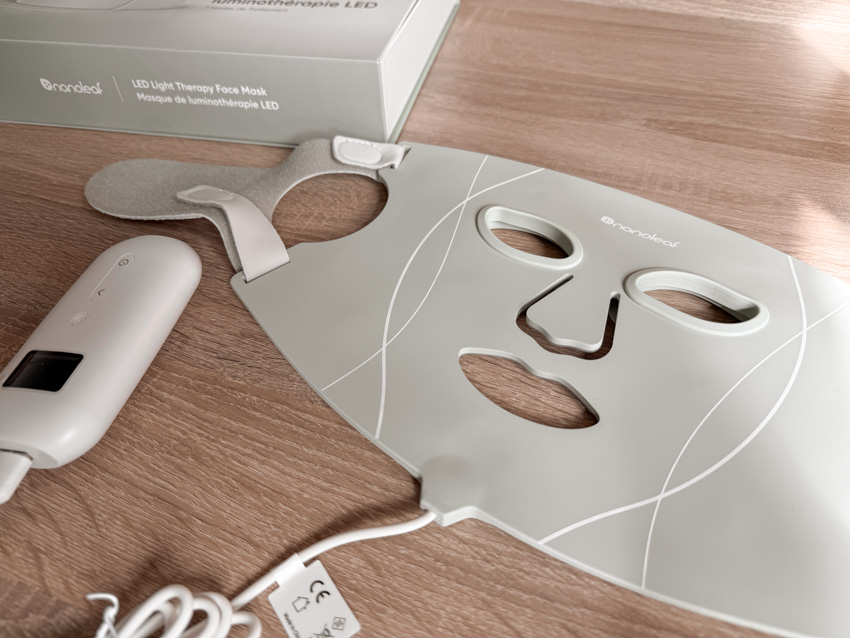
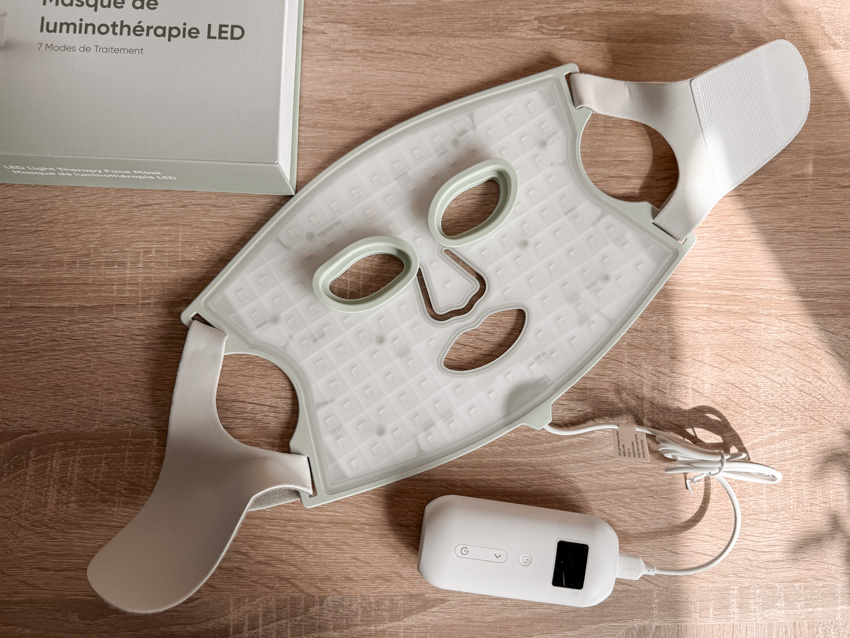
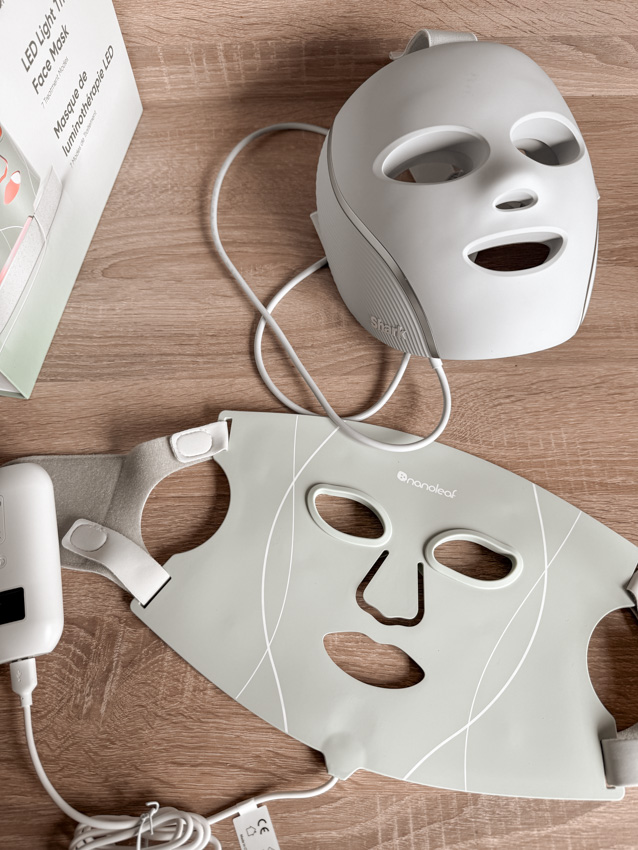
It's a flexible silicone mask with 432 tiny LED chips inside it, a small detachable controller with a screen, and velcro straps that go round the back of your head. You charge it over USB-C, pick a mode, and sit there for five or ten minutes looking like something out of a low-budget sci-fi film.
It costs £129.99 at full price and I've seen it discounted plenty of times since. For context, the Shark CryoGlow is £299.99. That gap matters, and I'll come back to it more than once.
Seven light modes. Five intensity levels for each. It's genuinely the most light options I've seen on a mask at this price, which is either brilliant or slightly beside the point depending on how much you care about the science. More on that shortly.
The Light Therapy Bit, Explained Simply
I'm going to keep this deliberately basic, because I've read enough LED mask reviews that read like a physics textbook and I don't think most of us need that.
Different colours of light go different distances into your skin. That's it. That's the whole idea.
Red light goes in a little way and nudges your skin into making more collagen. Collagen is the stuff that keeps skin springy and holds fine lines at bay. This is the one with the most proper research behind it and it's the reason most people buy an LED mask in the first place.
Near-infrared light you can't see at all. It goes deeper than red and does a similar job underneath. Both masks pair it with everything else, which is standard and sensible.
Blue light stays right at the surface and targets the bacteria involved in spots. Useful if you break out. Not much use if you don't.
The Nanoleaf also does green, yellow, cyan, purple and white. And here's where I have to be straight with you, because the whole point of this blog is that I tell you the annoying bits: the research behind those five is thin. Red, near-infrared and blue are the ones with real evidence. The rest are lovely to look at and I have no reason to think they'd do you any harm, but I wouldn't buy a mask because it has a purple setting.
The other thing worth knowing is that light therapy is a slow build. You're not going to take it off after one session and see anything except a slightly flushed face and a pattern from the eye cushions. Give it four to twelve weeks of using it three to five times a week before you make up your mind. If you stop, the benefits fade. It's maintenance, not a fix.
I've written about my wider experience with red light in my Lumaflex Essential review if you want the version that isn't strapped to your face.
Is It Properly Certified?
Yes, and I want to explain what that means because brands are slippery with the wording and it's one of my pet hates.
The Nanoleaf mask carries CE marking, so it's been assessed for sale across Europe, and it's also been cleared by the FDA in the States. I mention the American one because it's the stricter of the two and it's become the rough industry benchmark that decent masks aim for wherever they're sold. Cleared means the manufacturer proved the device is safe and works in broadly the same way as a similar product already on the market. Plenty of cheap masks can't claim it. The Shark CryoGlow has it too.
What it doesn't mean is “approved”. That's a much higher bar, reserved for things like new medicines, and no LED face mask anywhere has it. It also doesn't certify that every mode on the mask does what the marketing implies. Certification covers safety, not results.
Both masks pass, so it isn't a reason to pick one over the other. It's just worth knowing what the badge on the box is actually telling you.
The Fit Problem, Which Is The Real Story Here
This is the part I'd want to know if I were reading someone else's review.
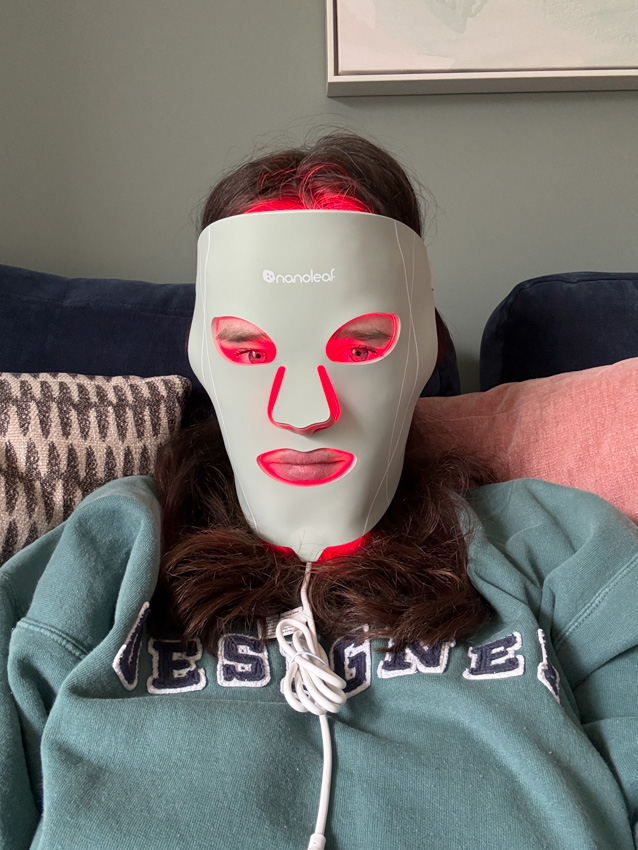
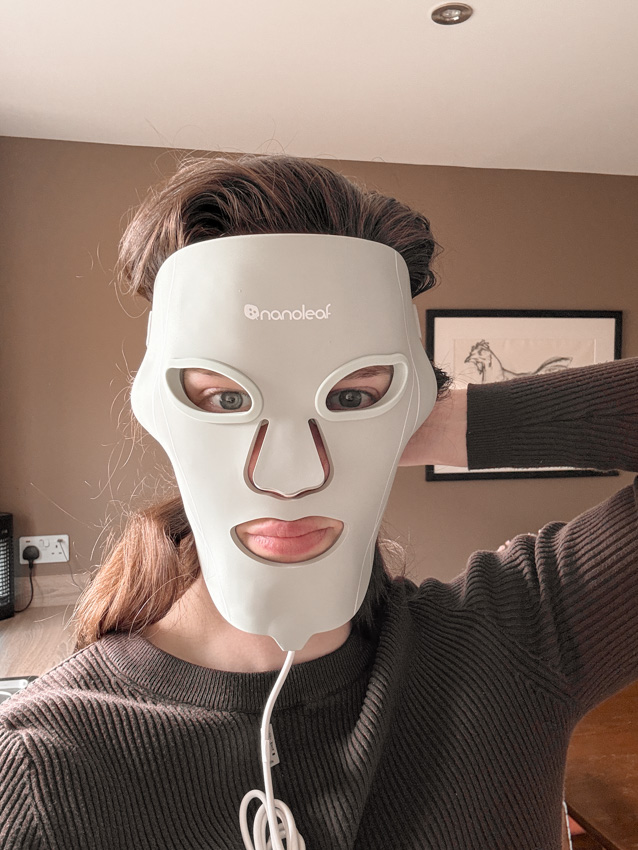
On me, the fit is okay if I sit still. Not brilliant. I've taken to holding it up with my thumbs, as I just can't get it to stay on my face. The velcro straps completely slip off my head. I've tried it with the rubber eye inserts and without, and I just can't get it to stay on my head.
On my partner, it was a write-off.
He's got a bigger head and a longer face than me, and he simply could not get the thing to sit. It pressed oddly on his nose, the eye holes were too low down (which is odd because of me they were almost too high up), and slid down within about a minute. This is a man who has strapped on the Shark every night for a year and a half without a single complaint, so it isn't a case of someone who can't be bothered. He tried and it didn't work.
I went looking to see whether this was just us, and it isn't. TechRadar's reviewer found the same thing, noting that the mask sat about a centimetre lower on her face than it should, that it was loose around the jaw, and that the velcro straps slipped. She also flagged that the eye holes are small enough that light leaks out around them, which I noticed too and which I don't love.
Nanoleaf do offer a free strap extender if you ask them, which suggests they know. It's a decent bit of customer service but it doesn't fix the shape of the mask itself.
The Shark solves this differently. It's a rigid shell rather than flexible silicone, with a strap over the top of your head as well as one round the back, so it clamps into position and stays there. Heavier, bulkier, absolutely useless for packing, but it does not move. For anyone with a larger face, a beard, or a strong nose, that difference is the whole ballgame.
Right, The Handsome Squidward Thing
I looked ridiculous. I want to be clear that I don't think a face mask needs to be flattering, but I genuinely caught myself in the hall mirror and thought: Handsome Squidward. The rigid panelled front, the long shape, the glow. My son found it hilarious. I found it slightly less hilarious.

It's not a criticism of the product. Every LED mask looks silly. This one just looks silly in a specific and memorable way, and if your evenings involve other humans wandering through the room, be prepared.
Nanoleaf vs Shark CryoGlow, Briefly
I'm writing a full comparison separately because there's too much to say here, but the headline is this.
The Shark is the better device. It fits properly, it stays put, it has under-eye cooling pads that feel genuinely lovely and do something for puffiness that no amount of red light does, and Shark have run their own twelve-week studies on it. It also feels expensive in the hand in a way the Nanoleaf doesn't. That matters to me. I know it shouldn't, and I know a mask should be judged on the light coming out of it, but there's a solidity to the Shark that the silicone version just doesn't have, and it feels like a little luxury.
The Nanoleaf is the better value. It's less than half the price, it travels, and the red light it puts out is properly specced. If someone told me they had £130 and wanted to try LED without committing to three hundred pounds of gadget, I'd point them straight at it and not feel bad about it.
I prefer the Shark. I'd also completely understand somebody buying the Nanoleaf instead.
Who I'd Recommend It To
Buy the Nanoleaf if you're curious rather than committed, if you've got a smaller or narrower face, if you travel a fair bit, or if the Shark's price makes you wince. It does the main job well and the price means you're not devastated if you use it twice and lose interest.
Skip it if you've got a larger face or a beard, if you already own a well-fitting mask, or if you want the under-eye cooling. Go and look at the Shark instead, or wait for a sale on it.
The mask is currently £129.99 direct from Nanoleaf, and it turns up on Currys and Amazon too, usually with the odd discount floating about.
If you're on any medication that makes you sensitive to light, if you're pregnant, or if you've got melasma or a photosensitive condition, ask a GP or dermatologist before you start with either.
Where It's Ended Up
It lives in the drawer in the spare room now, which sounds harsh but isn't. The Shark stays in the bedroom and gets used most evenings by my partner. The Nanoleaf comes out when the Shark is charging, or when we are travelling.
If you're building out the rest of your routine around it, my skincare routine at 32 and the VT Reedle Shot 100 review are probably the next two things to read. And if you're curious about the Shark side of the brand more generally, I've got a long-running Dyson Airwrap vs Shark FlexStyle review that covers three years of use.
Leave a Reply
The Sunday Letter
Most Sundays, once the house has gone quiet and it's edging towards nine, a letter goes out. It's the one I'd write to a friend with good taste and not nearly enough time: one thing worth reading, one thing worth buying, and one thing to skip. No noise, no pressure to spend, just the considered version of what I've actually been using, loving, or quietly sending back.
If you like the sort of recommendation that still holds up six months later, leave your email below and I'll write to you on Sunday.