Most small home office setups go wrong before anything has even arrived. The desk looked perfect online, so did the chair, and then a two-metre flat-pack box turns up that will never make it round the corner of your stairs.
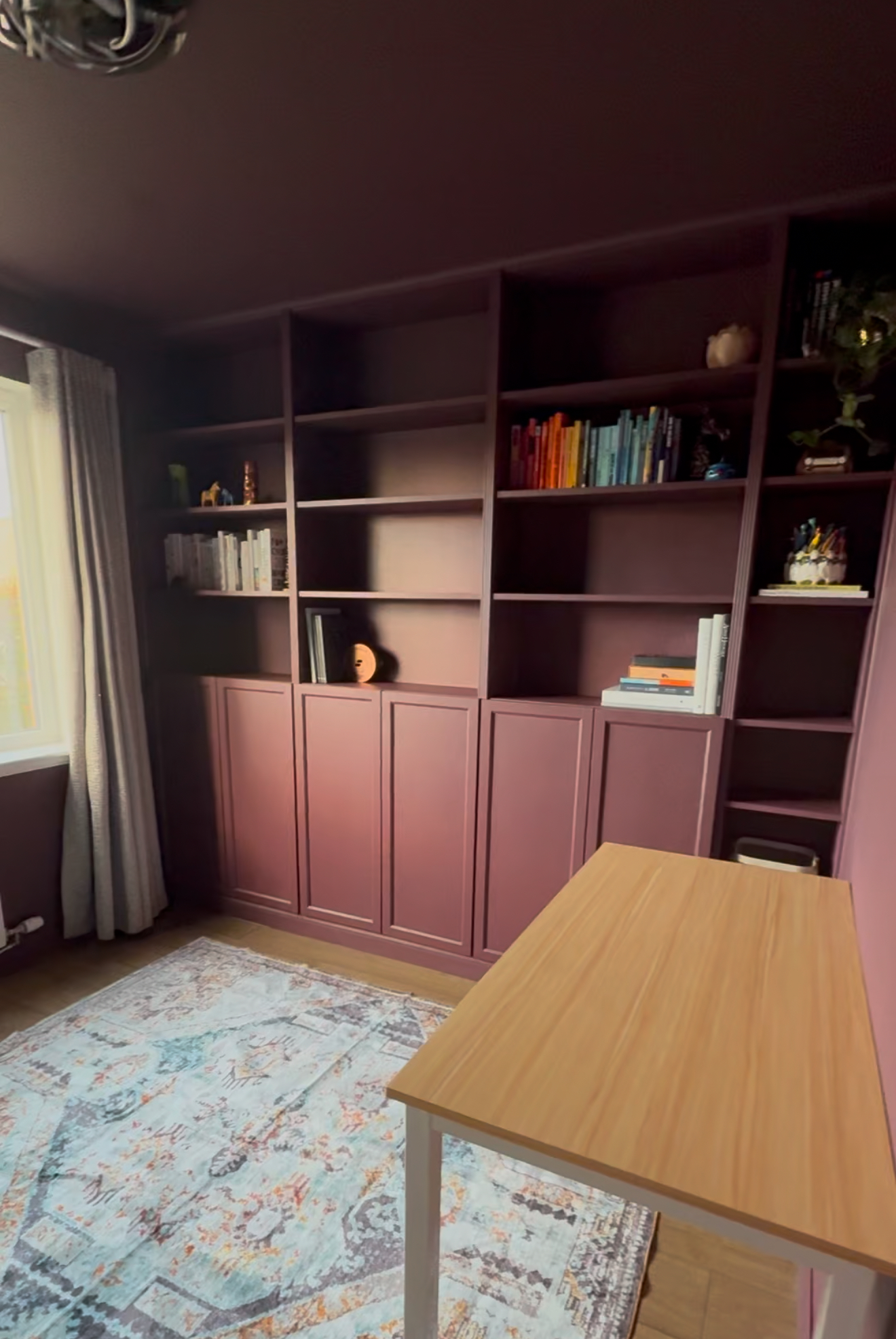
A spare room, a box room or a corner of the bedroom can make a properly lovely place to work. It just needs a bit more planning than a big room does, because there’s no spare space to hide a mistake in. Here’s how to plan a small home office setup so the furniture you order actually suits the room you’ve got.
Why the product photos make everything look bigger
Scroll through any furniture shop and you’ll see the same thing. Every desk sits in a huge, bright room with a tall window and a single, very healthy plant. Nobody’s real office looks like that.
Part of the reason is that a lot of the images aren’t photographs at all. More and more brands build their products in 3D and render the pictures, rather than photographing every finish and width. Specialist office furniture rendering services can produce the whole range digitally, so you can see the same desk in oak, white or black at 120cm or 140cm without anyone having to build and shoot every version.
That’s genuinely useful. You get to see the exact finish and size you’re considering, which no showroom near you will have in stock. The catch is that the room in the picture is usually a digital room, and digital rooms are enormous. Trust the dimensions, not the image.
Tape it out before you buy anything
This is the single most useful thing you can do, and it costs about three pounds.
Get a roll of masking tape and mark the exact footprint of the desk on the floor. Then mark the chair as well, pulled out as if you’re sitting at it. Walk around it. Open the door. Try to get to the window.
An L-shaped desk looks brilliant in a product photo. Taped out on the floor of a small room, it often takes up well over half the space and leaves you climbing over it to reach the curtains. Better to find that out with tape than with a delivery driver standing on the doorstep.
Leave the tape down for a day or two. You’ll notice things you wouldn’t in five minutes, like the way you keep catching your hip on the corner every time you come in.
Check the depth, not just the width
Everyone looks at width. Depth is the measurement that decides whether a small room feels workable.
A 70cm deep desk in a narrow room starts to feel like a wall. Dropping to 60cm gives you a surprising amount of breathing space, and it’s still plenty for a laptop on a stand, a keyboard and a mug. If you use two monitors and need to sit well back from them, you may need the extra depth. Most people working mainly on a laptop don’t.
Width is easier to be flexible about. A 120cm desk is enough for most set-ups, and 100cm works if you keep the rest of the surface clear.
Look for a picture with a person in it
Plain white background images make it nearly impossible to judge scale. A chair can look neat and compact until you see someone sitting in it and realise the back comes up past their shoulders.
When a shop shows a product with a person using it, grab that image. It tells you far more than the glossy lifestyle shot does. If a brand doesn’t have one, go looking for customer photos in the reviews.
Find the spec drawing
Decent brands include a small technical diagram somewhere on the product page, usually below the description or in a downloadable PDF. It shows every measurement, including desk height, leg spacing and how much clearance there is underneath.
That last one matters more than it sounds. If your chair has arms, you need to know whether they’ll slide under the desk or stop you sitting close enough to type comfortably. The spec drawing tells you. The lifestyle photo definitely doesn’t.
Think about where the light comes from
Almost every product image shows the desk facing a window. It looks lovely and it’s a bad idea if you’re on video calls.
Sit with a bright window behind you and you become a silhouette. Face it directly and you’ll squint at your screen by lunchtime. The best position is usually side-on, with the window to your left or right, so you get natural light without glare on the monitor or a halo around your head.
If the room only works with the desk against a wall, that’s fine. A decent lamp does more for a workspace than people expect. A warm bulb in a nice shade makes the whole room feel like somewhere you want to be, rather than somewhere you’re stuck.
Measure the route, not just the room
Furniture has to get to the room before it can live in it.
Measure the front door, the hallway, the stairs and every tight turn in between. Flat-pack desks often arrive in a single long box, and a box nearly two metres long doesn’t care how good your intentions are when it meets a narrow landing. Check the packaged dimensions on the product page, not just the finished size.
If the route is tight, look for desks that come in two boxes, or pick a smaller size that’s easier to carry.
Read the bad reviews first
The five-star reviews mostly say “lovely desk, quick delivery.” They’re not much use.
Go straight to the two and three-star ones. That’s where you’ll find out the drawer sticks, the legs wobble, or the “oak” finish is a thin wrap that peels at the corners. You’ll also learn whether the instructions are baffling and whether the screws are the right length. A product with a handful of sensible complaints is usually fine. One with the same complaint repeated twenty times is telling you something.
Buy the chair in person if you possibly can
If there’s one thing worth not ordering from a photo, it’s the chair. You’ll sit on it for hours a day, and the difference between a good one and a bad one shows up in your back about a fortnight later.
Go and sit in a few. Spend ten minutes on each, not ten seconds. Check the seat height, whether the back supports your lower spine, and whether the arms get in the way. Then, if you find the one you want and it’s cheaper online, order it online. You’ll have done the part that matters.
The finishing touches that make it feel nice
Once the practical bits are sorted, this is where a small office goes from functional to somewhere you actually enjoy working.
- A wall shelf instead of a bookcase. It frees up floor space and keeps the things you like within reach.
- A clamp-on monitor arm. It lifts the screen off the desk and gives you the surface back.
- A rug. Bare floorboards echo badly on calls, and a rug is the cheapest soundproofing there is.
- Good lighting. One task lamp and one softer lamp for the evening.
- Something that’s just nice to look at. A framed print or a small plant on the shelf.
None of this is expensive. A small room with a sensible desk, a good chair, warm light and a rug will feel better than a big room with expensive furniture and a harsh ceiling bulb.
Where to spend and where to save
Put your money into the chair and the lighting. Those two things change how the room feels and how you feel in it.
Save on the desk. A plain, well-reviewed desk in a sensible size does exactly the same job as an expensive one, and a simple oak-effect or white finish goes with almost anything. Save on storage too. A wall shelf and one small drawer are enough for most people.
Before you order
Tape out the desk and chair, check the depth and the clearance, and measure the route in. Then sit in the chair.
Leave a Reply
If you like the sort of recommendation that still holds up six months later, leave your email below and I'll write to you on Sunday.
Most Sundays, once the house has gone quiet and it's edging towards nine, a letter goes out. It's the one I'd write to a friend with good taste and not nearly enough time: one thing worth reading, one thing worth buying, and one thing to skip. No noise, no pressure to spend, just the considered version of what I've actually been using, loving, or quietly sending back.