Disclosure: This post is a collaboration with Tage. The products were sent to me, and the opinions are my own.
Retinal has a reputation for being the step that’s brilliant on paper and fiddly in real life. You buy it with the best intentions, it migrates to the back of the bathroom cabinet, and a month later you can’t remember why you bothered.
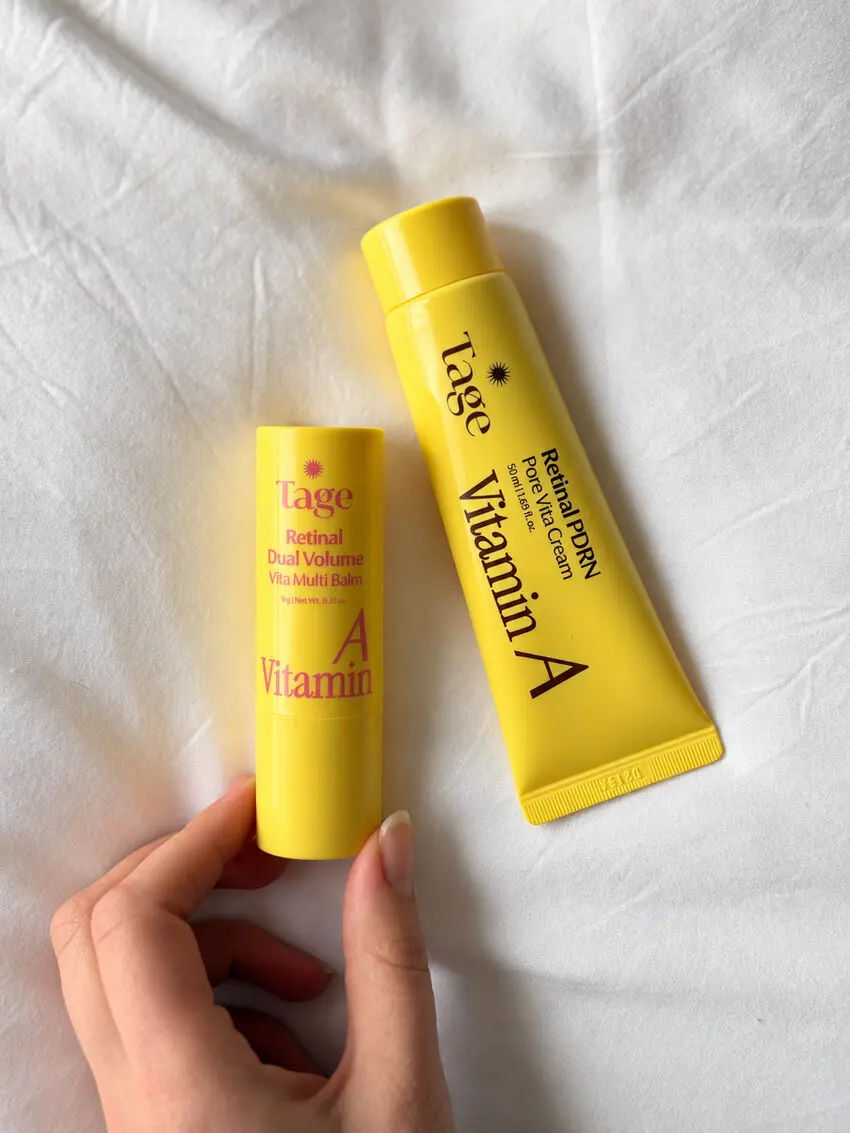
I wanted to see if Tage’s version was easier to live with, so this is my Tage retinal stick and retinal pore cream review. The two products are the Vita A Retinal Multi Balm Stick and the Vita A Retinal PDRN Pore Booster Cream. I like both of them. I also love the packaging, and I’ll admit that matters to me more than it probably should.
Grab a cup of tea. I’ll tell you what each one is for, how I’d ease them into your routine, and where they aren’t perfect.
The short version
If you’re short on time, here’s where I’ve landed.
The stick is the easy one. It goes on in seconds, it works morning or night (with SPF in the daytime), and it fits in a handbag. The cream is the evening one. It’s aimed at pores and rough, bumpy skin, and it suits the end of the day when you’ve got a bit more time.
I like both, and I think they look gorgeous. If you’re new to retinal, start with just one, patch test it, and take it slowly.
How I’ve been using them
It’s early days. I’m two weeks in, using the stick three nights a week and the cream two nights a week. That isn’t long enough to judge what retinal is really doing, so these are my first impressions, not a final verdict.
Truth be told, I’m getting old… Ok, I’m 33, so I’m really not that old, but my skin is starting to show signs of ageing for the first time in my life. I have crows feet in the corners of my eyes, and three deep wrinkles on my forehead from just never being able to control my face. I’m really looking forward to testing out the retinal stick here.

Retinal in plain English
Retinal is a form of vitamin A. Your skin turns it into the active form in a single step, so it tends to get going faster than retinol, and it’s usually described as gentler than the prescription options. It supports skin cell turnover, which is where the smoother texture and more even tone come from.
Korean skincare has leaned into it hard lately, and you’ll spot Korean retinal all over your feed. The catch is the same as with any vitamin A. It can be drying if you rush it, and it makes your skin more sensitive to the sun. Nothing scary, just worth knowing before you start.
First, the packaging
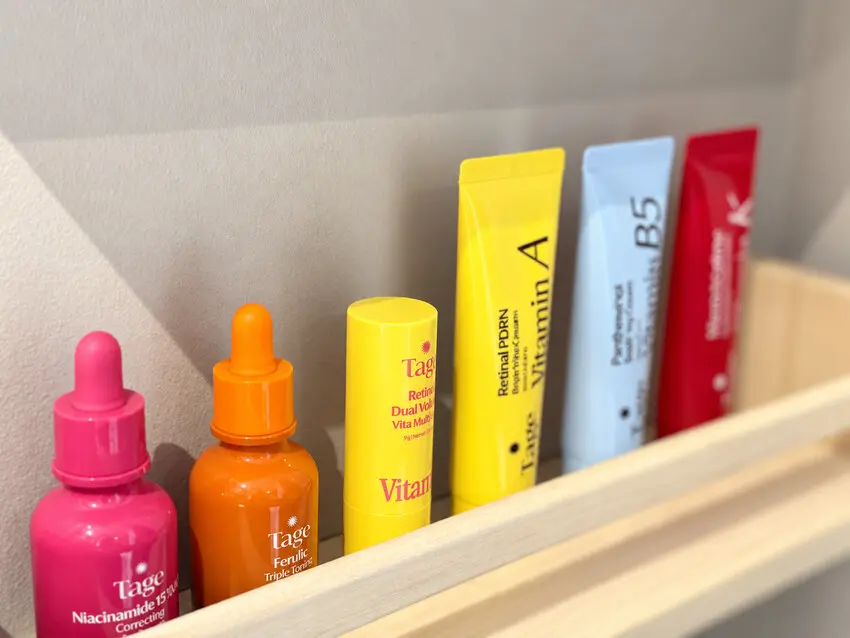
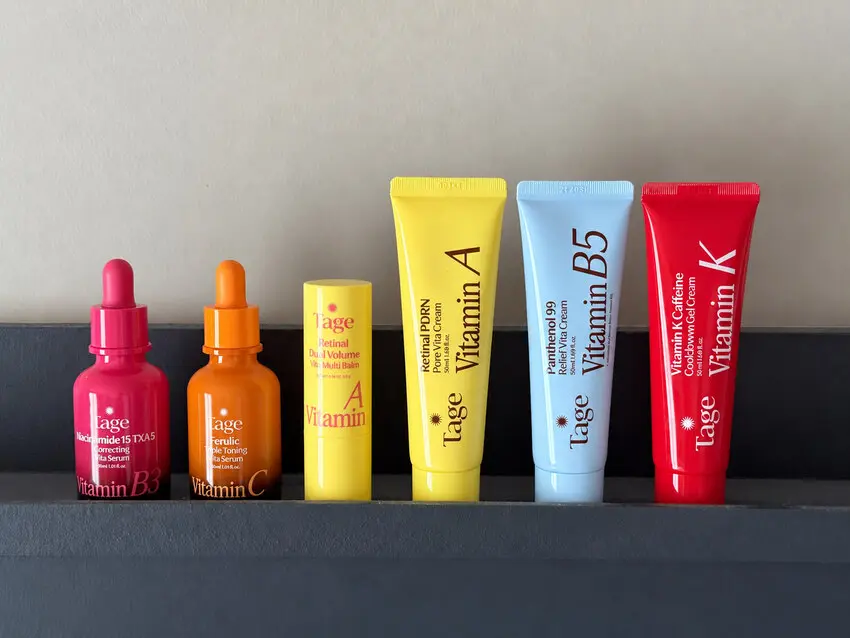
I’ll say it plainly: it’s lovely. Especially when you line it up with the rest of the Tage Vita range.
I’m a believer in skincare that looks good where you keep it. Retinal only works if you actually use it, so a product you’re pleased to see on the shelf has a head start.
The Tage retinal stick
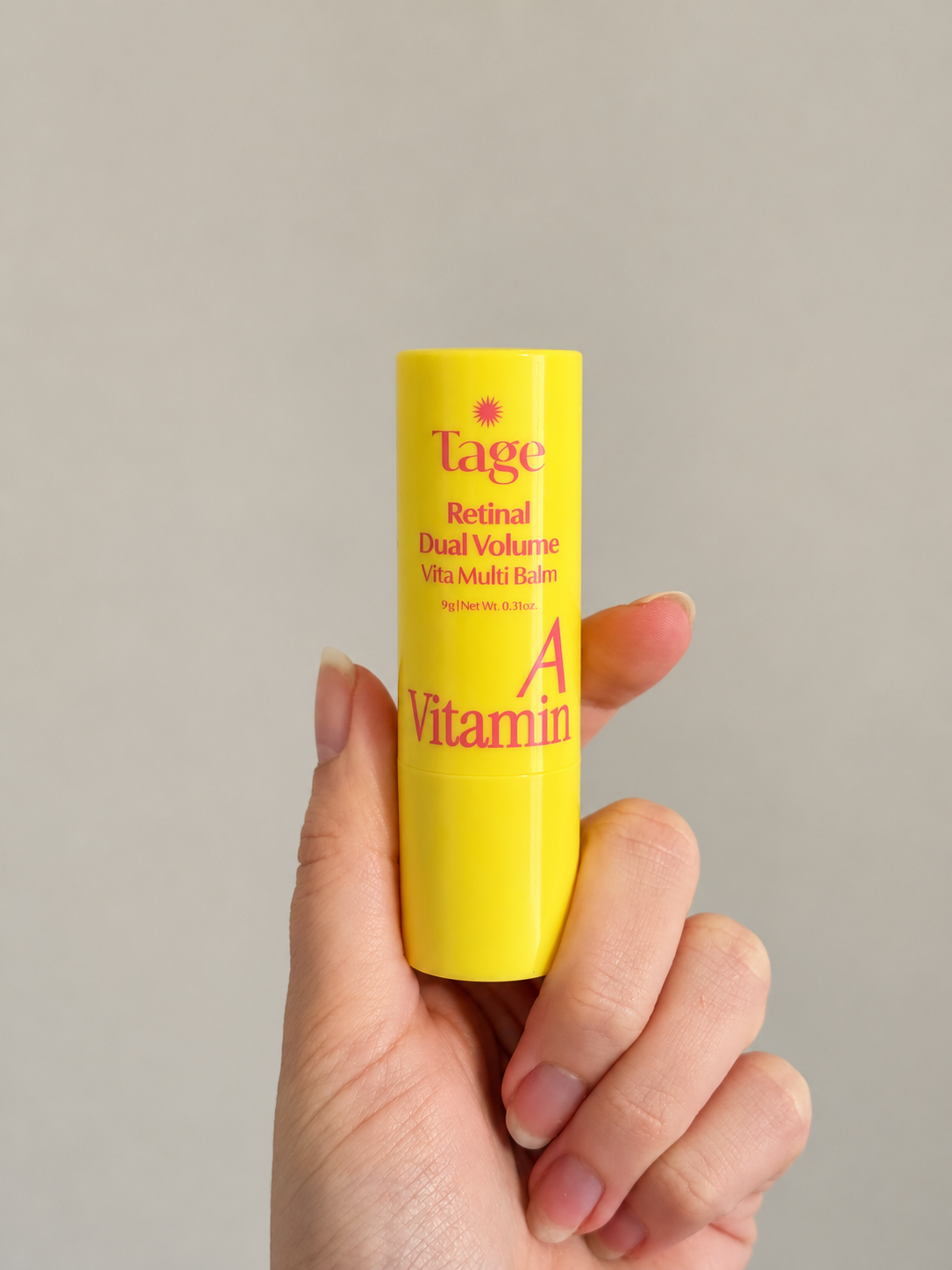
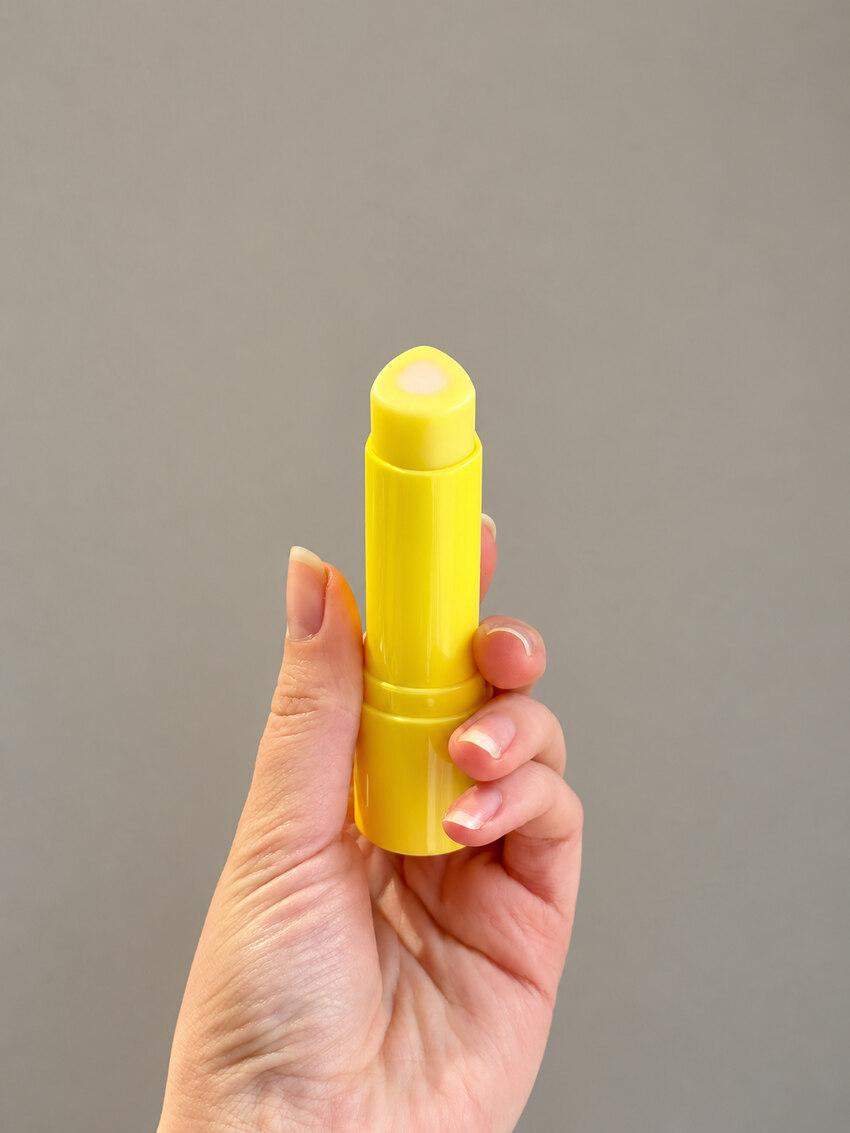
Let’s get the nickname out of the way. The headline ingredient in the Tage Vita A Retinal Multi Balm Stick is 6% Volufiline, which became well known in body care and picked up a very blunt name online. I’ll leave you to google that one. On your face it’s a cosmetic ingredient that helps skin look plumper and fuller. No needles, and nothing to do with filler.
Tage pairs it with retinal, so the stick has two jobs. One is renewal. The other is a softer, fuller look in places where skin has lost a little bounce. Tage says customers use it on under-eyes, smile lines and stretch marks, which gives you an idea of how flexible it’s meant to be.
It’s a balm in a stick, so there’s no tub and nothing to scoop. You swipe it on where you want it. That makes it the easy one to use, and the one you’re most likely to actually use on a night when a full routine feels like too much.
Tage says it’s gentle enough for morning or night. If you use it in the morning, sunscreen goes on top. Every time, no exceptions.
One of my two weeks of testing was spent away in a caravan with the kids, and that’s where the stick really earned its place. Space was tight and I’d packed small, so having one product I could pop on quickly was a lifesaver. There was no tub or pump to find room for, which is a big deal when you’re elbows are touching the walls either side of you.
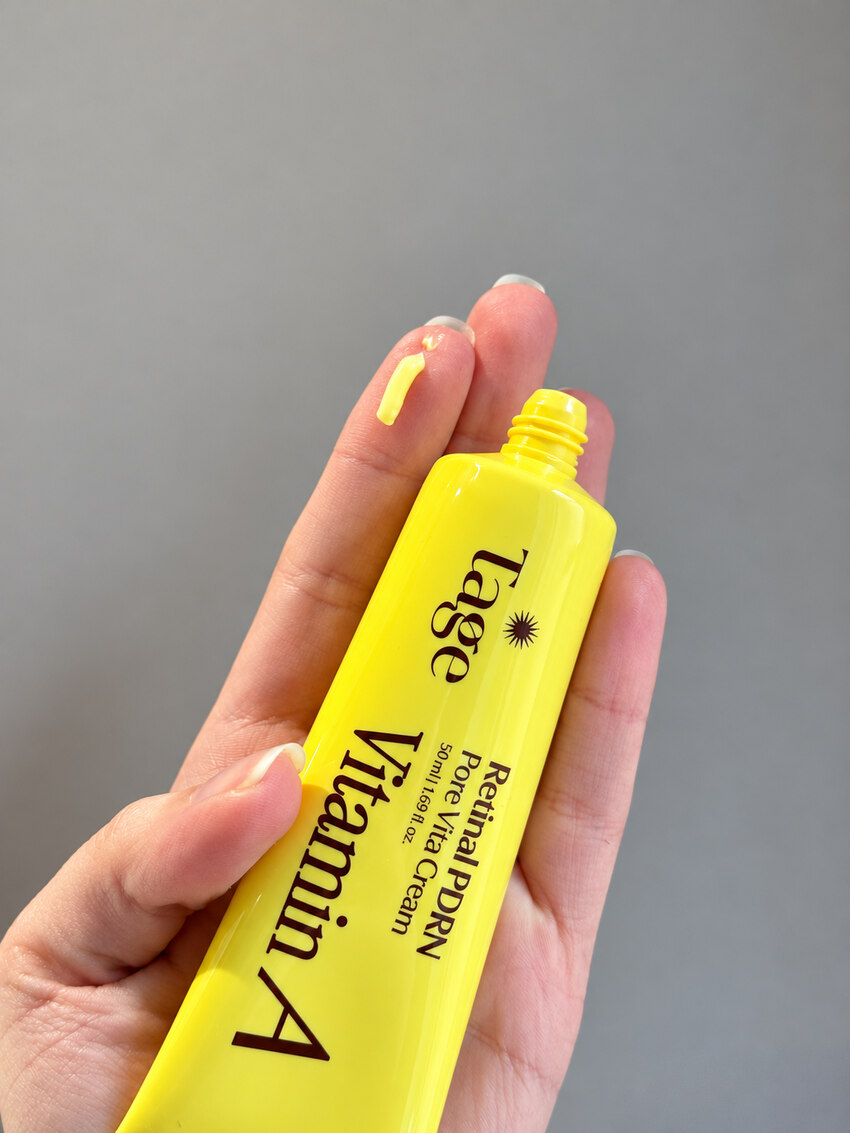
The Tage retinal pore cream
The Tage Vita A Retinal PDRN Pore Booster Cream is the night one. It pairs ultra-fine liposome retinal with PDRN, which is there for hydration and to support your skin barrier. So one half of the formula gets on with the renewing, and the other half looks after your skin while it does.
Tage recommends it if pores are your main gripe, or if you have rough, bumpy skin such as keratosis pilaris. The texture is described as a gentle butter that melts in, which is accurate, and what you want from something you’ll be putting on at the end of a long day.
If you’ve read my Medicube PDRN review, you’ll know PDRN has been on my radar for a while. This is a different formula with a different job, so I’d treat them as two separate products.
I’ve been using the cream two nights a week, in the evening only. It’s early days, so I’m not going to make big claims about my pores yet.

Stick or cream: which one should you start with?
If you can only pick one, it comes down to what bothers you most and how you like to do your routine.
Start with the stick if:
- You want something quick that you can use morning or night
- You’re thinking about under-eyes, smile lines or stretch marks, which are the areas Tage says customers use it on
- You like skincare that travels well and is super easy to apply
Start with the cream if:
- Your main gripe is pores or rough, bumpy skin
- You’d rather keep retinal as an evening step
- You like a proper wind-down routine and a soft, butter-like texture
Not sure? Go with whichever one matches the thing you notice first when you look in the mirror. You can add the other later, once your skin has settled. Alternatively, you can use them both together to target different areas; the stick on wrinkles and fine lines, and the cream to tighten pores and improve skin texture.
How I’d ease into them
If you’re starting from scratch, this is the order I’d follow with any retinal:
- Patch test first. A small amount behind your ear or on your inner arm, then wait a day.
- Start with one product, not both. Give your skin a chance to tell you how it feels.
- Use less than you think you need. A pea-sized amount covers your whole face.
- Begin with two or three nights a week and build up if your skin is happy.
- Moisturise afterwards, especially in the first few weeks.
- Wear sunscreen every single morning. Retinal makes your skin more sensitive to the sun.
If you’re pregnant, breastfeeding or trying to conceive, have a quick word with your GP or pharmacist before using any vitamin A product.
What a gentle first month looks like
Retinal is slow. That’s normal, and it’s also why so many people give up too early. If you want a plan to follow, this is a sensible way to start with one product:
- Week one: Patch test, wait a day, then use it twice. Something like Monday and Thursday works well.
- Week two: If your skin is calm, move to two or three nights.
- Weeks three and four: Three nights a week, with rest nights in between. Moisturise every time.
- After a month: If your skin is happy, you can add more nights or bring in the second product. Change one thing at a time.
Most people need around eight to twelve weeks before they can fairly judge what a retinal is doing, so try not to give up in week two. A bit of dryness early on is common. If your skin feels tight, stingy or irritated, skip a night and go back to basics for a few days. Persistent redness or stinging means stop.
Retinal skincare for sensitive skin: go slowly
Tage positions both of these as gentle, and describes the cream as kind to skin. I’d still take that as a good starting point rather than a promise, because everyone’s skin reacts a little differently.
If yours runs sensitive, patience is the whole trick. Use a small amount, space your nights out, and give it a couple of weeks before you decide. A bit of dryness early on is common. Redness that hangs around, stinging, or flaking that gets worse means you should stop and let your skin settle. Sensitive skin can use retinal, it just needs to be introduced at its own pace.
My own skin has been a little dry over the two weeks, so I’ve needed a bit more moisturiser than usual. Nothing that caused a problem, but it’s a good reminder to have a decent moisturiser ready before you start. This will be the same with any retinal.
What to pair with retinal, and what to leave off the same night
The easiest way to make retinal work is to keep everything around it boring.
On your retinal nights, stick to a gentle cleanser, a simple moisturiser, and nothing fancy. In the morning, make sure and finish with SPF..
What I’d leave off the same night:
- Strong exfoliating acids such as AHAs, BHAs and peels
- Other retinoids
- Anything that already makes your skin sting
A common way to split things is vitamin C in the morning and retinal at night. The Tage Vita range has a vitamin C serum and a niacinamide serum, and I’ll cover how they fit in my full rundown of the range.
One more thing. If you shave or wax, give that area a few days to settle before using retinal on it. Freshly treated skin is more sensitive, and retinal makes it more so.
The not-so-great bits
I’d rather you heard the downsides from me. Even though, to be completely honest, there aren’t many.
Both of these are retinal products, so the usual rules apply. You need sunscreen, you need to patch test, and you need patience. If you want dramatic results after one use, retinal isn’t going to deliver that.
The cream is recommended as night only, so it can’t help you in the morning. The stick works either side of the clock, but by day it needs SPF over the top. The only thing I’d flag from my own use is that dryness. It was mild, but keep a good moisturiser to hand.
Questions you might be wondering about
Can I use the retinal stick in the morning?
Tage says yes, it’s gentle enough for day or night. Just put sunscreen on afterwards, as you would with any retinal.
Is the pore cream a day or night product?
Night only.
Can I use both together?
Tage presents them as two separate products rather than a set to layer on the same night. I’d bring in one at a time, see how your skin feels, and only then think about using both.
Is Volufiline the same as filler?
No. It’s a cosmetic ingredient that helps skin look plumper and fuller. Filler is a procedure carried out by a professional.
Do I really need to patch test?
Yes, with any retinal. A small amount on a patch of skin, then wait a day before it goes anywhere near your face.
Who I’d point these at
If you’re new to retinal and want something that looks good enough to keep on show, these are worth a look, as long as you’re happy to go slowly. If you want a fast fix, they won’t give you one. Start with a single product, patch test it, and keep your sunscreen somewhere you’ll see it in the morning.
For more of what I’m testing, have a browse through my beauty & wellness category. And stay tuned for my rundown of the whole Tage Vita range.
Leave a Reply
If you like the sort of recommendation that still holds up six months later, leave your email below and I'll write to you on Sunday.
Most Sundays, once the house has gone quiet and it's edging towards nine, a letter goes out. It's the one I'd write to a friend with good taste and not nearly enough time: one thing worth reading, one thing worth buying, and one thing to skip. No noise, no pressure to spend, just the considered version of what I've actually been using, loving, or quietly sending back.