
I'm Gillian, a Scotland based home & lifestyle blogger. Follow along as I navigate this new journey sharing my life from home.


There is something about a red front door. It is the quiet exclamation mark on the end of a house. The small, confident detail that says: someone lives here, and they cared enough to choose. Of all the small exterior decisions you can make, painting your front door red might be the one with the biggest ratio of effort to impact.
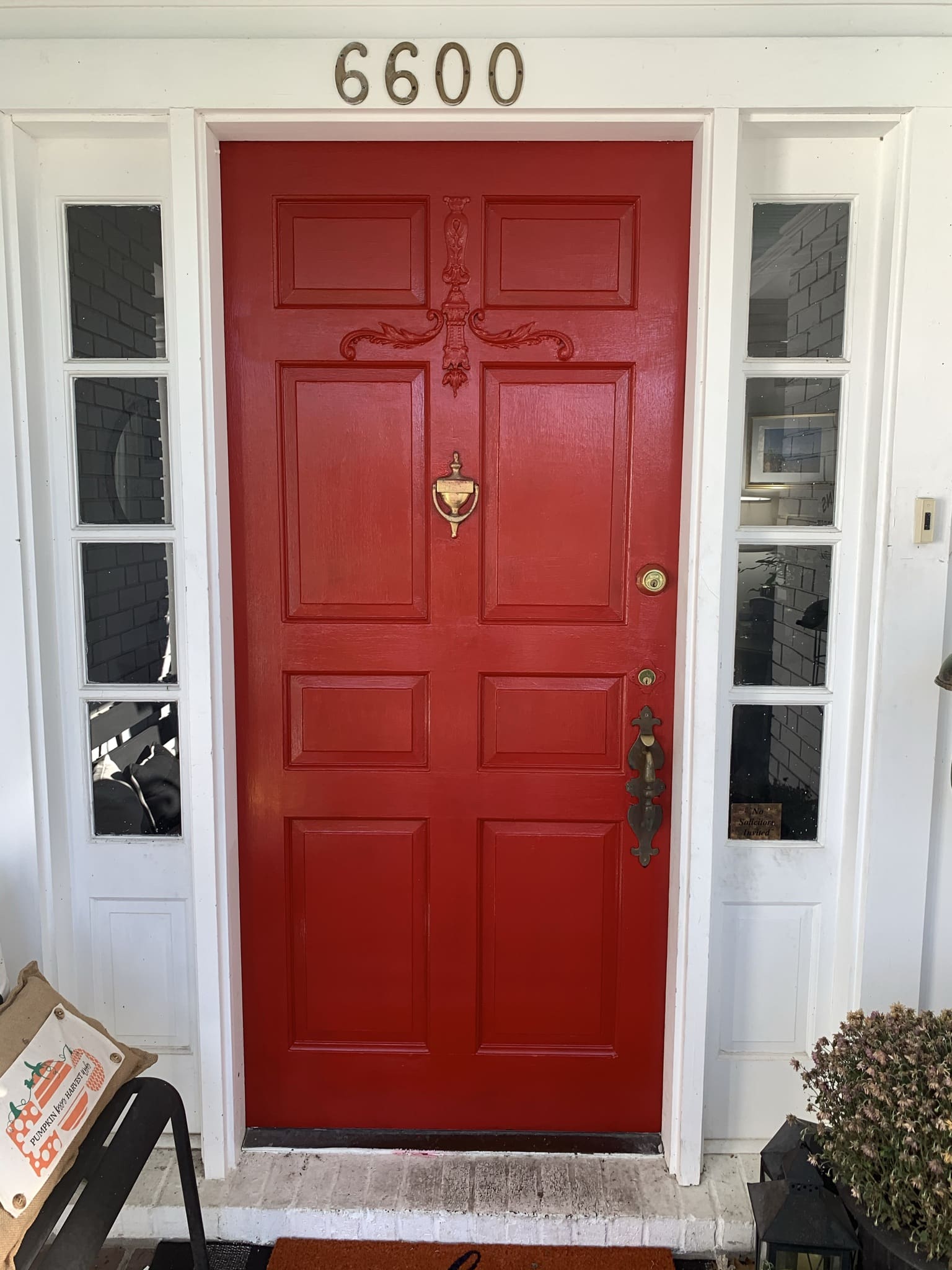
When we painted our own door red, the house had spent years being quietly lost inside its own porch. The porch is small and recessed, the kind of dark nook that swallowed the original black door whole. The house itself is a white brick cottage ranch with a new black roof and shutters, and it was practically begging for a jolt of colour somewhere near the front (that went with the blue painted porch ceiling). A weekend and two coats of paint later, the whole front of the house had shifted. Not just the door, the whole thing. That is the quiet trick of a painted red door. It does more work than it has any right to.
If you are here trying to figure out the best red paint for a front door, you are in the right place. Below is what we used, why it works, and a proper line-up of alternatives, including the Benjamin Moore Heritage Red dupes from brands you can actually get hold of without a transatlantic order.
Why a red front door works so well
Red is the colour of welcome. It is woven into centuries of architectural tradition, from the scarlet lacquered doors of Chinese courtyard houses to the glossy crimson entrances of Georgian terraces in Britain. In North America, the old superstition held that a red door meant your home was paid for. In Scotland, a red door was once a signal of a warm welcome. The symbolism varies, but the instinct is the same: red says come in.
It is also, practically speaking, one of the most flattering colours for almost any exterior palette. Red sits happily against white brick, warm red brick, stone, render, weatherboard, limewash, and pretty much any shade of roof you can think of. Unlike a trending colour that might date in five years, a properly chosen red has genuine longevity. This is not a colour that goes out of fashion. It just keeps quietly doing its job.
For smaller or recessed porches especially, red is one of the few colours confident enough to draw the eye into what would otherwise be a dark, easily overlooked space. If your front door currently disappears into shadow, a red one will fix that problem in about a day.
What we used (and why)
The red we picked for our door is Benjamin Moore Heritage Red (CC-60). It is a rich, slightly warm, classic red with just enough depth to read as sophisticated rather than pillar-box. Not so bright that it shouts, not so dusty that it mutes itself down to brown in shadow. It took two coats, on a well-prepared door, and the finish still looks fresh years on.
Heritage Red is a particularly easy red to live with because it has a touch of blackened warmth underneath, which stops it reading as cartoonish. In direct sun it looks vivid and cheerful. On an overcast afternoon it deepens into something almost burgundy. That shape-shifting quality is what separates a good red from a flat, one-note one.
The catch, of course, is that Benjamin Moore is not universally easy to pick up. It is available through selected stockists in the UK and beyond, but you are not going to find it on the same shelf as your regular tin of emulsion. So if Heritage Red is the reference point, here are the alternatives from brands that are more widely stocked.
The best Benjamin Moore Heritage Red dupes
Farrow & Ball Rectory Red (No. 217)
If you only sample one alternative, make it this one. Rectory Red is a rich, aged, blackened red named after the parsonage houses it traditionally appeared on, and it is probably the closest widely available equivalent to Heritage Red in spirit. It has that same slightly dusty, slightly heritage quality. Looks particularly lovely with black or brass door furniture and works on both period and modern properties. Available in Full Gloss and Exterior Eggshell, both of which are formulated for front doors.
Farrow & Ball Blazer (No. 212)
Blazer is the brighter, cleaner sibling of Rectory Red. More saturated, slightly more primary. If Heritage Red feels too muted for your house and you want something with more snap, Blazer is the one to sample. It is the red you would pick for a clean white Georgian town house where the door is doing the heavy lifting colour-wise.
Farrow & Ball Incarnadine (No. 248)
For something with proper depth, Incarnadine is a glossy, almost theatrical red with a real sense of confidence about it. Less muted than Rectory Red, less primary than Blazer. This is the red you want if your door is going to be the star of a dark or moody exterior, particularly against charcoal render or black weatherboarding.
Little Greene Atomic Red (No. 190)
Little Greene is the quietly brilliant British paint brand that sits somewhere between Dulux and Farrow & Ball on both price and attitude. Atomic Red is a warm, orangey, confident red with a vintage feel. Not a straight dupe for Heritage Red, but a gorgeous alternative if you want something with a bit more warmth and personality.
Little Greene Tuscan Red (No. 140)
For a deeper, darker, more oxblood red, Tuscan Red delivers. This is the red to pick if your house has a lot of cream or buff stone, because the slightly earthy depth of it stops the door looking too shiny against a softer backdrop.
Dulux Volcanic Splash
Dulux is the most accessible of the big paint brands, and for a fraction of the price of a Farrow & Ball pot you can get a perfectly lovely red from the Weathershield exterior range. Volcanic Splash is a rich, slightly dusty red that reads beautifully on a front door. If you are mixing at a stockist, ask for it in Dulux Weathershield Exterior Gloss or Satin, both of which are designed to stand up to weather properly.
Valspar reds, mixable at B&Q
For a budget pick that still gives you proper colour depth, Valspar’s extensive red range is mixable in any B&Q and comes with a Love Your Colour guarantee, which is a quiet blessing when you are committing to something this visible. Take a Heritage Red colour chip into store and they will colour-match it to the closest Valspar equivalent. The finish will not be quite identical to Benjamin Moore, but at the price difference, it is a very reasonable compromise for a weekend project.
How to choose the right red for your house
A few things worth knowing before you commit.
Look at your brick, stone, or render. Warm red brick pairs beautifully with a deeper, slightly blackened red like Rectory Red or Heritage Red, because it complements the brick without competing. Cool grey brick or charcoal render can handle something brighter like Blazer. White or cream houses are the most flexible and can take almost any red, from oxblood to pillar-box.
Consider the light. A red door in direct south-facing sun will read brighter and cleaner than the same colour on a shaded north-facing porch. If your porch is recessed or in shade for most of the day, reach for a slightly brighter red than you think you need. The shadow will do some of the deepening for you.
Don’t forget the door furniture. Brass looks warmer and more traditional against almost any red. Polished chrome or stainless steel feels more contemporary and crisper. Matt black is the most flexible and works beautifully with both heritage reds like Rectory Red and brighter versions like Blazer.
Always sample. Buy small sample pots of your top two or three picks and paint decent-sized squares on lining paper or a bit of scrap wood. Prop them against the door at different times of day for a few days. The red that looks perfect in morning sun might not be the one that still looks right at dusk.

Preparing the door properly (this bit matters)
The single biggest difference between a red door that looks professional and a red door that looks slightly rough is the prep. Rushing this part is the most common mistake.
Start by washing the door down with sugar soap to remove years of grime, greasy fingerprints, and general weather gunk. Let it dry completely. Sand the whole door with medium then fine grit sandpaper to give the paint something to key into, paying particular attention to any areas where the old paint has chipped or flaked. Fill any dings with a suitable wood filler, let it dry, and sand flush.
If the door was previously painted in a dramatically different colour, or if the wood is bare, you will need a proper exterior primer or undercoat. Both Farrow & Ball and Dulux make exterior-grade primers in tinted versions designed to sit under specific colour families, including reds. A grey-toned undercoat under a red topcoat gives you the richest, most even finish.
Apply your topcoat in thin, even coats rather than one thick one. Two coats is almost always better than one. Work methodically from the top of each panel downwards, cutting in the edges with a good brush before rolling or brushing the flat areas. A mini foam roller is brilliant for flat door panels if you want a really smooth finish without brush marks.
And then, crucially, leave it alone to dry properly between coats. Red paints, in particular, can look patchy and uneven if you rush the drying time, because they need the pigment to settle. Patience is paint’s best friend.
Finishes: gloss, satin, or eggshell?
The finish you choose changes the whole personality of the door.
Full gloss is the classic, most traditional finish for front doors. High shine, formal, makes colour look its richest. Particularly lovely on period properties and heritage homes. The only slight downside is that gloss shows every imperfection, so your prep work needs to be genuinely good.
Satin is the middle-ground option and probably the most forgiving. Less reflective than gloss, still protective against weather. Most exterior door paints are available in satin, and it is the sensible pick for a first-time door painter.
Eggshell has a very soft, low sheen. Looks beautiful on matt brickwork and more rustic cottage-style properties, but offers slightly less protection than gloss or satin, so you may need to refresh it sooner.
Farrow & Ball’s Full Gloss and Exterior Eggshell are both formulated for exterior use. Dulux Weathershield comes in Exterior Gloss and Satin. Little Greene’s Intelligent Gloss and Intelligent Satinwood are both door-ready.
How long will a red front door last?
Properly prepped and painted, a good exterior red paint should give you five to seven years before it needs a proper refresh, though a light clean and a touch-up coat every couple of years will keep it looking fresh. South-facing doors in a lot of direct sun may fade slightly sooner, because red pigments are more vulnerable to UV than darker colours. This is why most premium exterior paints include UV stabilisers, and why it matters to use an exterior-grade formula rather than repurposing interior paint.
Kerb appeal, quietly done
A red front door is one of those small, almost old-fashioned design moves that quietly signals care. It is not trend-led. It is not going to age out of style. It does not cost a fortune. It just makes the front of your house look like somewhere worth coming home to.
Whether you go for Benjamin Moore’s Heritage Red, Farrow & Ball’s Rectory Red, or something mixed at your local B&Q, the thing that matters most is that you took the time to choose properly and prep well. The colour itself is almost the easy bit.
If you are thinking through other small exterior updates while you have the paintbrush out, have a browse of the rest of the home interiors section. There is plenty more in the same spirit.
Leave a Reply
If you like the sort of recommendation that still holds up six months later, leave your email below and I'll write to you on Sunday.
Most Sundays, once the house has gone quiet and it's edging towards nine, a letter goes out. It's the one I'd write to a friend with good taste and not nearly enough time: one thing worth reading, one thing worth buying, and one thing to skip. No noise, no pressure to spend, just the considered version of what I've actually been using, loving, or quietly sending back.


September 9th, 2021 at 12:33 pm
Amy- your home is just beautiful! And you give us such inspiration. Thank you!! Your door looks great by the way. My door is currently white- but we need to replace it anyway and plan to paint a color when we do. My home is blue and white and has shutters also. Still trying to decide on a color for door. Such a fun great idea though. You picked right I think with red for your house and feel. Thanks again for your great ideas.
September 22nd, 2021 at 6:01 am
[…] decked out for fall! This year, I decided to go with bright colors that would contrast with my new red door (LINK). Bright and cheery to welcome guests and spread a little […]
September 11th, 2023 at 6:17 pm
Beautiful! Do you know brand/color of the shingles? Thx