How I Created a Colourful Home Library That Actually Gets Used
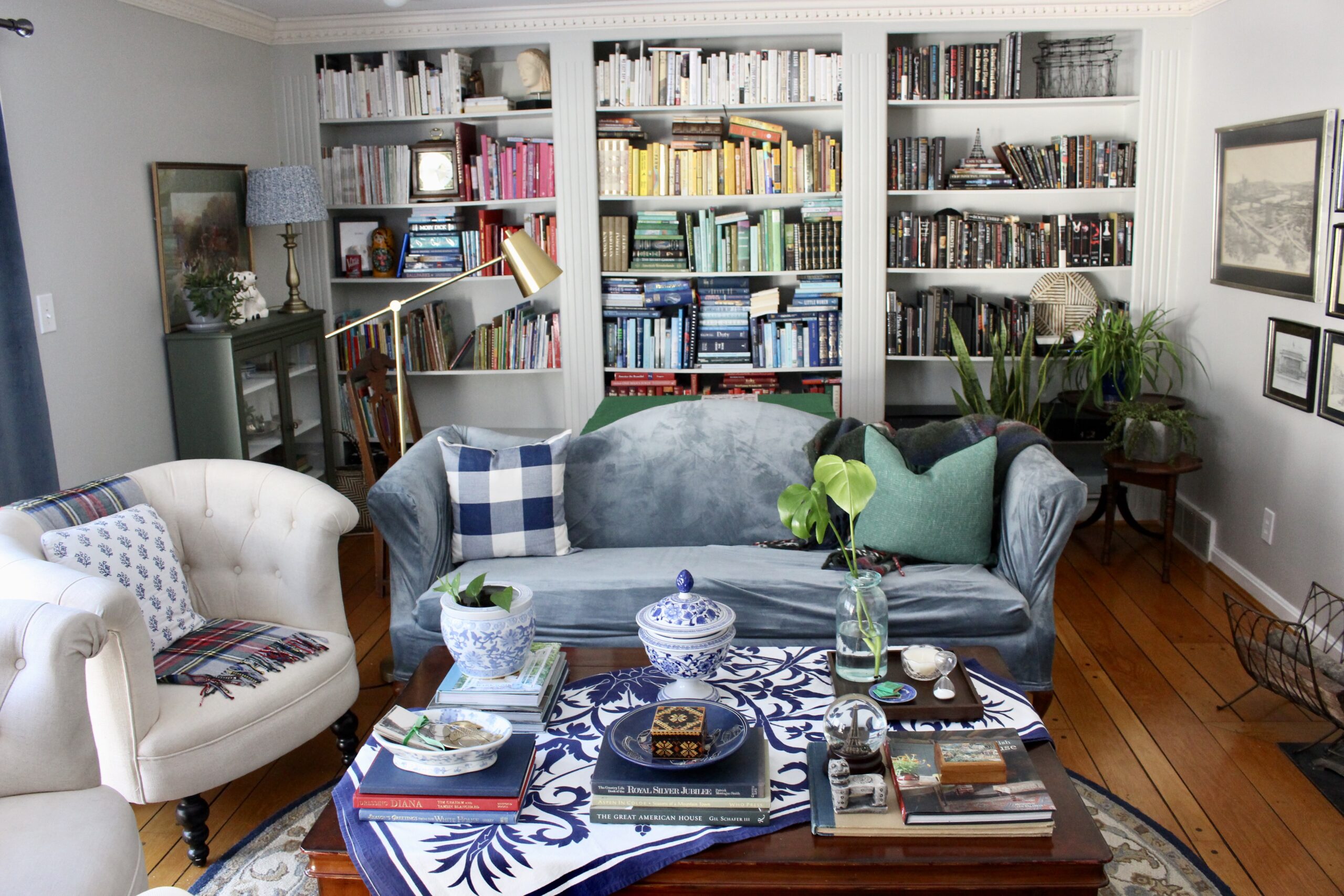

There's something about a room full of books that makes a house feel like a home. Not in a staged, interior-magazine sort of way, but in that genuinely lived-in, pulled-a-book-off-the-shelf-with-your-morning-coffee kind of way. Our colourful home library has been one of the most rewarding spaces in this house to put together, and today I'm sharing the full room reveal with you.
This room has seen a lot of change over the last four years. I've rearranged the furniture at least half a dozen times, moved shelving around, swapped out paint colours, and never quite landed on a layout that felt right. Sometimes when you've been staring at a space for too long, you lose the ability to see it clearly. It took a good friend coming over, looking around with fresh eyes, and making a few suggestions that completely shifted how I thought about the room. If you've ever been stuck on a space in your own home, I cannot recommend this enough. Fresh perspective changes everything.
Choosing a Neutral Backdrop for Colourful Books
One of the first decisions I made when planning this colourful home library was the paint colour. With so many vibrant book spines on the shelves, I knew the backdrop needed to do the opposite of compete. I wanted it to disappear.
I painted the walls, the bookcases, and the mantel all in the same shade: Sherwin Williams Repose Gray. Painting everything in one colour creates this lovely seamless effect where the architectural details fade into the background and the books themselves become the focal point. It sounds simple, but it makes a real difference when you're working with open shelving and a lot of visual colour already happening on the shelves.
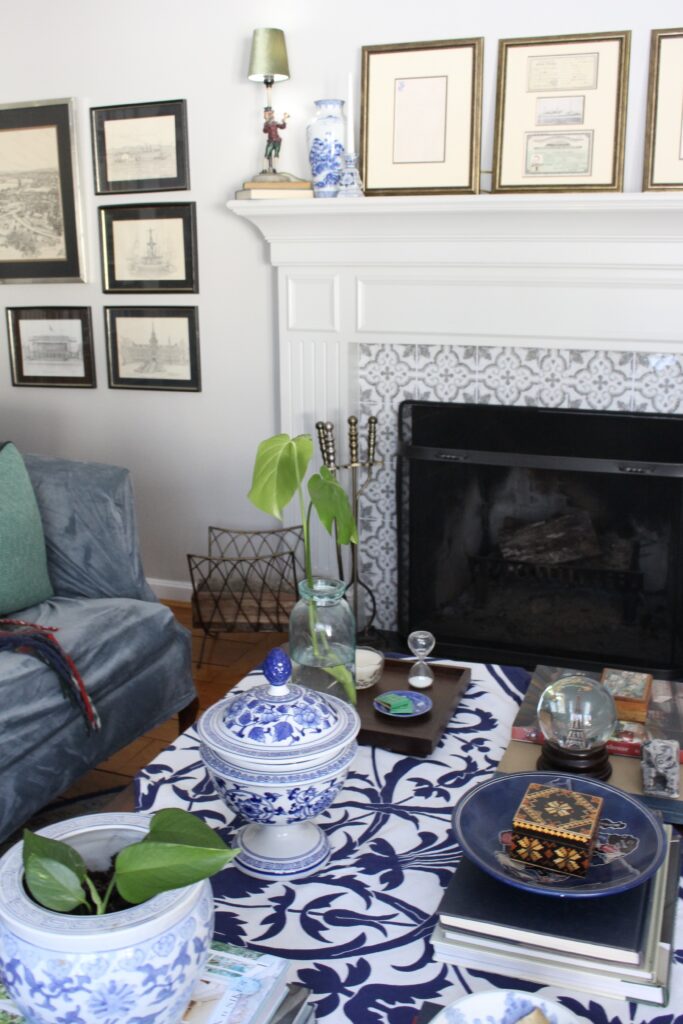
The fireplace surround was updated last year with smart tiles, and the gray-toned mantel blends beautifully with the new tile. It's one of those small updates that pulled the whole wall together.
Building a Book Collection That Feels Personal
We've been collecting books for years, and the vast majority have been thrifted or bought secondhand. There's a real joy in finding a favourite title or a beautiful hardback classic for a fraction of the original price. I gravitate towards a mix of well-loved fiction, classics I always mean to reread, and coffee table books on interiors, travel, and local landmarks.
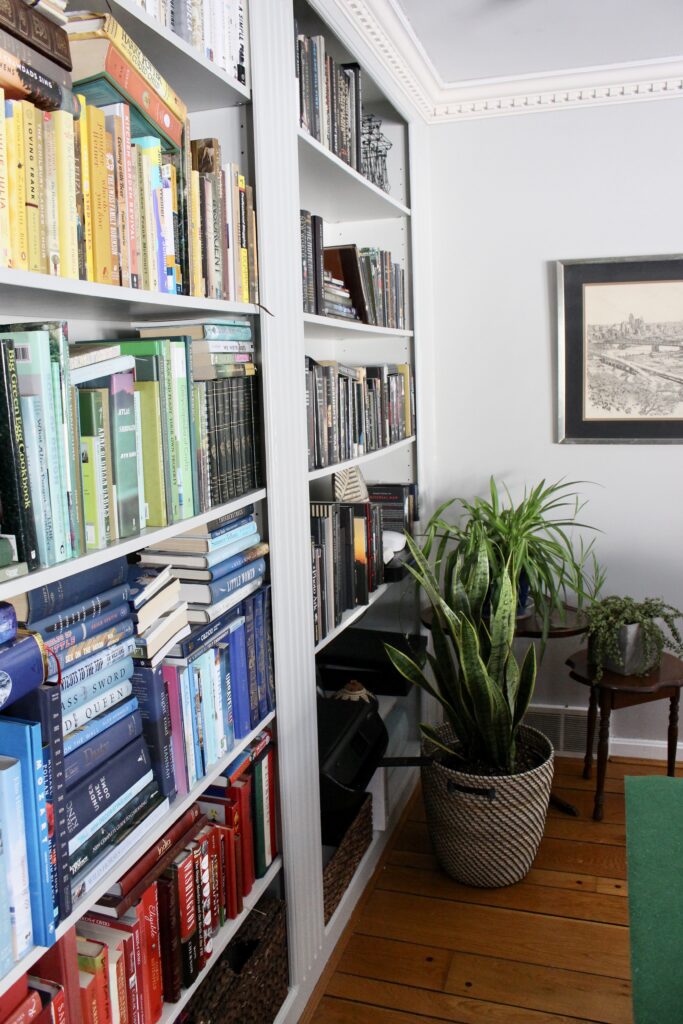
If you're building your own colourful home library, secondhand bookshops and charity shops are genuinely the best place to start. You end up with a much more eclectic and personal collection than you would buying everything new, and the colour palette develops naturally rather than feeling forced. I've never colour-coordinated my shelves deliberately; the vibrancy just happened over time as the collection grew. If you're curious about the titles on my shelves, I've put together a What's On My Bookshelf list over on Amazon with some of my favourites.
The Curved Sofa That Started as a Project
A while back, I found a beautiful curved-back sofa at a thrift shop and fell completely in love with the shape. The bones are gorgeous: curved legs, a sculpted back, and the kind of silhouette you'd normally associate with something far more expensive. The fabric, however, was a different story entirely.
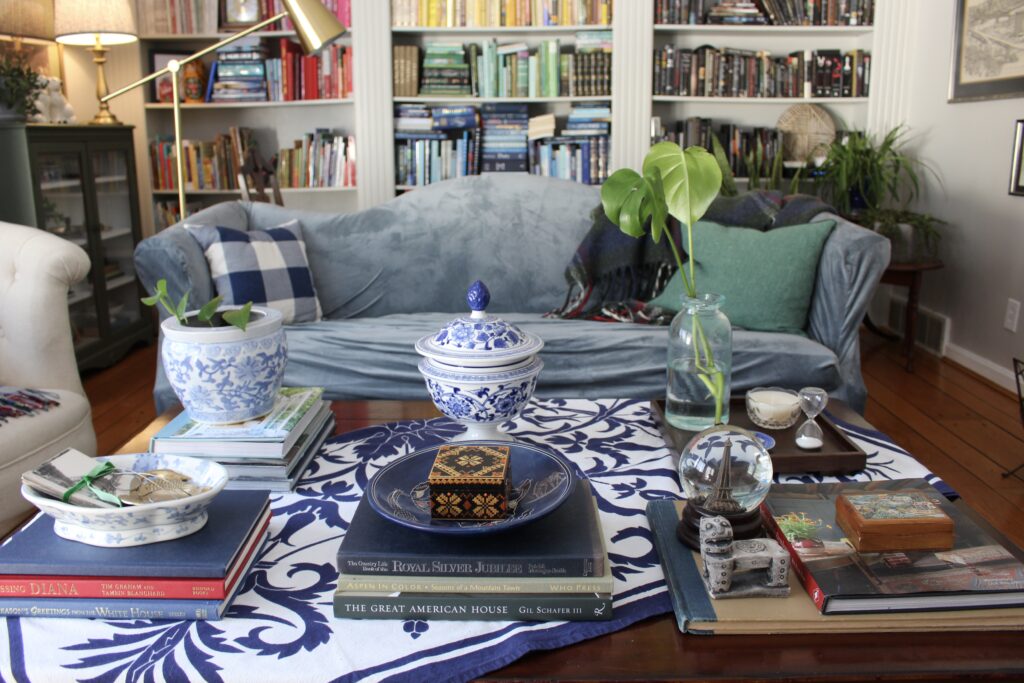
I bought it with every intention of trying my hand at reupholstering, and that's still on the cards. For now, a slipcover has done a brilliant job of giving it a fresh, neutral look that works with the room. It's a good reminder that you don't always have to tackle the big project straight away. Sometimes a temporary solution is perfectly fine while you figure out the longer-term plan.
Creating a Comfortable Seating Area in the Centre
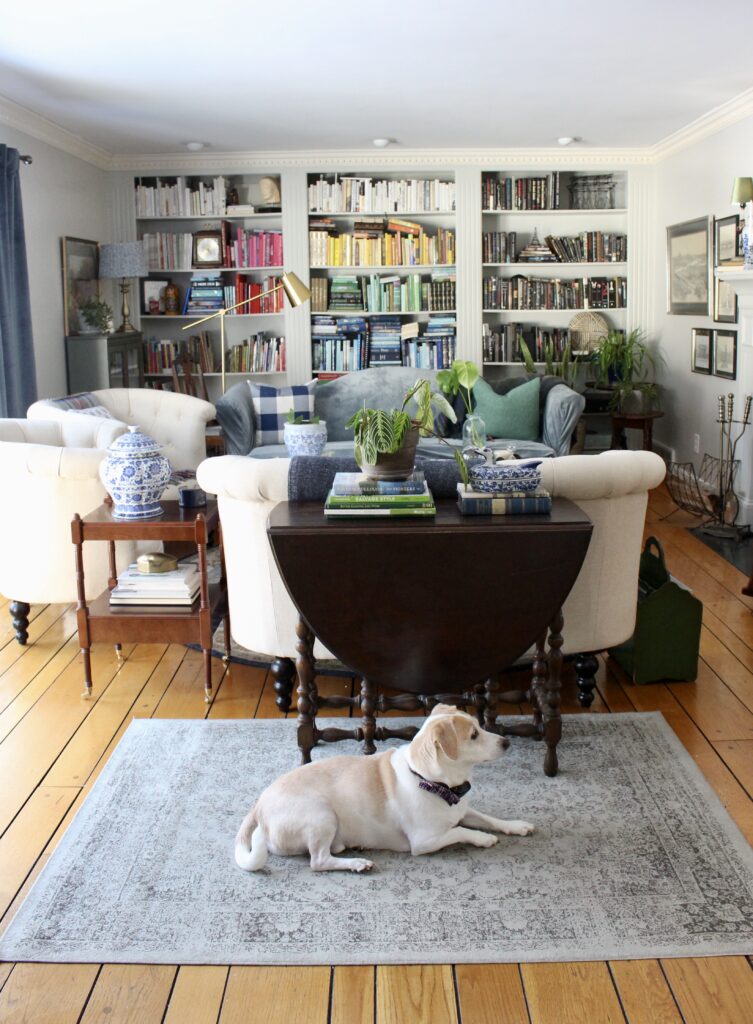
One of my biggest priorities for this room was getting a proper seating area into the centre of the space. A home library should be a room you actually sit in, not just walk past. The layout needed to invite you to stay, pick up a book, and settle in for a while.
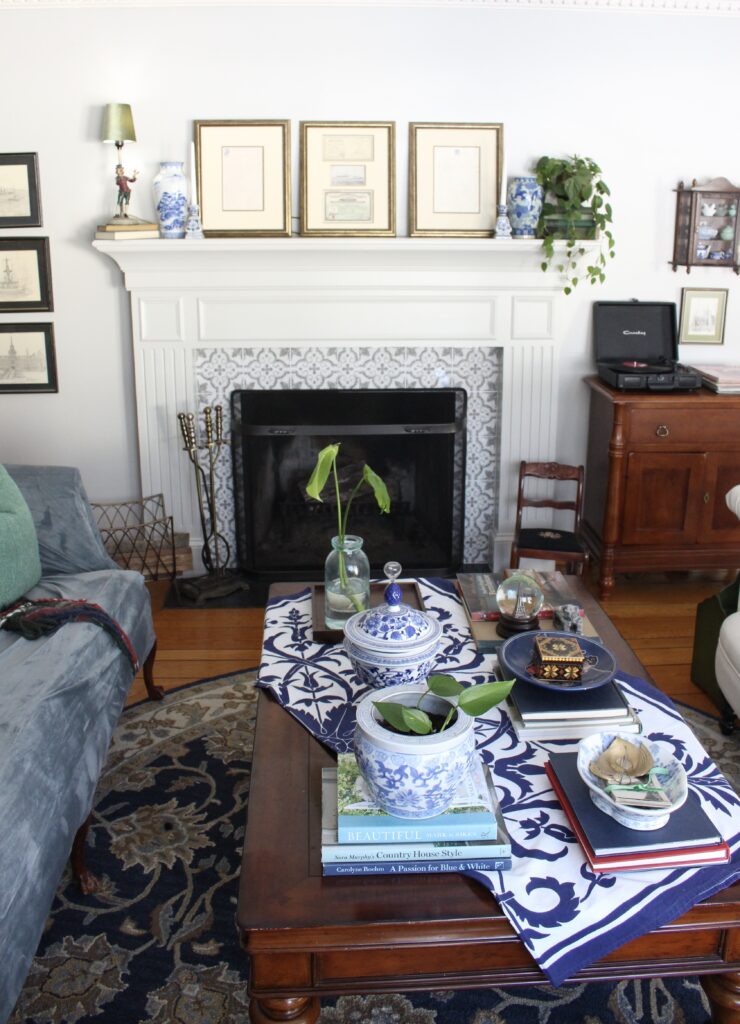
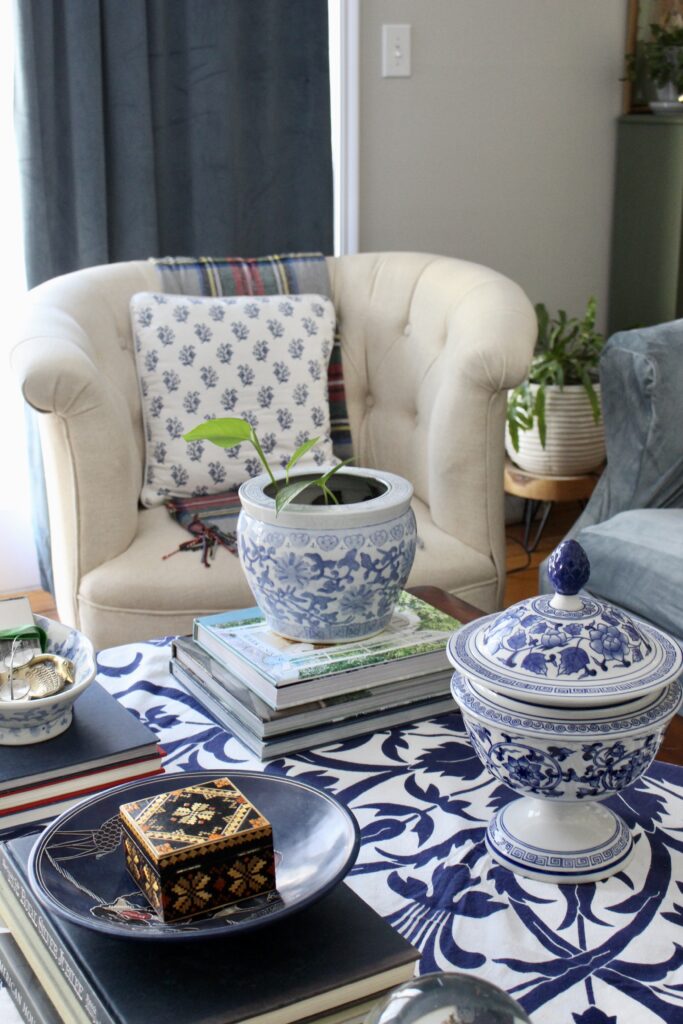
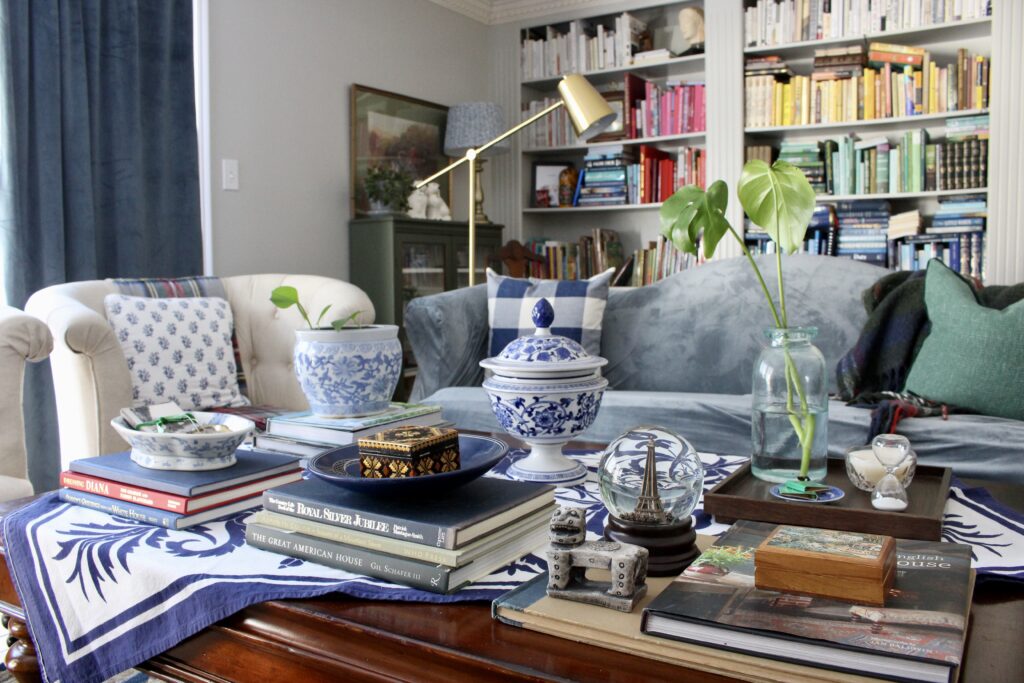
The missing piece for the longest time was a coffee table. The one I had before was far too small for the larger furniture grouping, and it made the whole arrangement feel a bit disconnected. Then, on a completely unplanned thrifting trip, I came across a large rectangular wooden coffee table that was exactly the right scale.
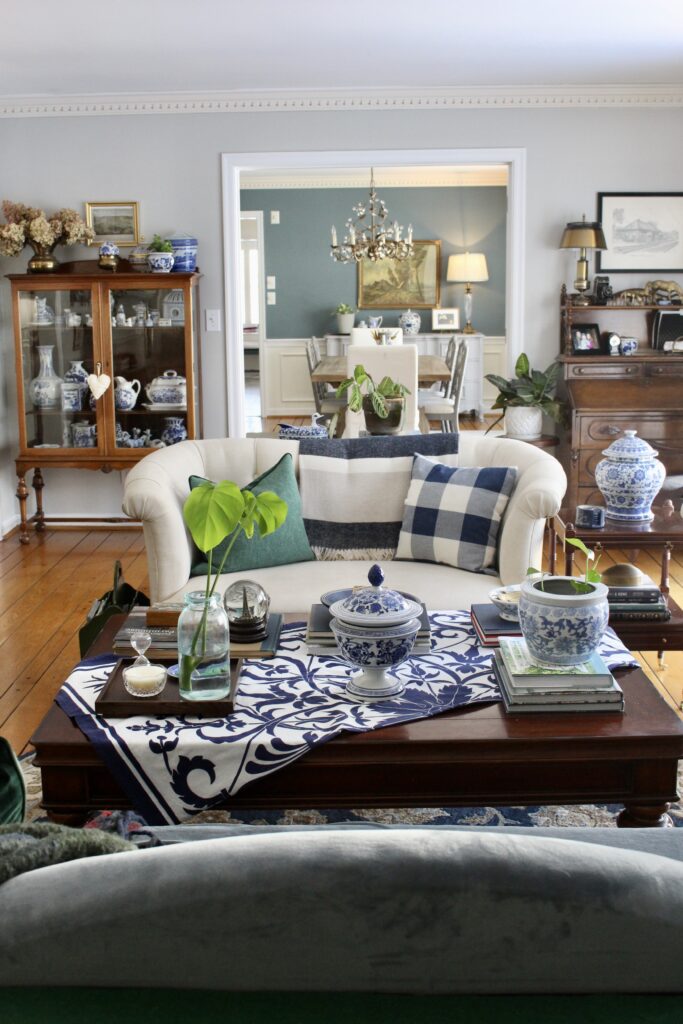
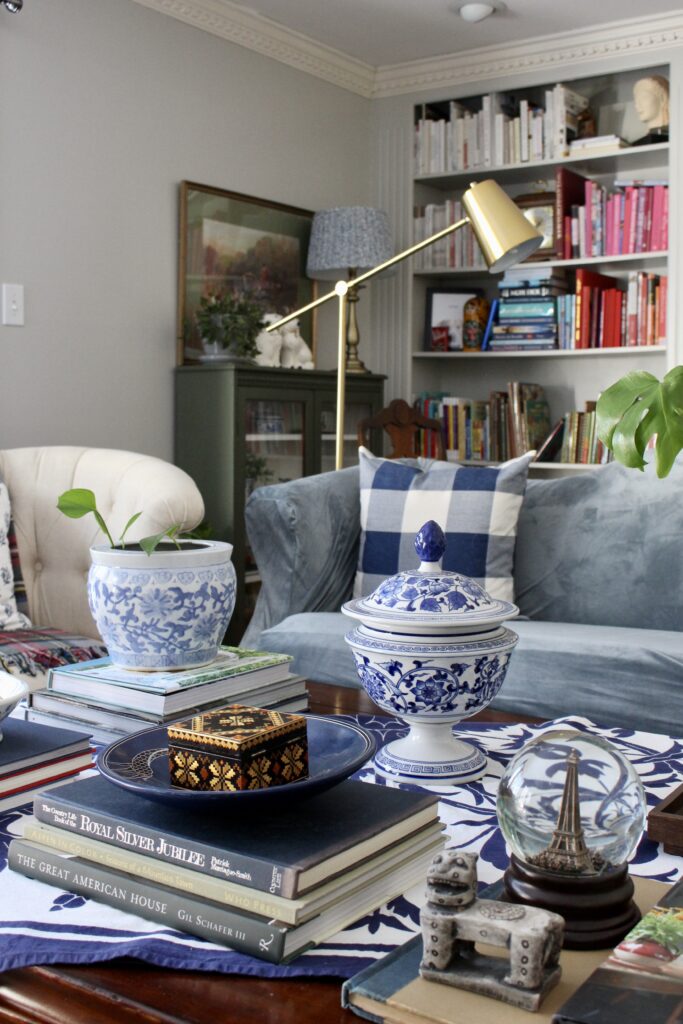
It ties the seating together properly now. Every chair and the sofa can reach it for a cup of tea or to set a book down, and it's a lovely surface for styling too. Scale really matters with coffee tables, and I'd say this is one of those pieces where going bigger than you think you need almost always looks better.
Making the Most of Every Corner
With the seating area now in the centre of the colourful home library, the corners of the room were freed up for other functions. I set up my desk in one corner, which gives me a quiet workspace with plenty of natural light. A cabinet sits nearby for storage, keeping things like stationery and paperwork out of sight.
In another corner, I created a little grouping of plants. This wasn't purely decorative, though it does look lovely. The plants help to disguise the electronics housed on the nearby shelving: the printer, the wifi booster, and all those bits and pieces that are necessary but not exactly beautiful. A few trailing plants and a taller floor plant make that whole area feel intentional rather than cluttered.
A Puzzle Table That Doubles as a Console
One of my favourite features in this room is the game table behind the sofa. In the winter months, I love working on puzzles. It's one of those slow, meditative hobbies that pairs perfectly with a cup of something warm and an audiobook in the background.
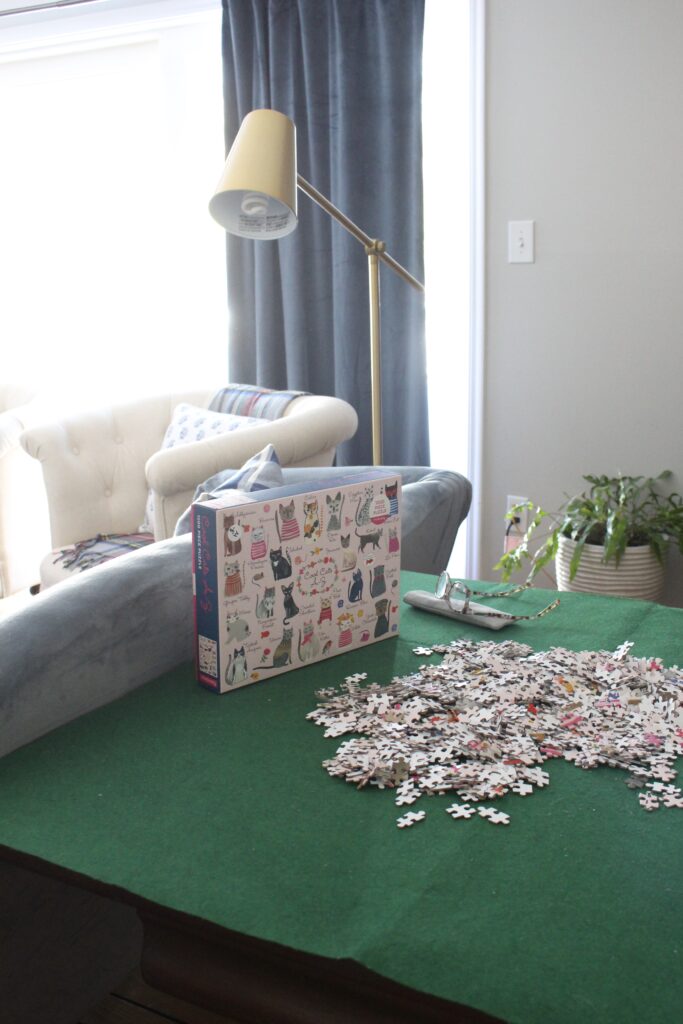
The table folds out when I'm mid-puzzle or when we have friends over for games, and when it's not in use, it sits neatly behind the sofa as a console table. I styled it with a lamp, a small stack of books, and a vase, so it earns its place in the room visually whether it's in “working” mode or not. Furniture that serves more than one purpose is always worth the investment, especially in a room like this where you want flexibility without sacrificing style.
Getting the Lighting Right
Good lighting can make or break a reading room. A brass cantilever lamp sits over the sofa and provides the perfect amount of light for reading in the evening. It also reaches over to the game table, so whether I'm deep into a novel or halfway through a 1,000-piece puzzle, the lighting works.
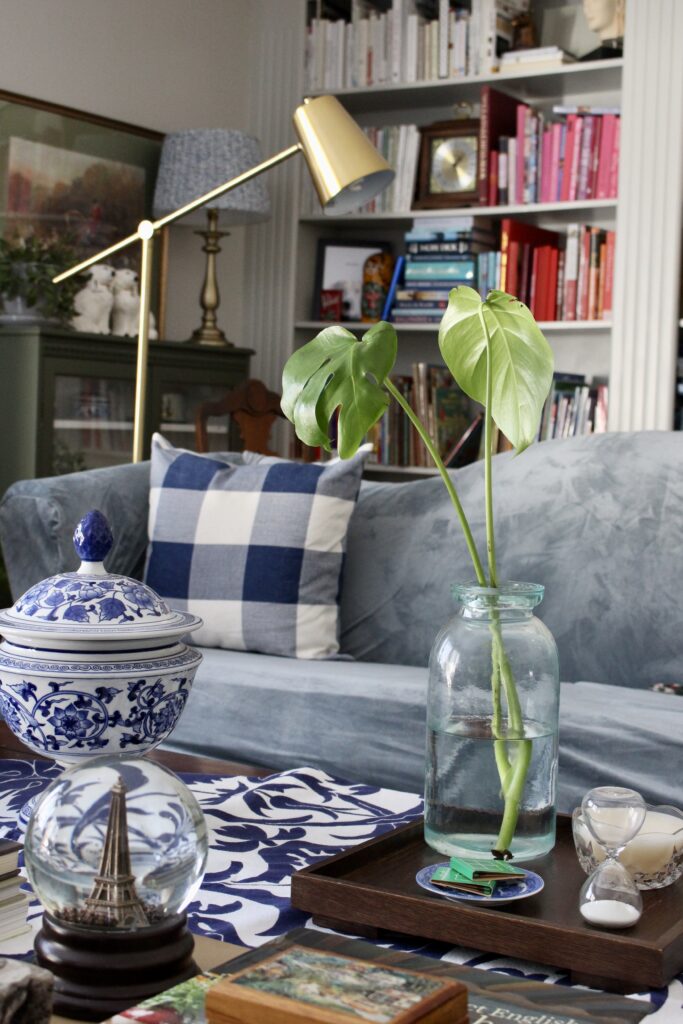
The cantilever style is ideal for a room like this because it doesn't take up floor space. It tucks behind furniture and extends over where you actually need the light. If you're setting up a reading nook or a home library, think carefully about where the light falls rather than just where the lamp looks good. Function first, then style, and in this case, the brass finish delivers on both.
Tips If You're Creating Your Own Colourful Home Library
Putting this room together has been a process of trial and error, and I've learned a lot along the way. If you're thinking about creating your own colourful home library, here are a few things that made the biggest difference for me.
Start with paint. A neutral wall colour that matches your shelving creates a gallery-like effect and lets the books do the talking. You don't need to colour-coordinate your collection; just let the colour build naturally over time as you add books you actually want to read.
Don't rush the furniture. Some of the best pieces in this room were thrifted finds that I stumbled across rather than sought out. If you're patient and keep your eyes open, you'll find pieces with character and quality for a fraction of the price. The coffee table and the curved sofa both came from thrift shops, and they're two of my favourite things in the room.
Think about the centre of the room. It's tempting to push everything against the walls, but pulling furniture into the middle creates a much more inviting atmosphere. A seating area that faces inward says “sit down and stay,” which is exactly the feeling you want in a library.
Layer your lighting. Overhead lighting alone won't do it. A good floor lamp or a table lamp near your reading spot makes the room feel warmer and more usable in the evenings.
Use plants strategically. They soften a room, add life, and can be incredibly useful for disguising things you'd rather not look at, like tech equipment and cables.
Finally, get a second opinion. I spent years rearranging this room on my own before a friend walked in, suggested a few changes, and completely transformed how the space works. Sometimes we're too close to our own homes to see the obvious.
If you're working on your own reading space or home library project, I'd love to hear about it. There's something so satisfying about creating a room that's equal parts beautiful and functional.
You can find more home and interiors projects over in my home section.
Shop this room: