Medik8 Crystal Retinal 6 Review: What Happened After 12 Weeks

I've been putting off writing this Medik8 Crystal Retinal 6 review for about two months, mostly because I wanted to get past the bit where everyone says lovely things at week two and then stops using the product by week six. I'm now well past week six. The tube is nearly done, and I have opinions.
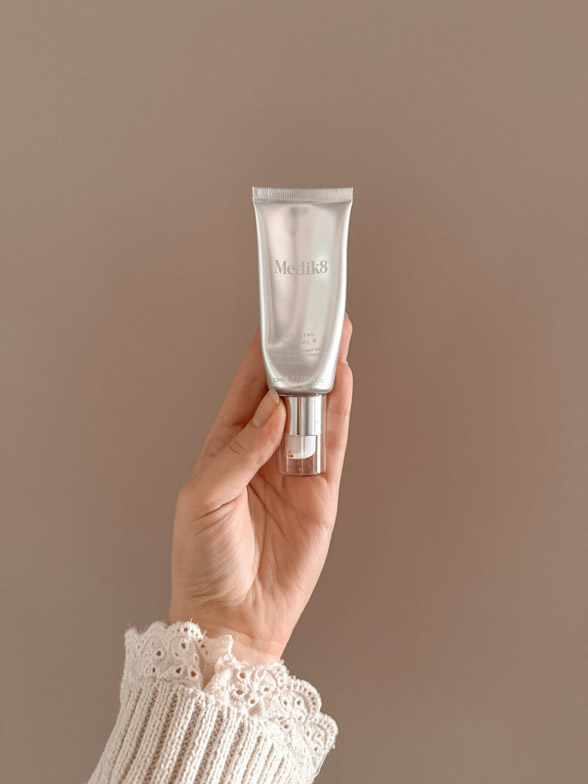
Quick context if you're skimming: Crystal Retinal 6 is a night serum containing 0.06% retinaldehyde. It costs £69 for 30ml on the Medik8 site. It's the third rung of a six-strength ladder, and it's the one most people land on once they've got a bit of retinoid experience behind them. If you've been searching “Medik8 Crystal Retinol 6”, this is the product you mean. Retinal, not retinol. The difference matters, and I'll get to that.
The short answer
Crystal Retinal 6 is worth it if you've already used a retinoid without much drama and you want visible texture and tone change without a prescription. My skin looks smoother across the cheeks, my forehead lines have softened, and the general grey tiredness that had settled in over winter has lifted. It's expensive at £69, and one tube at nightly use lasts me around ten weeks. If you're brand new to vitamin A, buy Crystal Retinal 3 instead and save yourself a fortnight of flaking.
What Crystal Retinal 6 actually is
Retinaldehyde sits one step closer to retinoic acid than retinol does. Your skin has to convert whatever vitamin A you put on it into retinoic acid before anything useful happens, and every conversion step costs you time and potency. Retinol takes two steps. Retinal takes one. The research Medik8 cite puts retinal at up to eleven times faster than standard retinol, which is a 1990 paper by Siegenthaler and colleagues rather than brand marketing invented last Tuesday.
What that means in practice: you get results at a lower percentage, so your skin has less to put up with. 0.06% sounds tiny next to a 1% retinol. It isn't behaving like a tiny number.
Medik8 also encapsulate the retinal in a crystal structure and pack it in an airless tube with a carrot seed oil complex to stop it degrading. Retinal is famously unstable. This is the bit you're paying for, and it's why the last pump works as well as the first one, which is not something I can say about every serum on my shelf.
The formula also carries hyaluronic acid, glycerin, squalane and vitamin E, plus two forms of vitamin C in small amounts. So it's a retinoid that's actively trying to keep your barrier intact while it works.
The strength ladder, and why I went to 6
Medik8 run six strengths: 1, 3, 6, 10, 20 and 24, which map to 0.01% through to 0.24% retinaldehyde. Prices climb with them, from £45 for Crystal Retinal 1 up to £114 for the 24.
Their advice is to finish a full tube of your current strength before moving up. I came to 6 after a long stint on a lower-strength retinol, so my skin was already used to vitamin A and I didn't need the training wheels. If I'd come to this cold I'd have started at 3.
Here's the honest version of who fits where:
- Crystal Retinal 1 if you've got reactive or rosacea-prone skin and every retinoid so far has ended badly
- Crystal Retinal 3 if you're new to vitamin A entirely, or you've only used it occasionally
- Crystal Retinal 6 if you've used a retinoid consistently for a few months without much irritation
- Crystal Retinal 10 and above if you've done a full tube of 6 and your skin barely noticed
Skipping tiers is how people end up with flaking around their nose, and deciding retinoids aren't for them.
What it feels like
Peach-coloured, thicker than most serums, closer to a light cream. It sinks in fast and doesn't pill under moisturiser, which was my main worry given I use a fairly rich night cream on top.
There's no added fragrance, though it has a faint sort of warm smell from the formula itself. Nothing that lingers.
The airless pump is genuinely good and mildly irritating at the same time. Good because the formula stays stable and you get a consistent dose. Irritating because the tube is opaque, so you have absolutely no idea you're about to run out until you're pumping air at eleven at night.
Two pumps for face and neck is what Medik8 recommend, and it is the right amount. I tried to eke it out with one pump for a fortnight and the results stalled, so I stopped being tight about it.
Twelve weeks, honestly
Weeks one and two. Twice a week, never on consecutive nights. Nothing dramatic happened, which is the point. A bit of tightness the morning after, sorted by moisturiser.
Weeks three and four. Every other night. This is where I got some flaking around my nose and chin, and one small crop of spots along my jaw that I'm fairly sure was purging rather than a reaction, because it cleared within about ten days and hasn't come back. Not painful, not red, just annoying.
Weeks five to eight. Nightly. Skin settled completely. Somewhere around week seven I noticed my foundation sitting differently, which is usually my first clue that texture has changed before I can actually see it in the mirror.
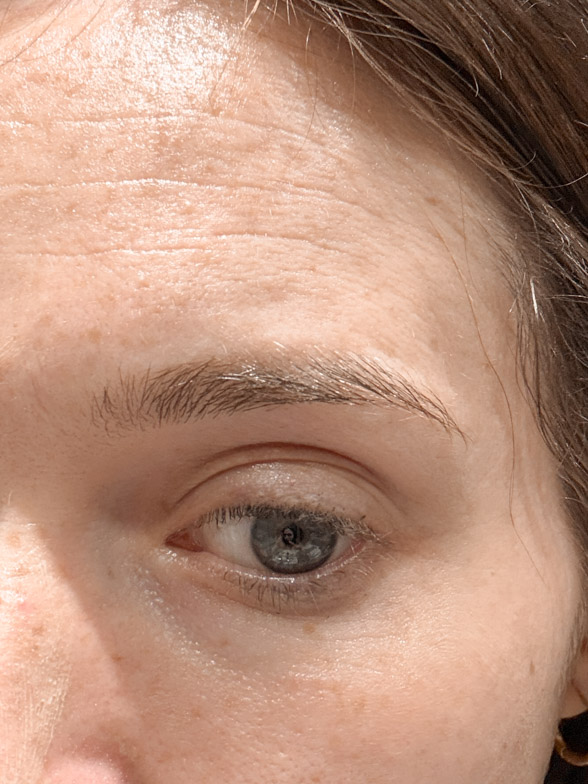
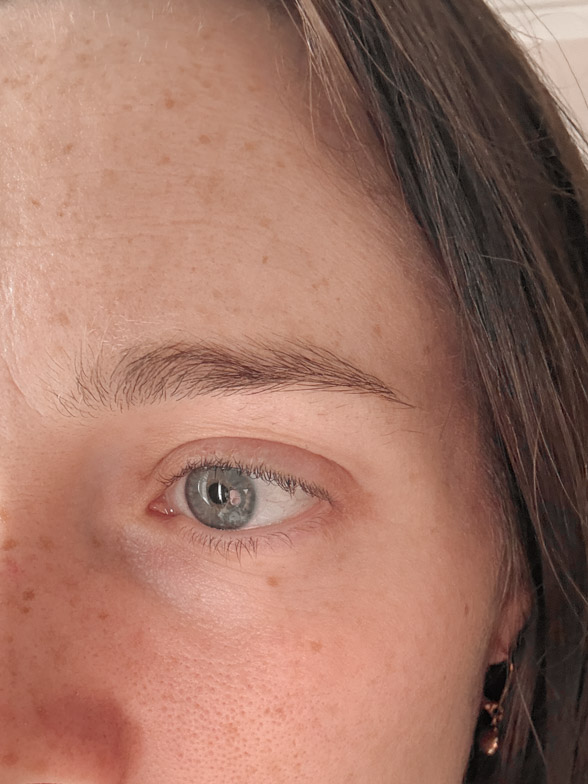
Weeks nine to twelve. This is where it earned the £69. The fine lines across my forehead have softened, not vanished. There's a general evenness to my skin tone that wasn't there in February. The scattered pigmentation on my right cheek, the side that faces the car window, has faded noticeably. My pores look smaller, which I suspect is a texture thing rather than an actual pore-size thing, but I'll take it.
For reference, Medik8's own clinical study on Crystal Retinal 6 ran twelve weeks with 33 participants and reported a 20% reduction in the appearance of wrinkles and a 20% reduction in visible hyperpigmentation, with all participants finding it gentle. My experience tracks with that, allowing for the fact that brand-run studies are brand-run studies.
What I'd flag before you buy
The price is the obvious one. £69 for something that lasts around ten weeks at nightly use works out at roughly £7 a week, so £1 a use. Whether that's reasonable depends entirely on what else is in your routine and what you'd give up for it. I'd rather spend here than on another cleanser.
The second thing is that a retinoid only works if the rest of your routine cooperates. Sunscreen every morning isn't optional with this. If you're not going to wear SPF daily, you're spending £69 to undo your own work.
Third, don't layer it with acids on the same night. I use a gentle exfoliating acid twice a week and I simply skip Crystal Retinal on those evenings. Vitamin C in the morning, retinal at night, no overlap.
And finally, don't start it three weeks before a wedding or a big event. Start it three months before.
How I use it
Cleanse. Two pumps of Crystal Retinal 6 over face and neck, avoiding the immediate eye area. Wait a minute or so for it to absorb. Moisturiser on top, something ceramide-heavy. SPF the next morning without fail.
That's the whole routine. Retinoids don't need company.
So is Medik8 Crystal Retinal 6 worth it?
For me, yes. It's the first retinoid I've used consistently for three months without either giving up or resenting it. The results are real but gradual, which is exactly what vitamin A does when it's working properly.
But I'd caveat it heavily for two groups. If you're new to retinoids, the 3 is the better buy and you'll get there eventually anyway. And if you're not prepared to wear sunscreen every single morning, this isn't the product to start with.
Medik8 Crystal Retinal 6 FAQs
No. Crystal Retinal contains retinaldehyde, which is one conversion step closer to active retinoic acid than retinol. That means it works faster at a lower percentage. People often search for it as “Crystal Retinol”, but retinal is the correct name.
Texture and brightness changes usually show around weeks six to eight with consistent use. Line softening and pigmentation change take closer to twelve weeks. Medik8's own study ran over twelve weeks.
Start with 3 if you're new to vitamin A or have used it only occasionally. Choose 6 if you've used a retinoid consistently for a few months without significant irritation.
It can. I had some flaking and a small crop of jawline spots in weeks three and four, which cleared within about ten days. Phasing in slowly reduces this considerably.
At two pumps nightly, around ten weeks for face and neck. Slightly longer if you're still phasing in.
Yes, but use them at different times. Vitamin C in the morning, Crystal Retinal at night.
No. Retinoids aren't recommended during pregnancy or breastfeeding. Speak to your GP or midwife about alternatives.
£69 for 30ml direct from Medik8 at the time of writing. It's also stocked at several UK retailers, and prices vary slightly.
I'll update this post when I've finished the second tube and can say something useful about the six-month mark. If you're deciding between strengths and still not sure, the 3 is the safer starting point and you lose nothing by going the slow way round.
For more of these, have a look through the rest of the skincare reviews on the blog.
Leave a Reply
The Sunday Letter
Most Sundays, once the house has gone quiet and it's edging towards nine, a letter goes out. It's the one I'd write to a friend with good taste and not nearly enough time: one thing worth reading, one thing worth buying, and one thing to skip. No noise, no pressure to spend, just the considered version of what I've actually been using, loving, or quietly sending back.
If you like the sort of recommendation that still holds up six months later, leave your email below and I'll write to you on Sunday.