Sliding Barn Doors: A Stylish Way to Divide a Room

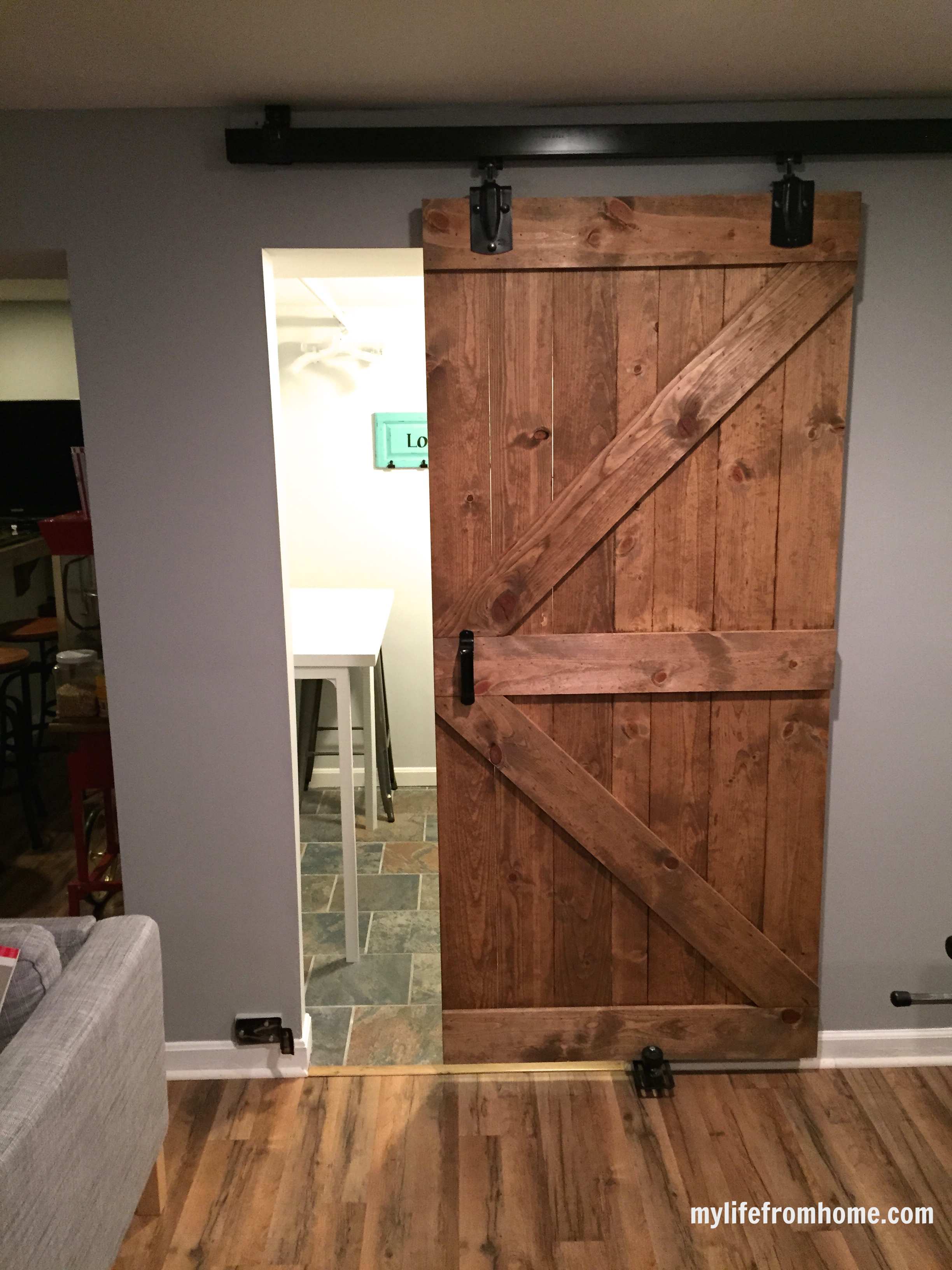
There's something quietly satisfying about a door that glides rather than swings. No arc to walk around, no awkward patch of floor left empty so the door has somewhere to go, just a single panel that slides along a track and settles neatly against the wall when you want the space open. Sliding barn doors have been having a moment for a while now, and although the name conjures up something rural and farmhouse, the idea itself is far more versatile than that. Done well, a sliding door is one of the most characterful, space-saving changes you can make to a home.
Why a sliding door is worth considering
The appeal comes down to space, mostly. A standard hinged door needs roughly a square metre of clear floor to open into, which in a smaller room or a tight hallway is a square metre you can't really use for anything else. A sliding door reclaims it. It also does something a little harder to put into words: it adds a sense of intention. A swinging door is purely functional; a sliding one feels like a choice, a small piece of design rather than a builder's default.
My own preference leans heavily towards sliding doors anywhere the layout is tight, simply because they make a room feel calmer. Nothing is jutting out, nothing has to be left clear, and the eye isn't drawn to a door standing half-open in the middle of the floor.
It doesn't have to look like a barn
Here's the part worth saying plainly: a sliding door does not have to look like it belongs on the side of a barn. The mechanism, a track and a couple of rollers, is completely neutral. What sits on it is entirely up to you. A reclaimed timber panel will give you that rural, lived-in look, and there's nothing wrong with it if that suits your home. But the same track will happily carry a flat painted panel in a soft, chalky colour, a glazed Crittall-style door with slim black frames, or a panelled door that echoes the rest of the doors in your house.
Painted in something like a deep, smoky green or a warm off-white [affiliate: Farrow and Ball via AWIN], a sliding door reads as considered rather than novelty. That single decision, treating it as part of the scheme rather than a feature shouting for attention, is the difference between a door that dates in three years and one that simply looks right.

Where a sliding door earns its keep
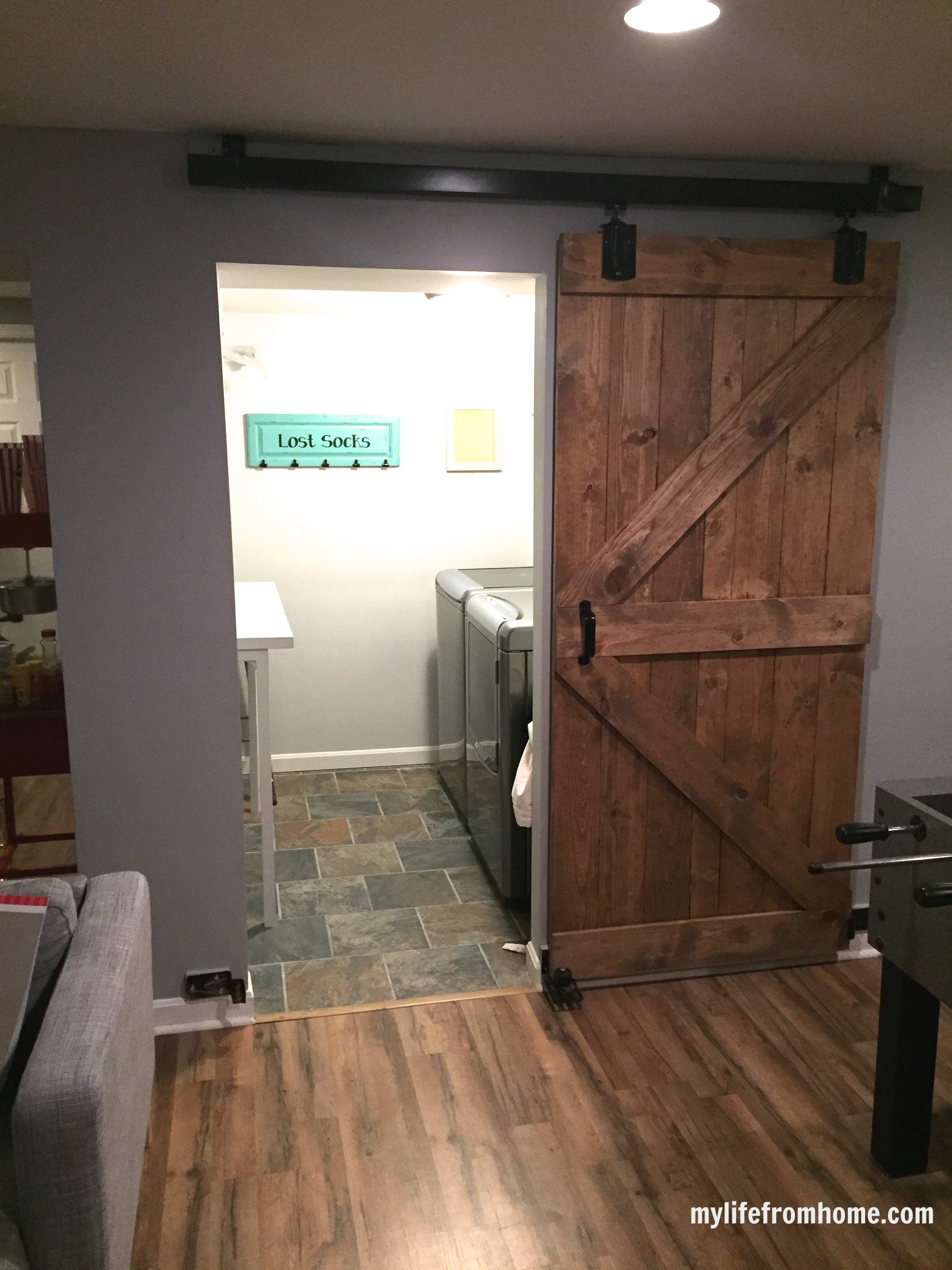
The most obvious use is to close off a space that doesn't quite warrant a full doorway. A utility area tucked off the kitchen is the classic example; sliding a door across to hide the washing machine and the inevitable pile of laundry keeps the working part of the room out of sight without committing to building a wall and hanging a conventional door. The same logic works beautifully for a pantry, a downstairs loo, or a home office set into an alcove of a larger room.
In bedrooms, a sliding door can separate an en suite or a dressing area while keeping the footprint open and airy. And in open-plan spaces, a single wide sliding panel, or a pair that meet in the middle, can divide a kitchen from a snug when you want them apart of an evening and merged the rest of the time. That flexibility is really the whole point; you get the option of a closed room without permanently losing the openness that made the space feel generous in the first place.
The hardware, and a few honest practicalities
The track is where the quality lives, so it's worth not skimping. A good top-mounted track and a set of smooth rollers will glide for years; a cheap one will judder and rattle and quietly drive you mad every time you use it. Plenty of high-street retailers now stock complete kits with the track, rollers, end stops and a floor guide all in one box, which takes most of the guesswork out of it. If you'd rather mix and match, specialist ironmongers sell the track and the handle separately so you can choose finishes that suit the room: matt black, brushed brass, aged steel, and so on.
Two practical things are worth knowing before you fall for the idea. The first is the wall. A top-mounted track needs solid fixing, so a sturdy timber header or a properly reinforced section of wall above the opening is essential; a flimsy stud wall on its own won't hold the weight of a heavy door over time. The second is the gap. A sliding door sits slightly proud of the wall and never seals as tightly as a hinged one, which means it lets a little light and sound through. For a utility or a pantry that's no issue at all. For a bathroom that shares a wall with a bedroom, it's worth thinking about before you commit.
Neither of those is a reason not to do it. They're just the sort of thing it's better to hear now than to discover halfway through.

Styling it so it looks intentional
A few small choices separate a sliding door that looks like a feature from one that looks like an afterthought. Letting the door overlap the opening generously on both sides, rather than sitting flush to the edges, makes the whole thing feel deliberate and stops daylight leaking around the frame. Matching the door's colour or timber to something already in the room, your skirting, a piece of furniture, the kitchen cabinetry, ties it in so it reads as part of the scheme rather than a bolt-on.
And a single beautiful handle does a surprising amount of quiet work. It's the piece you'll touch every single day, so it's one of the few places where spending a little more genuinely shows. A heavy, well-made handle on an otherwise simple painted door instantly makes the whole thing feel more expensive than it was.
It's also worth thinking about how the door looks when it's open, not just when it's closed, because for most of the day that's exactly how you'll see it. Parked against a stretch of plain wall, a painted panel almost disappears. Parked against a busy gallery wall or a run of shelving, it competes. Giving it a clear, uncluttered patch of wall to slide back onto keeps everything feeling considered rather than crowded, and it's the kind of detail nobody notices when you get it right and everybody feels when you don't.
Is it worth it?
A sliding door won't suit every opening, and it isn't the cheapest way to hang a door once you've factored in the track and a decent panel. But in the right spot, a tight hallway, a hard-working utility, an awkward corner that's never quite functioned, it solves a real problem and looks lovely doing it. That combination of useful and quietly beautiful is more or less the whole brief around here.
If you're in a making-the-most-of-your-space frame of mind, you might like my guide to turning an IKEA Billy bookcase into proper built-ins, which scratches very much the same itch. And there's plenty more to wander through over in the home and interiors section whenever you fancy it.
Leave a Reply
The Sunday Letter
Most Sundays, once the house has gone quiet and it's edging towards nine, a letter goes out. It's the one I'd write to a friend with good taste and not nearly enough time: one thing worth reading, one thing worth buying, and one thing to skip. No noise, no pressure to spend, just the considered version of what I've actually been using, loving, or quietly sending back.
If you like the sort of recommendation that still holds up six months later, leave your email below and I'll write to you on Sunday.



I keep seeing a Bipass track being used for Barn door hardware for a Single Door. Where can I purchase this? Who is the Manufacturer?
This was purchased at Tractor Supply Company.
Great Share!
Its really a good way to save space and the best part of sliding doors is that it costs less amount and give a pleasant look to your home and surroundings.
Keep sharing such amazing stuff! I would surely look forward!
I never considered going to the tractor supply store to find hardware for these barn doors. I actually like that you didn’t use the doors on anything that needed privacy too. We have one of these doors and it has been in the office of our home and it is a distraction. We love the look but just as an added caution when selecting these doors, (use them where privacy and sound isn’t a necessity). Love your photos and your post. Thanks for sharing.
Thank you, Linda! Yes. We are in love with our doors. I can see what you mean about the sound. It definitely would not be a sound proof solution. Glad you stopped by!